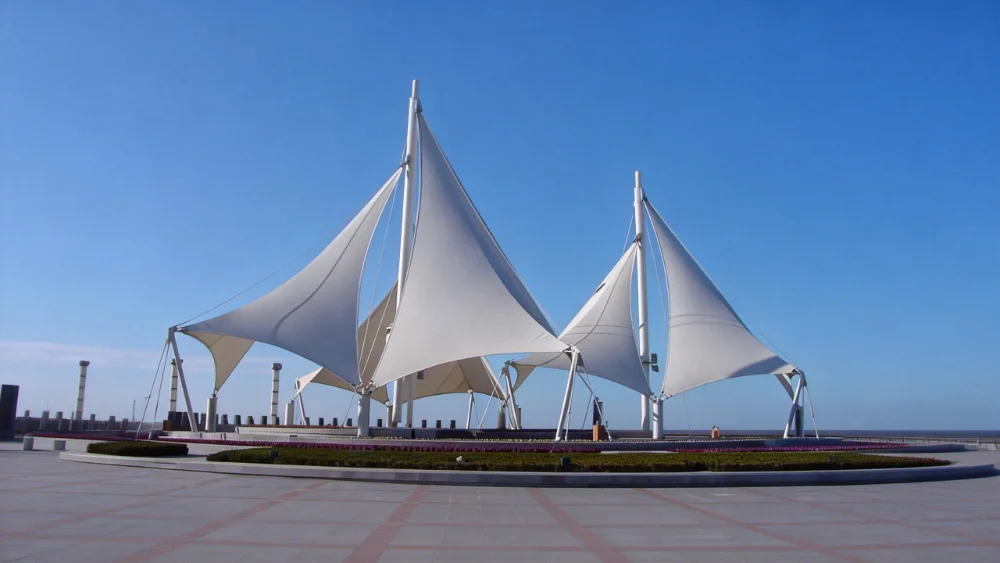
Why foundation design is critical in membrane structure projects
Membrane structures may appear visually light, but their support behavior depends heavily on the quality of the foundation system below them. Wind uplift, pretension forces, asymmetrical loading, and long-span steel geometry can all place specific demands on anchors and substructure design. If the foundation is not matched correctly to the soil conditions and structural form, the whole project can face movement, settlement, or serviceability problems over time.
That is why foundation engineering in membrane projects should begin with an accurate understanding of site conditions. The goal is not only to support vertical loads, but also to manage horizontal forces, overturning effects, and long-term stability under real environmental exposure.
Site investigation and soil-response review
Good foundation design starts with proper investigation of the site. Soil bearing behavior, groundwater conditions, fill history, slope conditions, and local construction constraints all influence the appropriate support strategy. In some projects, standard shallow foundations may be adequate. In others, pile systems, ground improvement, or adapted anchoring details may be necessary to achieve safe long-term performance.
For membrane structures in soft soil, coastal areas, reclaimed land, or complex terrain, the importance of this early-stage review increases significantly. The structural efficiency of the roof above cannot compensate for weak geotechnical control below.
Matching the foundation to membrane structural behavior
Unlike many conventional roofs, membrane structures often introduce significant tension-related forces and geometric sensitivity into the supporting frame. This means the foundation system has to respond not only to gravity loads but also to the specific load paths created by the tensile roof form. Anchor bolts, pedestal geometry, base-plate detailing, and foundation stiffness all influence how the superstructure behaves once installed and tensioned.
Effective foundation engineering therefore requires coordination between geotechnical data, structural analysis, and construction practicality. The result should be a support system that remains stable, buildable, and appropriate for the long-term service conditions of the project.
Project-specific solutions for complex conditions
No two membrane projects face exactly the same site conditions. Terrain, loading, climate, and construction constraints can vary widely from one location to another. We support project teams by aligning foundation strategy with the actual technical conditions of the site so that the membrane structure above has a reliable base for installation and service. A well-resolved foundation system reduces risk, improves structural confidence, and supports smoother execution throughout the project lifecycle.