Architectural Shade Canopies for Outdoor Public Spaces
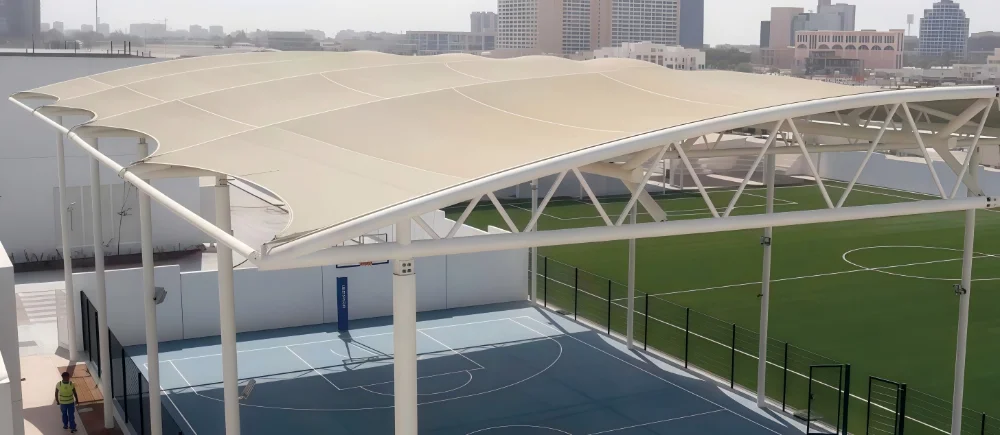
Architectural shade canopies are used in parks, plazas, courtyards, waterfront promenades, resorts, commercial landscapes, and civic outdoor spaces where shade, weather protection, and visual identity must be considered together.
Unlike a simple shade product, a public-space canopy has to work with the site. It may need to cover seating areas, pedestrian nodes, outdoor dining zones, viewing decks, children’s activity spaces, or public waiting areas. The structure should provide useful shade without blocking circulation, damaging the landscape layout, or creating difficult maintenance conditions.
Timi supports custom tensile membrane canopy projects with material selection, steel frame coordination, drainage planning, support layout review, fabrication preparation, export packing, and installation-related documentation. For overseas projects, we help buyers review the canopy as a complete outdoor structure, not only as a fabric roof.
Common Applications
Architectural shade canopies can be adapted to different public and commercial outdoor environments. The canopy form, column layout, membrane material, and drainage direction should be selected according to how people actually use the space.
| Application Area | Typical Design Focus |
|---|---|
| Public Parks | Shaded rest areas, activity zones, seating points, and pedestrian gathering nodes |
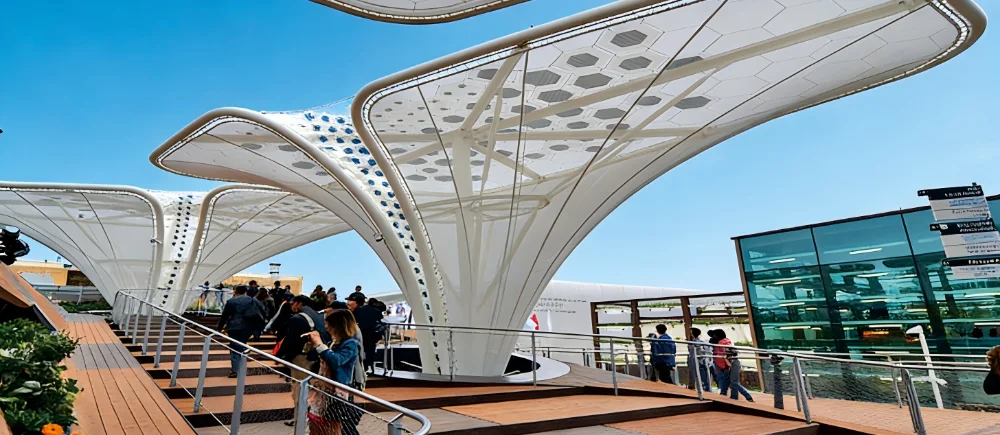
| City Plazas | Landmark canopy forms, public events, open gathering areas, and civic spaces |
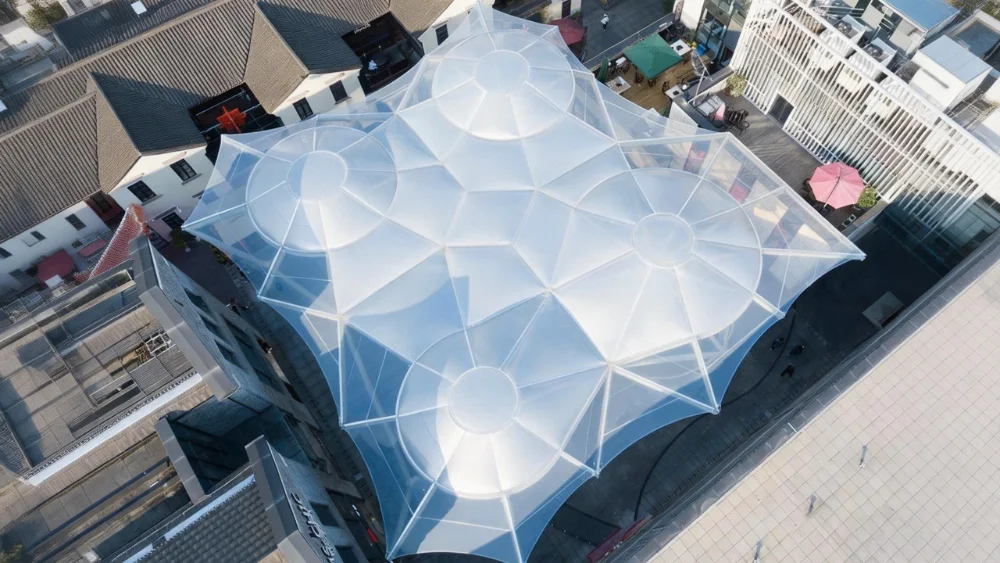
| Courtyards | Semi-open shade for hotels, schools, commercial buildings, and residential communities |
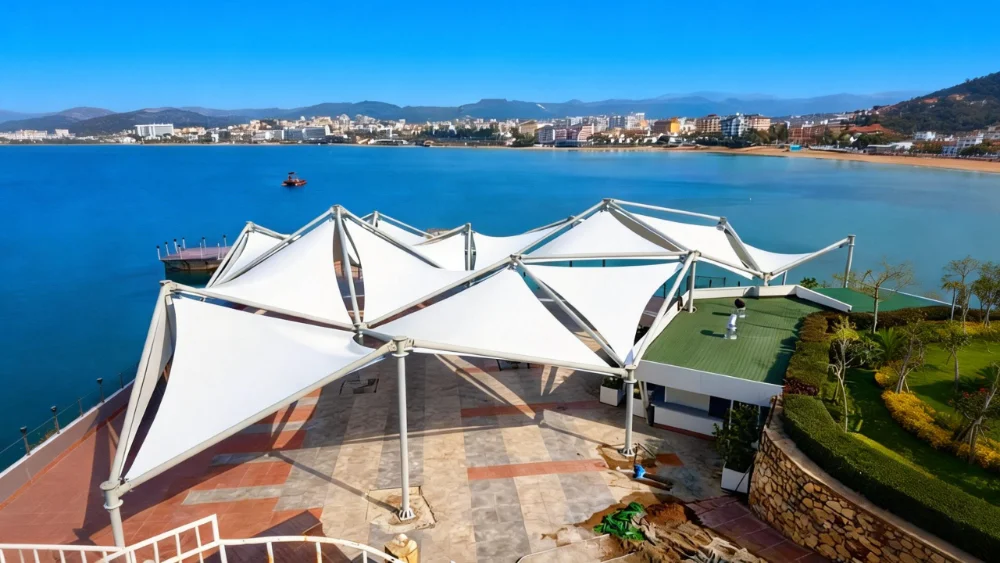
| Waterfront Areas | Shade for promenades, viewing decks, waiting areas, and public seating near humid or coastal conditions |
| Resorts and Scenic Areas | Lightweight canopy structures for visitor rest areas, entrances, outdoor lounges, and leisure spaces |
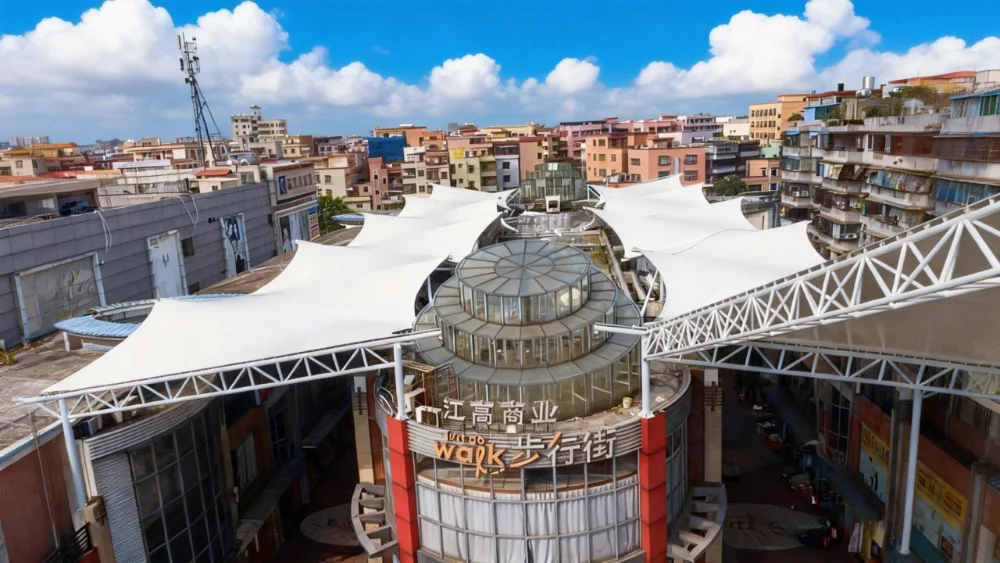
| Commercial Landscapes | Shade for shopping centers, outdoor dining, mixed-use developments, and public-facing retail areas |
| Community Spaces | Covered areas for small events, resident activity zones, and daily outdoor use |
| Pedestrian Nodes | Partial weather protection at intersections, walkway connections, and open circulation points |
For example, a plaza canopy may need a stronger architectural form because it becomes part of the public image of the site. A park canopy may focus more on shade comfort, user safety, tree coordination, and long-term outdoor durability. A waterfront canopy should pay closer attention to corrosion exposure, wind direction, and maintenance access.
Design Points That Should Be Confirmed Early
A public-space canopy should be planned around site conditions before the structure is quoted or fabricated. Many problems in landscape canopy projects come from details that are not clear at the early stage, such as drainage discharge points, column positions, underground utilities, or conflicts with lighting and planting.
Key points to review include:
- Covered area and shade direction during main use hours
- Pedestrian circulation and emergency access
- Seating areas, activity zones, viewing points, and waiting areas
- Column positions and pedestrian safety clearance
- Trees, planting beds, lighting poles, signage, and public furniture
- Underground utilities, drainage lines, paving, and foundation restrictions
- Wind exposure, local rainfall, snow load, or coastal humidity
- Drainage slope, gutter direction, and final water discharge point
- Membrane color, translucency, and visual impact from different angles
- Steel surface treatment and corrosion protection
- Maintenance access for cleaning, inspection, and future repair
- Installation route, crane access, and site working space
For public projects, the canopy should not only look good in drawings. It should be practical for fabrication, shipment, installation, cleaning, and daily public use.
Membrane Material Options
Different landscape and public-space canopy projects require different membrane materials. The right choice depends on the project budget, expected service life, appearance, fire requirements, daylight control, and local exposure conditions.
PVC/PVDF Membrane
PVC/PVDF membrane is commonly used for park canopies, plaza shade structures, courtyard covers, commercial outdoor areas, and general landscape canopy projects. It provides practical weather resistance, flexible form options, and controlled project cost.
This material is often suitable when the project needs an efficient outdoor shade structure with a clean appearance and reasonable budget.
PTFE Membrane
PTFE membrane can be considered for larger or more permanent public-space projects. It offers stronger long-term weather resistance and is suitable for structures that need a more durable architectural membrane roof system.
It is often considered for public facilities, transport-related outdoor areas, large landscape structures, and projects with higher performance expectations.
ETFE Film
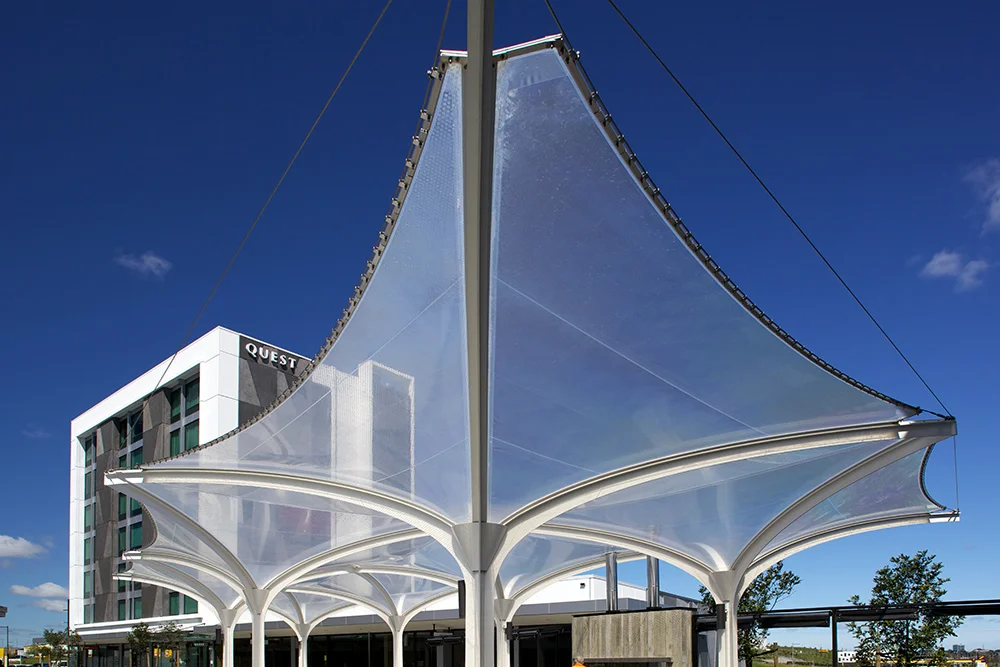
ETFE is suitable where transparency, daylight transmission, or a lightweight enclosure effect is required. It can be used for selected public roofs, atriums, skylight-related areas, and special landscape structures where natural light is an important design requirement.
ETFE is not always necessary for a standard shade canopy, but it can be valuable when the project requires a more transparent or architectural roof effect.
Steel Frame and Corrosion Protection
The steel support frame affects both the appearance and long-term performance of the canopy. For parks, plazas, waterfront areas, and commercial landscapes, the frame must handle membrane tension, wind load, drainage detailing, surface exposure, and public safety requirements.
Important steel structure details include:
- Column and beam layout
- Base plate and anchor bolt arrangement
- Membrane edge connection method
- Drainage-related steel detailing
- Hot-dip galvanizing or coating specification
- Frame color and surface finish
- Corrosion exposure level
- Component marking for site installation
- Packing sequence for overseas delivery
In coastal, waterfront, humid, or high-rainfall areas, corrosion protection should be reviewed carefully. A public-space canopy is often exposed year-round, so the steel frame, welded areas, connection plates, and surface treatment must be suitable for long-term outdoor use.
Custom Canopy Forms for Landscape Design
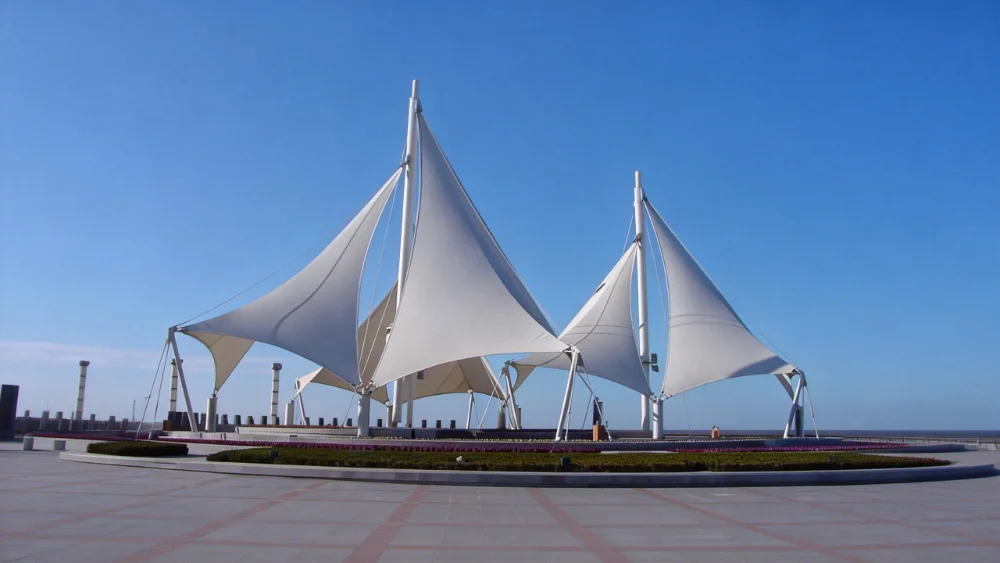
Landscape canopy projects often require a balance between architectural appearance and practical construction. Some projects need a simple repeated canopy system, while others need a more expressive structure that becomes a visual landmark.
Timi can support different canopy directions, including:
- Single canopy structures for rest areas
- Repeated canopy units for plazas or walkways
- Curved tensile membrane forms for landscape integration
- Landmark canopy structures for public gathering spaces
- Open-sided canopies for parks, resorts, and scenic areas
- Light-transmitting canopy concepts for courtyards
- Custom steel frame color and surface finish
- Project-specific membrane edge profiles
- Drainage and gutter coordination
- Layout adjustment around trees, paths, or existing buildings
The final form should be attractive, but it also needs to be buildable. A good canopy design should allow reasonable membrane tensioning, clear water discharge, stable steel support, and practical site installation.
Fabrication and Overseas Project Support
Timi supports architectural shade canopy projects from early communication to fabrication and shipment preparation. For overseas buyers, clear technical coordination is important because local contractors often handle foundation and installation after the structure arrives on site.
Project support may include:
- Reviewing drawings, site photos, or concept sketches
- Confirming suitable membrane material options
- Coordinating steel frame and membrane connection details
- Reviewing coverage area, column layout, and drainage direction
- Preparing components according to confirmed drawings
- Marking membrane and steel components for site installation
- Supporting packing and loading for overseas shipment
- Providing installation-related drawings or technical communication
For landscape and public-space projects, organized component marking and packing are especially important. They help local contractors identify parts, follow the installation sequence, and reduce confusion during site assembly.
Related Engineering Support
Architectural shade canopies should be evaluated as complete outdoor structures. In addition to the visible membrane form, buyers may also need to review foundation, material selection, steel frame protection, installation logic, and documentation requirements.
Related support topics include:
- Foundation conditions for tensile membrane structures
- PVDF, PTFE, and ETFE material selection
- Steel support structure and corrosion protection
- On-site project management for membrane structures
- Quality assurance and documentation support
- Engineering compliance for local project requirements
These factors help project teams reduce uncertainty before production and installation.