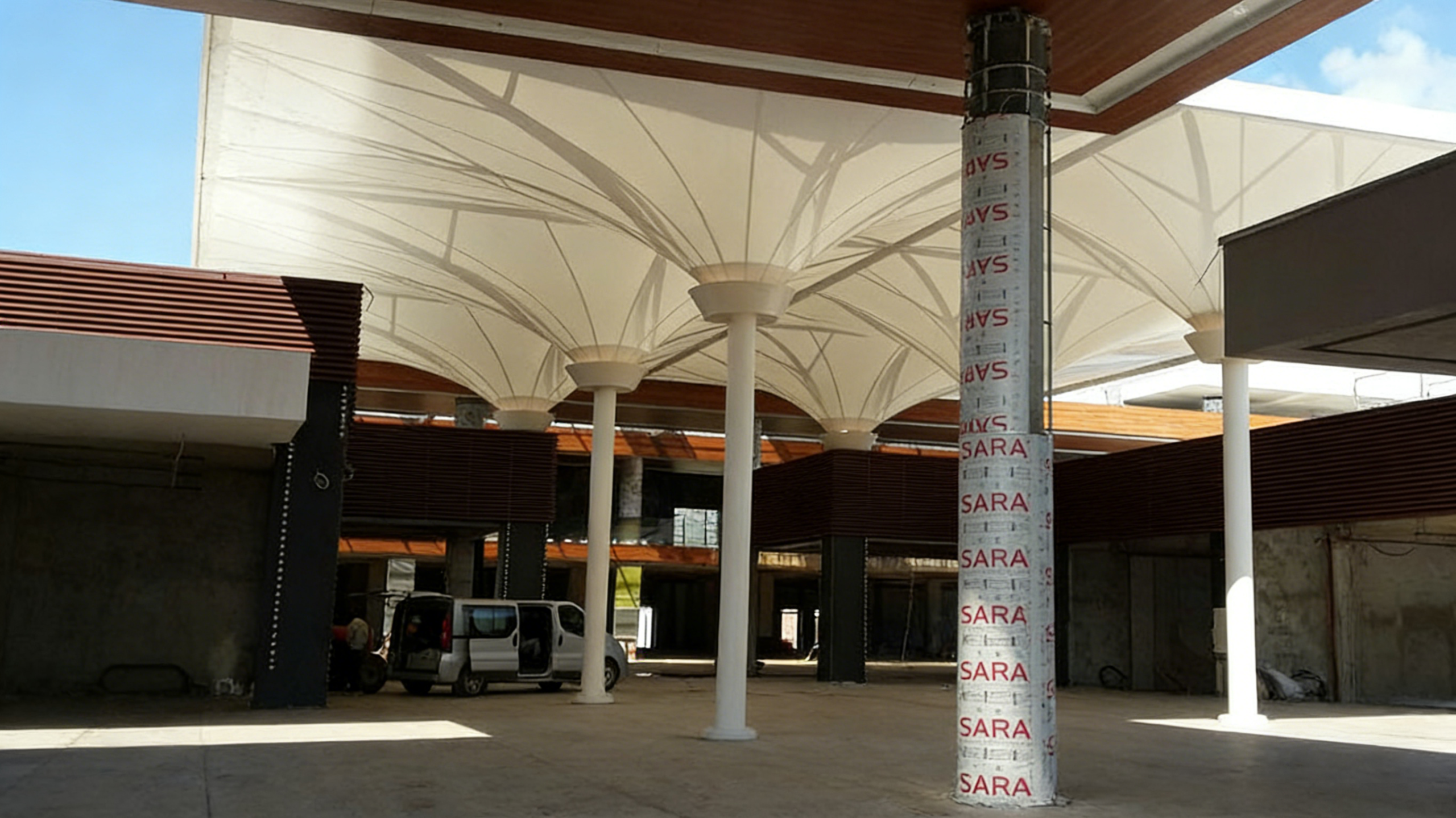
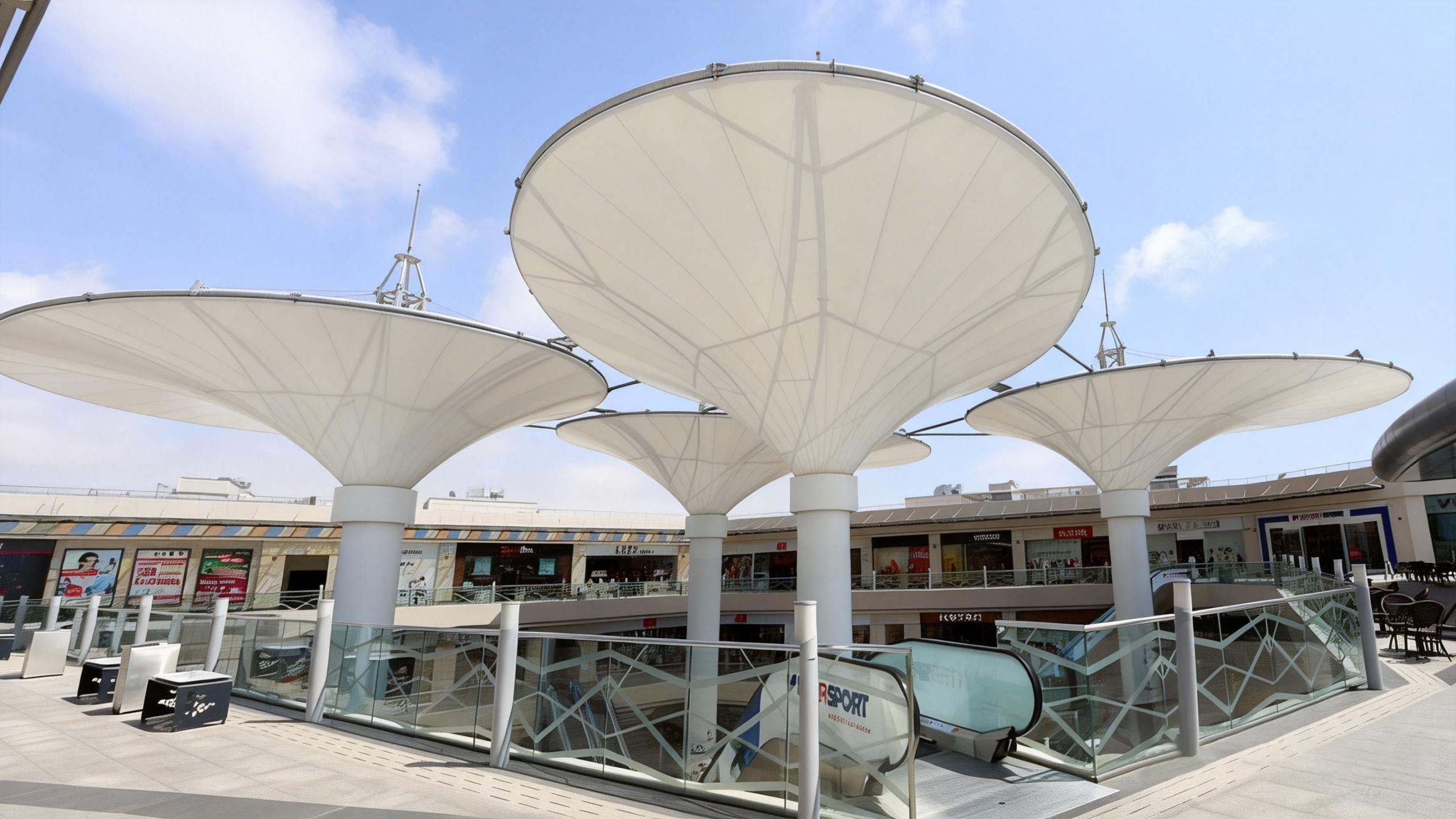
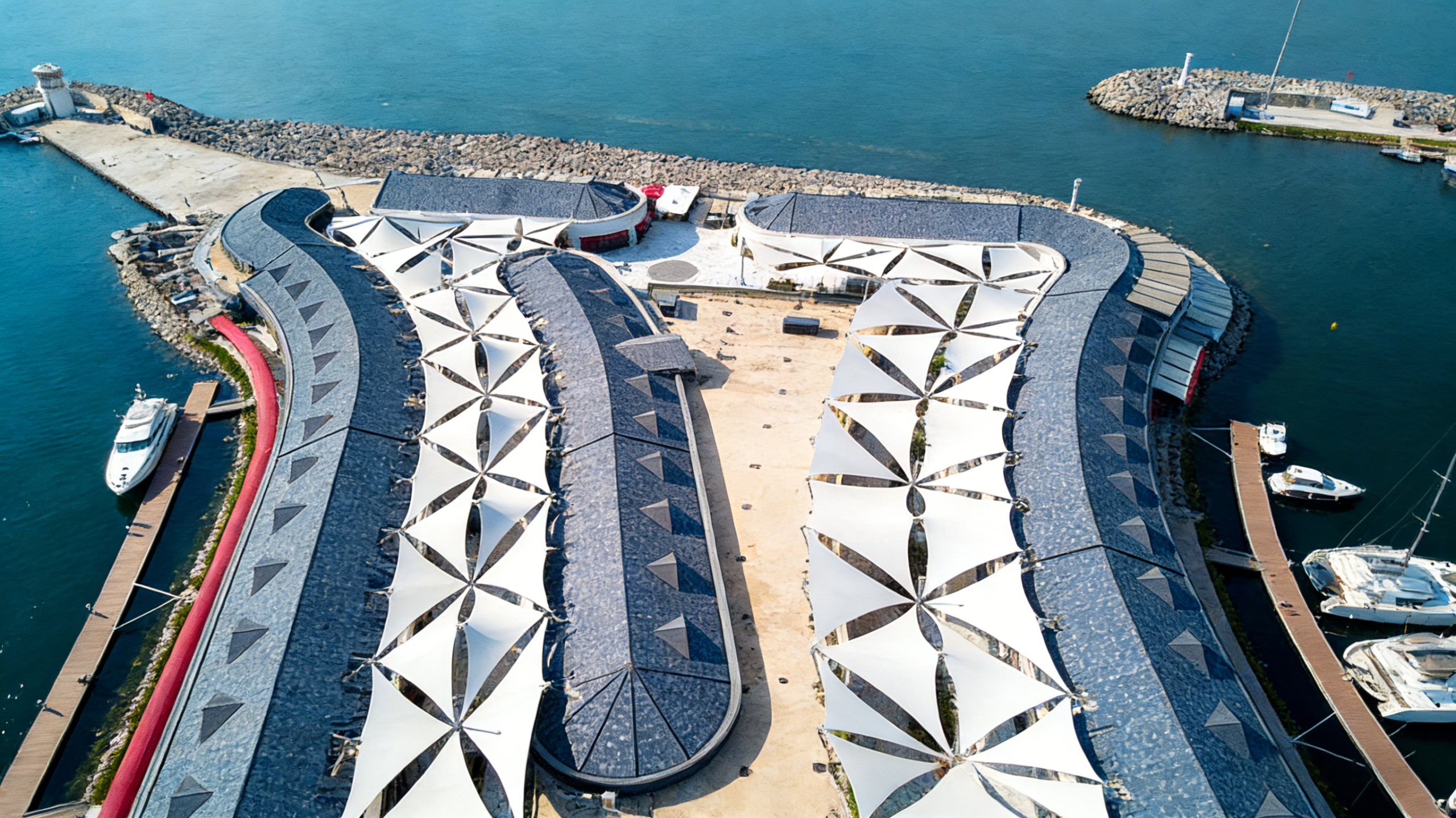
Entrance Canopies Designed Around the Real Site
Most entrance canopy projects start with one of three situations: the building already exists, the facade design is still being developed, or the contractor needs a canopy package that can be coordinated with other site works. In each case, the structure should be reviewed around the actual entrance condition rather than selected from a fixed model.
| Project Condition | What Needs to Be Checked | Why It Matters |
|---|---|---|
| Existing Building Entrance | Facade fixing points, column space, doorway width, wall condition and available installation area | Helps avoid conflict with glass walls, doors, signage, underground pipes or existing structures |
| New Commercial Building | Architectural drawings, entrance elevation, canopy projection, drainage route and lighting position | Allows the membrane canopy to be coordinated earlier with the facade and steel structure design |
| High-Traffic Public Entrance | Pedestrian flow, clear height, emergency access, rainwater discharge and safety clearance | Reduces obstruction and keeps the entrance area comfortable during rain or strong sunlight |
| Hotel or Drop-Off Area | Vehicle clearance, driveway width, column position and covered waiting area | Ensures the canopy works for both pedestrians and arriving vehicles |
| Retail Storefront | Store visibility, signboard position, brand color, lighting and customer waiting area | Improves entrance recognition without blocking the storefront display |
Custom Manufacturing by Drawings, Dimensions and Project Requirements
Entrance canopy membrane structures can be customized from architectural drawings, structural drawings, basic sketches, site photos or measured dimensions. If complete drawings are not available at the beginning, basic site information can still be used for an initial review.
- By drawings: architectural drawings, structural drawings, elevation drawings, shop drawings or concept sketches.
- By dimensions: entrance width, canopy projection, clear height, covered area and column spacing.
- By material: PVDF, PTFE, ETFE or project-suitable membrane material direction.
- By structure: wall-mounted, column-supported, cantilevered or combined support form.
- By building style: curved, arched, wave-like, flat or other architectural membrane forms.
- By project conditions: wind, rain, sun exposure, drainage, corrosion environment and installation access.
- By commercial use: lighting, logo, signage, color and facade coordination.
Technical Specification Reference
The following information is used as a project communication reference. Final configuration should be confirmed according to drawings, local requirements, site conditions and the agreed supply scope.
| Product Type | Custom Tensile Membrane Entrance Canopy |
|---|---|
| Typical Applications | Shopping malls, hotels, office buildings, restaurants, hospitals, exhibition centers, transport hubs and public entrances |
| Membrane Material Options | PVDF / PTFE / ETFE, selected according to project requirements |
| Steel Structure | Galvanized steel or structural steel frame, customized according to span and support method |
| Surface Treatment | Hot-dip galvanizing, powder coating or other project-specified treatment |
| Canopy Size | Customized according to entrance width, projection depth, clear height and covered area |
| Support Method | Column-supported, wall-connected, cantilevered or combined structure depending on site conditions |
| Drainage Design | Front drainage, side drainage, gutter coordination or project-specific rainwater discharge route |
| Appearance Options | Custom membrane shape, color direction, lighting position, logo and signage coordination |
| Quotation Basis | Drawings, dimensions, site photos, material selection, project location and supply scope |
Key Design Points for Entrance Membrane Canopies
1. Entrance Width and Projection Depth
The entrance width determines the basic coverage area, while the projection depth affects how far the canopy extends from the facade. For a small storefront, the focus is usually customer shelter and signboard coordination. For a hotel, office tower or public building, the canopy may also need to cover a waiting area, walkway or vehicle drop-off zone.
2. Clear Height and Traffic Flow
Clear height should be checked before confirming the membrane form and steel frame. A pedestrian-only entrance, a hospital entrance and a hotel drop-off area have different clearance requirements. The canopy should protect people from rain and sun without blocking doors, vehicles, signs, cameras or lighting equipment.
3. Column Position and Support Method
Some entrance canopies can use front columns. Others need a wall-connected or cantilevered structure because the ground space must remain open. The support method should be discussed together with the building facade, foundation condition, existing walls and installation access.
4. Drainage Direction
Drainage is one of the details that can affect daily use. Rainwater should not be discharged directly onto the main doorway, waiting area or pedestrian path. The membrane slope, gutter position and water discharge route should be planned before fabrication.
5. Facade, Lighting and Signage Coordination
For commercial entrances, the canopy often works together with brand signage, wall lights, glass facade, logo panels or storefront display areas. During customization, lighting and signage positions should be reviewed early so they do not conflict with membrane edges, steel members or drainage components.
Membrane Material Selection for Entrance Canopies
Material selection should match the project budget, design life expectation, light transmission requirement, appearance preference, maintenance plan and local outdoor environment. The table below provides a practical comparison for early project discussion.
| Material | More Suitable For | Project Notes |
|---|---|---|
| PVDF Membrane | Commercial entrances, mall canopies, hotel entrances, carports and general outdoor shade projects | A practical option when the project needs weather protection, flexible form design and controlled project cost. |
| PTFE Membrane | Higher-performance architectural entrances, public buildings and long-term membrane structure projects | Often considered when the project requires stronger architectural performance and more demanding outdoor use. |
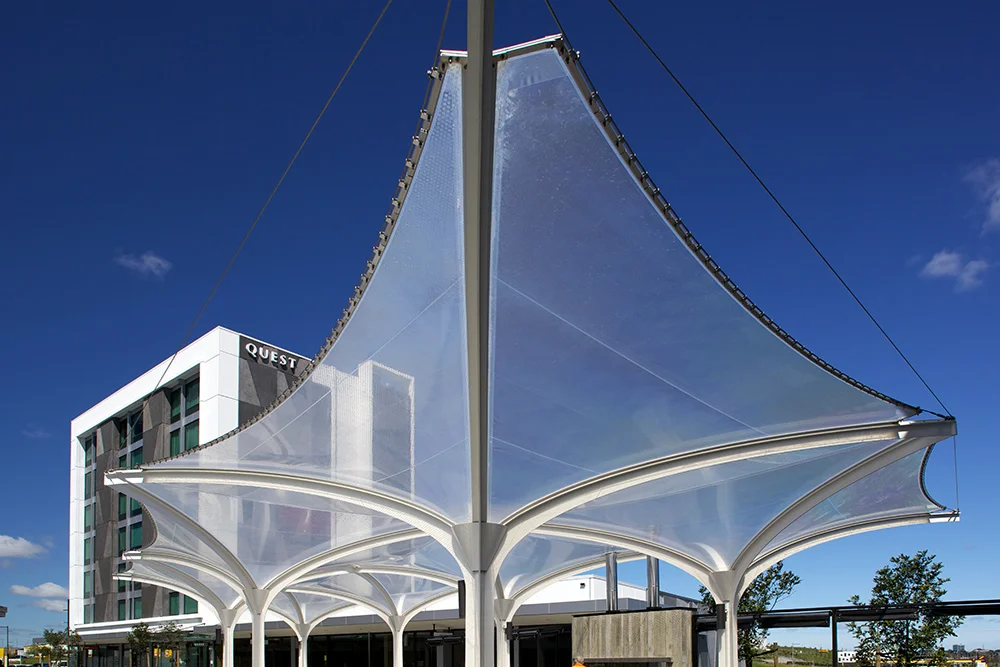
| ETFE Membrane | Entrances, atriums, skylight areas or canopies where light transmission and a modern visual effect are important | Suitable for projects that need a lighter, more transparent appearance instead of an opaque fabric roof. |
If you are not sure which material is suitable, you can send the project location, entrance size, photos, design effect and budget direction. We can help compare the material options during the quotation stage.
Application Scenarios
| Application | Common Requirement | Customization Focus |
|---|---|---|
| Shopping Mall Entrance | Large pedestrian flow, strong visual entrance and rain protection | Large coverage, facade matching, lighting, drainage and brand appearance |
| Hotel Entrance | Guest arrival area, vehicle drop-off and premium entrance image | Clear height, driveway coverage, column layout and elegant canopy form |
| Office Building Entrance | Daily pedestrian access and professional building image | Facade connection, simple structure, durable material and clean drainage |
| Restaurant or Café Entrance | Customer waiting area, storefront shading and entrance decoration | Compact size, color matching, signboard position and lighting integration |
| Hospital or Public Facility | Safe covered access for visitors, staff and patients | Clear passage, non-obstructive column layout and reliable rain protection |
| Exhibition Center or Transport Hub | High-traffic public access and large covered entrance area | Large span, structural coordination, drainage and installation sequence |
Manufacturing and Project Support
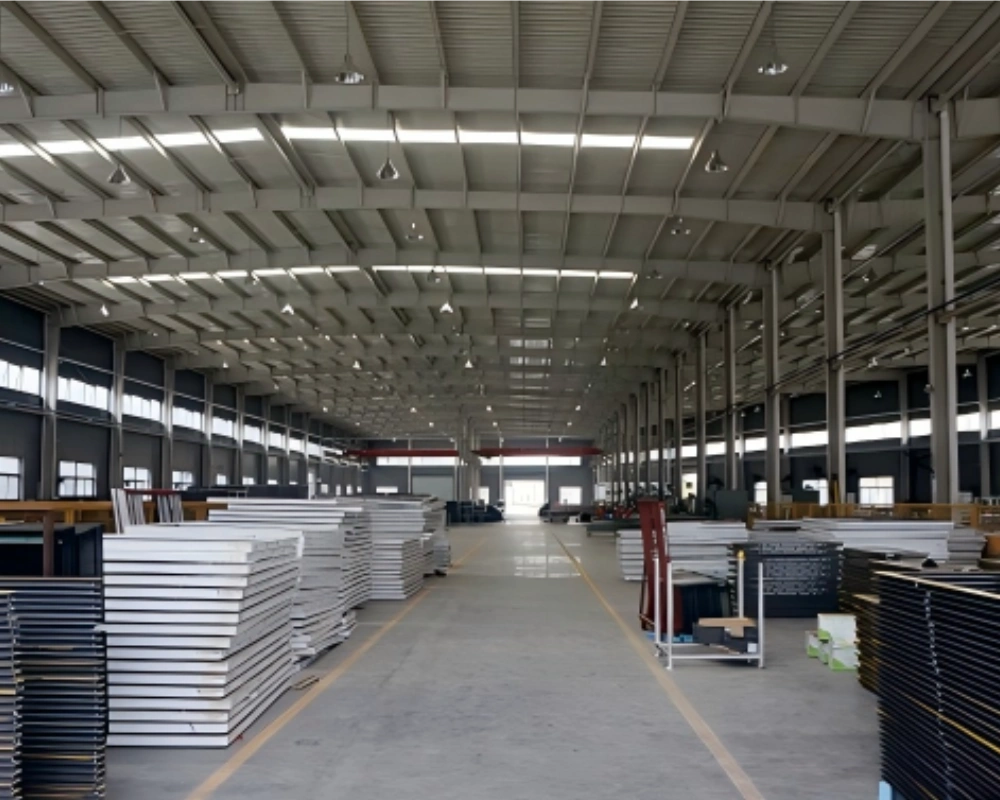
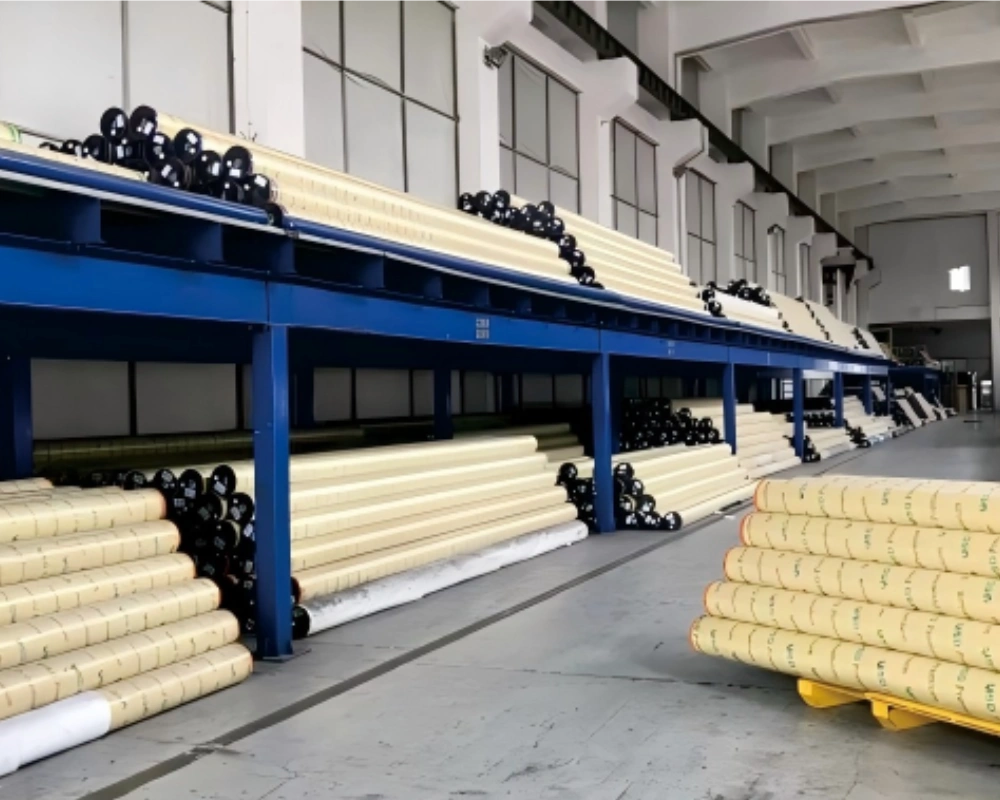
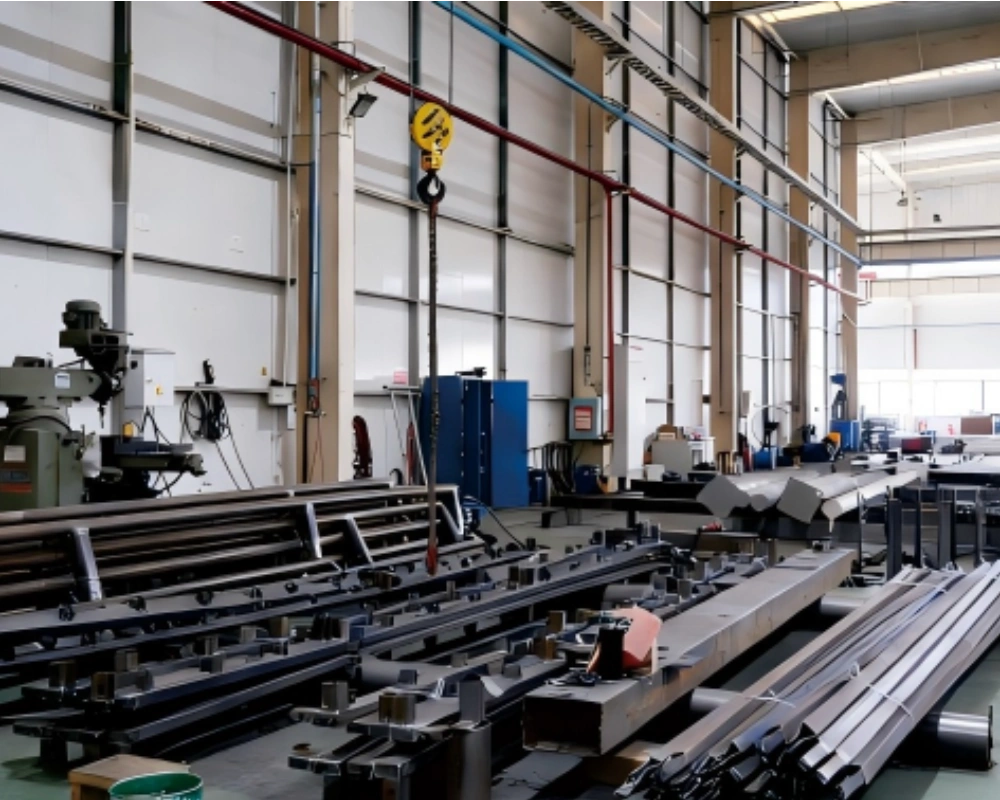
Timi supports membrane structure projects through design, manufacturing, installation and maintenance-related services. For entrance canopy projects, the work usually involves membrane form review, steel frame coordination, membrane cutting, component preparation, surface treatment coordination, packing and installation communication.
- Review of drawings, site photos, basic dimensions and entrance conditions before quotation.
- Customized membrane form according to building facade and architectural effect.
- Steel frame coordination based on span, support method, column layout and installation access.
- Membrane material selection according to outdoor exposure, appearance and project budget.
- Component labeling and packing support for project delivery and site assembly.
- Installation drawings or technical communication according to the agreed project scope.
For overseas projects, it is especially important to confirm drawings, component identification, packing method and installation sequence before shipment. This helps the local contractor understand how the membrane and steel components should be assembled on site.
What Affects the Quotation?
A membrane entrance canopy quotation is affected by more than the covered area. The structure form, material, steel frame, surface treatment, drainage details and delivery scope can all change the final cost.
| Quotation Factor | What to Confirm |
|---|---|
| Canopy Size | Entrance width, projection depth, covered area and clear height |
| Support Method | Wall-mounted, column-supported, cantilevered or combined support |
| Membrane Material | PVDF, PTFE, ETFE or other project-suitable membrane material |
| Steel Structure | Steel frame form, span, column layout, connection points and surface treatment |
| Drainage Details | Gutter position, water discharge route and coordination with the building entrance |
| Project Location | Wind, rain, snow, corrosion environment, local standards and shipping route |
| Supply Scope | Membrane only, steel frame, accessories, drawings, packing, shipment or installation support |
Information Needed Before Production
Before production, the canopy details should be checked carefully. This reduces the risk of wrong dimensions, blocked entrances, drainage problems or site installation conflicts.
- Final entrance dimensions and covered area
- Confirmed drawings or approved sketches
- Building facade condition and fixing position
- Column position and foundation condition if columns are required
- Membrane material, color and surface appearance
- Steel frame surface treatment requirement
- Drainage direction and gutter position
- Lighting, logo or signage requirements
- Packing, delivery and installation support requirements
Why Work with Timi for Custom Entrance Canopies?
Entrance membrane canopy projects require coordination between architectural appearance, steel structure, membrane material, fabrication details and site installation. Timi focuses on membrane structure buildings, membrane materials and tensile membrane systems, with services covering design, production, installation and maintenance-related support.
- Experience with commercial, public, shading and architectural membrane structure applications.
- Custom production based on drawings, dimensions, materials and project requirements.
- Support for PVDF, PTFE, ETFE and project-suitable membrane material selection.
- Coordination of membrane form, steel frame, drainage and installation details.
- Project communication for contractors, architects, developers and overseas buyers.
FAQ About Entrance Canopy Membrane Structures
Can the entrance canopy be fixed to an existing building facade?
In many projects, the canopy can be coordinated with an existing facade, but the fixing method must be checked according to the wall condition, structural support points, entrance width and installation access. Please send site photos and drawings for review.
Can you manufacture the canopy according to our drawings?
Yes. You can provide architectural drawings, structural drawings, elevation drawings, sketches or basic dimensions. The canopy shape, membrane material, steel frame, drainage and connection details can be reviewed based on your project information.
What if we do not have complete drawings?
You can send entrance width, projection depth, clear height, site photos, project location and a simple sketch. This is usually enough for the first discussion. More detailed drawings can be confirmed before production.
Which membrane material is better for a commercial entrance?
PVDF is often used for practical outdoor canopy projects. PTFE can be considered for higher-performance architectural applications. ETFE is suitable when light transmission and a modern transparent effect are important. The final choice should depend on project budget, appearance, outdoor exposure and design requirements.
How is rainwater handled on a membrane entrance canopy?
Rainwater discharge should be planned according to the canopy slope, membrane form, gutter position and site drainage route. The design should avoid discharging water directly onto the entrance, waiting area or main pedestrian path.
Can the canopy cover a vehicle drop-off area?
Yes, but vehicle clearance, driveway width, turning space, column position and covered waiting area need to be confirmed before design and quotation. This is especially important for hotels, hospitals and public building entrances.
Can lighting, logo or signage be added?
Lighting, logo and signage can be considered during the customization stage. These details should be confirmed early so they do not conflict with the membrane edge, steel frame, drainage route or maintenance access.
What information should we provide for quotation?
Please provide project location, application, entrance dimensions, drawings or site photos, preferred material, color requirement, support method if known, drainage requirement and expected supply scope.
Request a Custom Entrance Canopy Membrane Structure
If you are planning an entrance canopy for a shopping mall, hotel, office building, restaurant, hospital, exhibition center, transport hub or public facility, send us your drawings, dimensions, site photos and material requirements. We can review the canopy form, support method, membrane material and quotation details according to your project conditions.