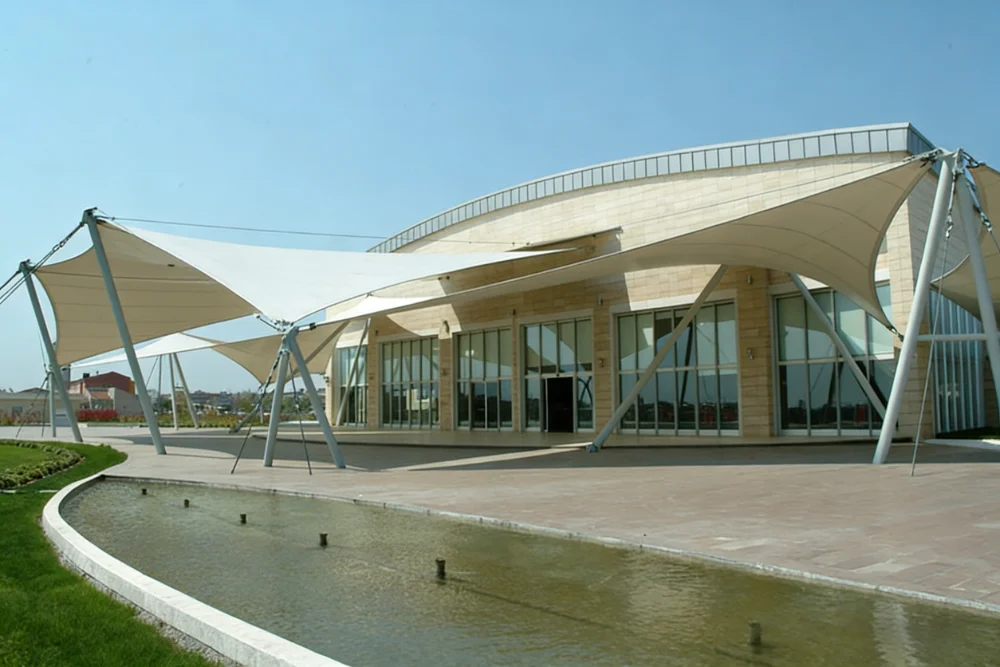
Covered Walkway Canopies for Daily Pedestrian Routes
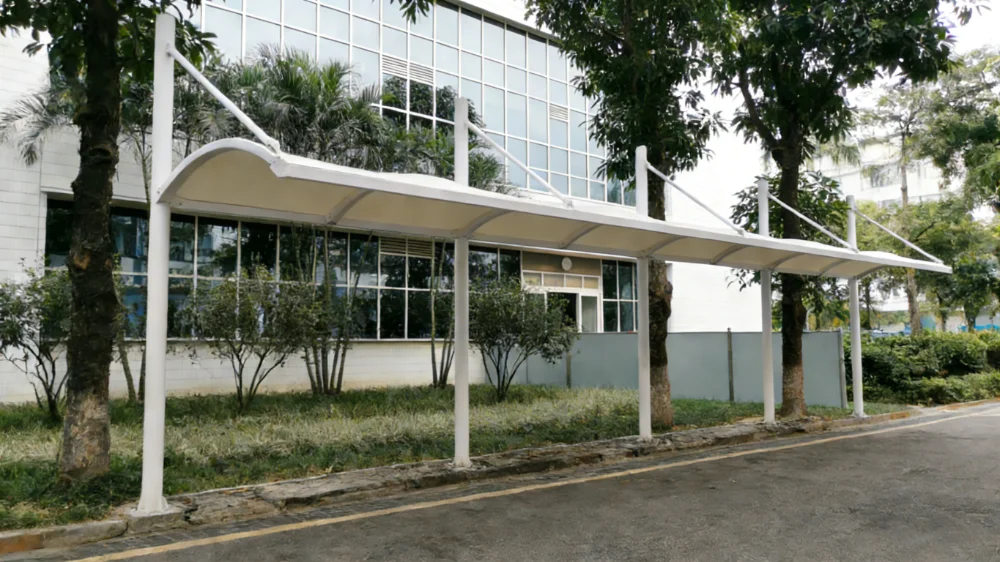
Covered walkway canopy systems are used for schools, campuses, residential communities, commercial buildings, transport connections, industrial sites, and public pedestrian routes where people need reliable protection from sun and rain during daily movement.
A walkway canopy is different from a general shade structure. It must follow the actual route, maintain safe clearance, avoid blocking entrances, support smooth pedestrian flow, and manage rainwater properly along long or narrow circulation areas. For many projects, the canopy also needs to connect different buildings, parking areas, bus stops, courtyards, or public facilities without making the route feel closed or visually heavy.
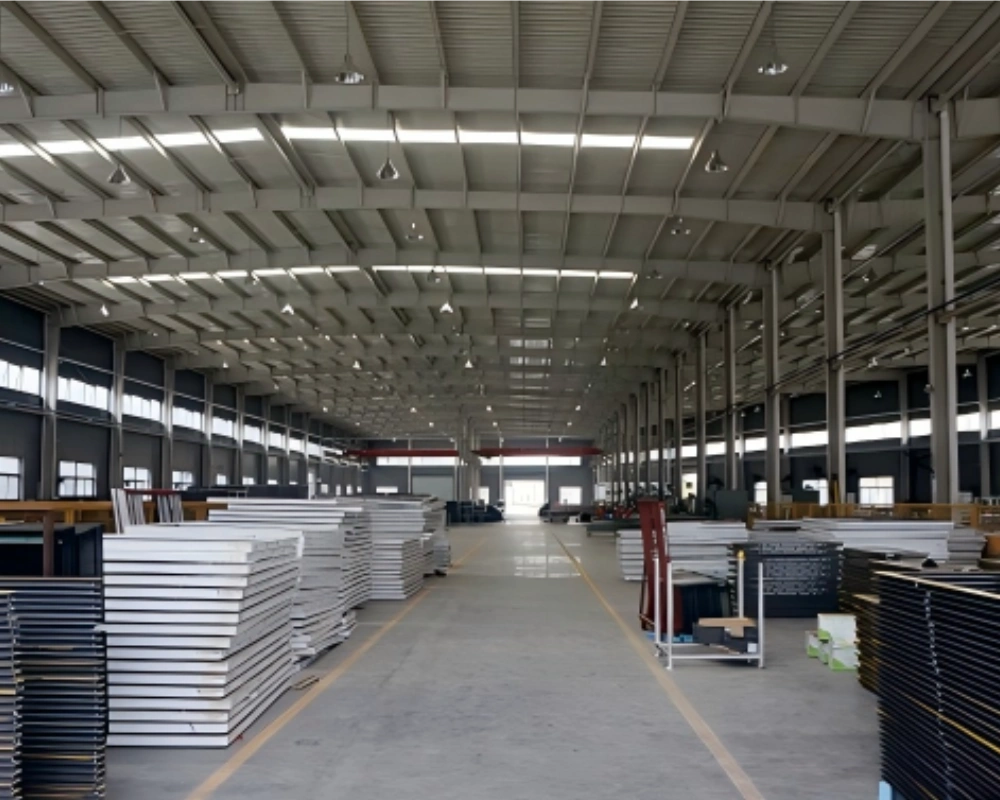
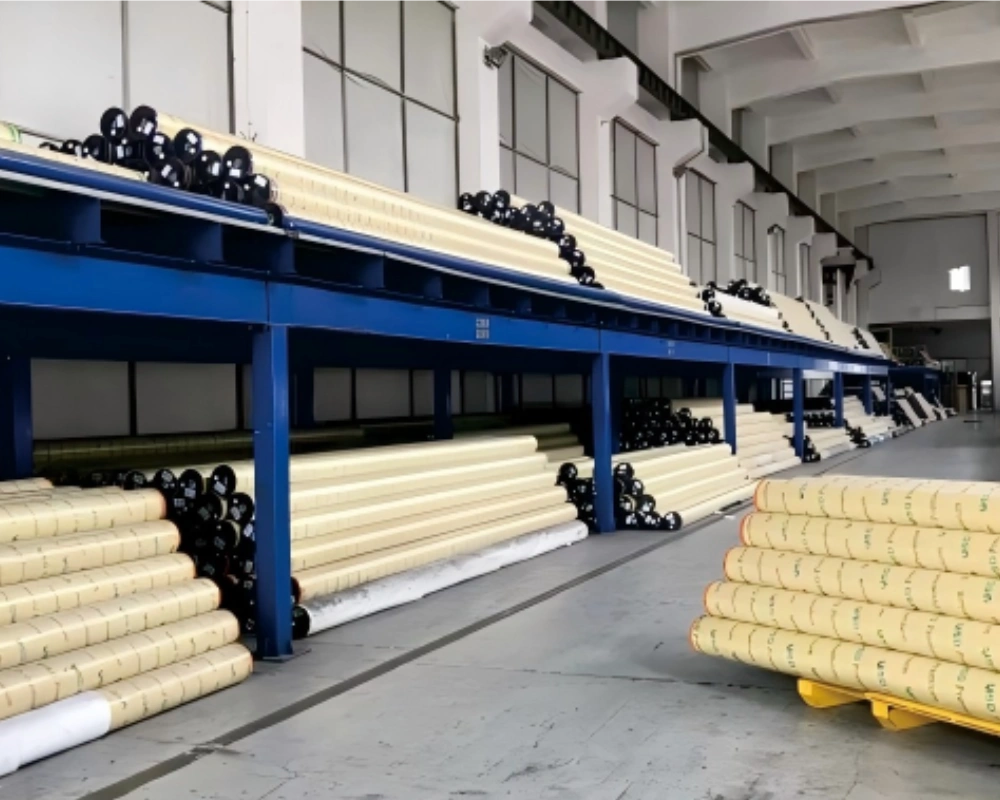
Timi supports custom tensile walkway cover projects with membrane material selection, steel frame coordination, support layout review, drainage planning, fabrication preparation, export packing, and installation-related documentation. For overseas projects, we help buyers review the canopy as a complete pedestrian circulation structure, not only as a fabric roof.
Where Covered Walkway Canopy Systems Are Used
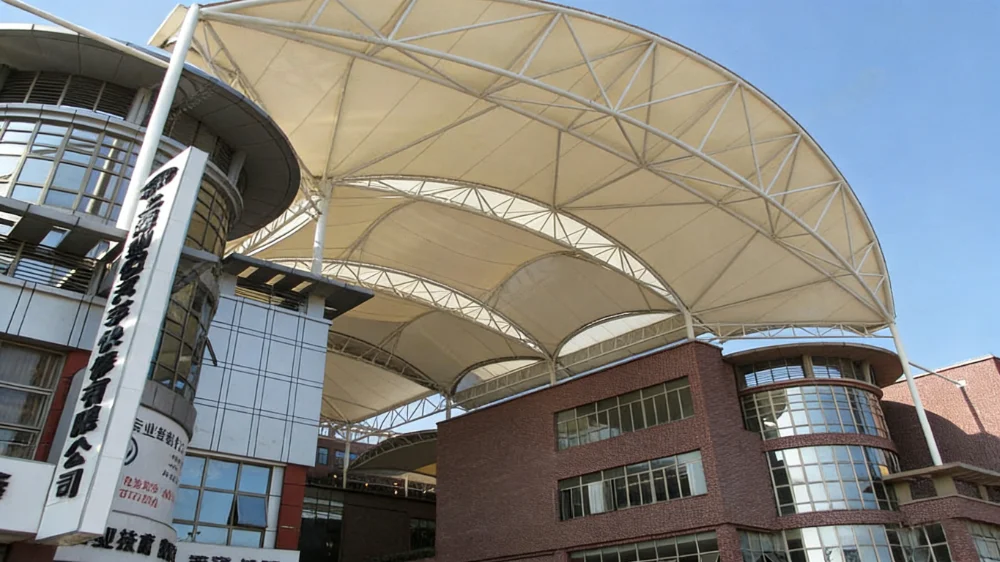
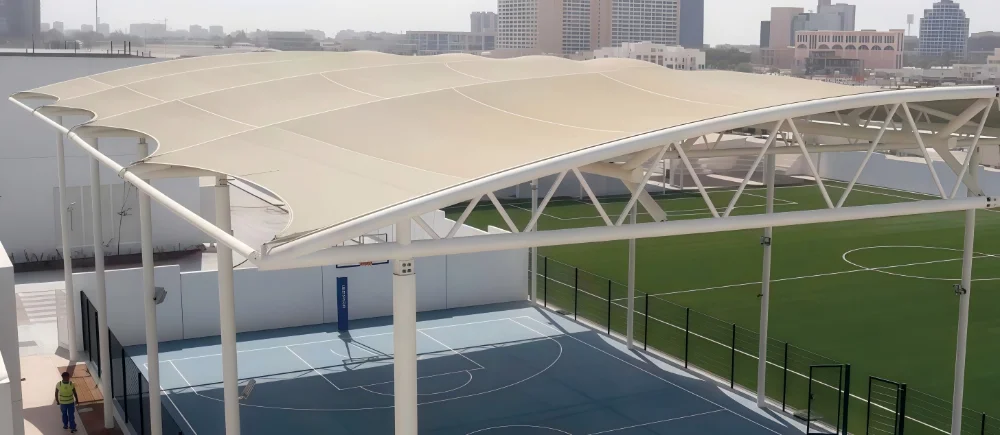
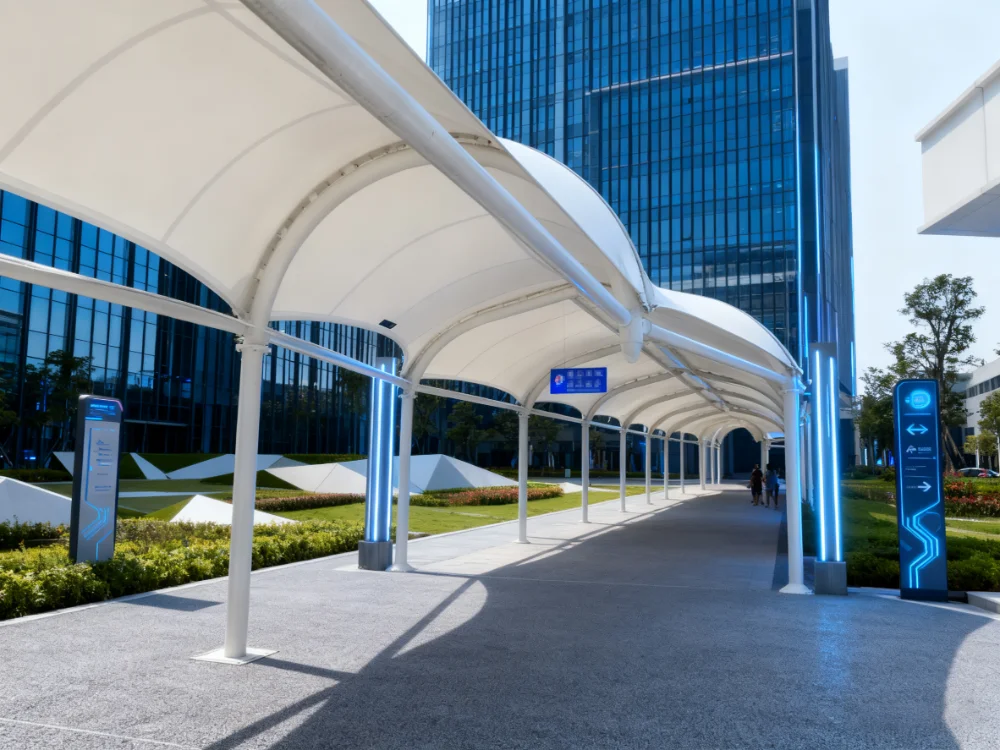
Covered walkway canopies can be adapted to straight routes, linked passages, curved paths, building entrances, outdoor corridors, and long pedestrian connections. The layout should be based on how people move through the site and how the canopy connects with surrounding buildings.
| Application Area | Typical Design Focus |
|---|---|
| School Walkways | Covered routes between classrooms, dormitories, sports areas, dining halls, and pick-up zones |
| Campus Connections | Long pedestrian links between buildings, courtyards, car parks, and public activity areas |
| Commercial Access Routes | Weather protection for shopping centers, office parks, hotels, and mixed-use developments |
| Residential Communities | Covered pedestrian routes between entrances, parking areas, gardens, and community facilities |
| Transport Links | Walkway covers for bus stops, station entrances, parking connections, and public transfer routes |
| Industrial Circulation Areas | Covered routes for staff movement, loading access, equipment areas, and plant circulation |
| Public Corridors | Pedestrian covers for parks, plazas, civic buildings, and municipal facilities |
| Building Entrances | Canopy extensions for entrance approaches, drop-off zones, and outdoor waiting areas |
For example, a school walkway may focus on safety, daily traffic, and clear routes for students. A commercial walkway may require a cleaner architectural appearance and better connection with façades. A transport link usually needs stronger attention to rainwater discharge, crowd movement, and long-term outdoor durability.
Design Points That Should Be Confirmed Early
Walkway canopy projects often look simple at first, but many details affect whether the structure works well after installation. Width, column position, drainage, turning points, entrance alignment, and installation access should be reviewed before quotation and fabrication.
Key points to confirm include:
- Total route length and required covered width
- Pedestrian flow during normal and peak use
- Clear height for people, vehicles, signs, lighting, or service access
- Straight, curved, angled, or linked route layout
- Column positions and safe pedestrian clearance
- Building entrances, doors, windows, façades, and existing walls
- Drainage slope, gutter direction, and final water discharge point
- Ground paving, underground utilities, and foundation restrictions
- Lighting, signage, CCTV, landscaping, and public furniture conflicts
- Wind exposure, rainfall, snow load, or coastal humidity
- Maintenance access for cleaning and inspection
- Installation route, lifting access, and available site working space
For long pedestrian routes, drainage should be considered especially carefully. Poor water discharge can cause dripping at entrances, slippery walking surfaces, or water accumulation near columns and foundations.
Membrane Material Options
Different walkway canopy projects may require different membrane materials depending on project budget, expected service life, appearance, daylight control, fire requirements, and local exposure conditions.
PVC/PVDF Membrane
PVC/PVDF membrane is commonly used for covered walkways, school canopy systems, commercial pedestrian covers, residential community walkways, and general outdoor corridor projects. It provides practical weather resistance, flexible form options, and controlled project cost.
This material is often suitable when the project needs a durable, lightweight, and cost-controlled walkway cover for daily use.
PTFE Membrane
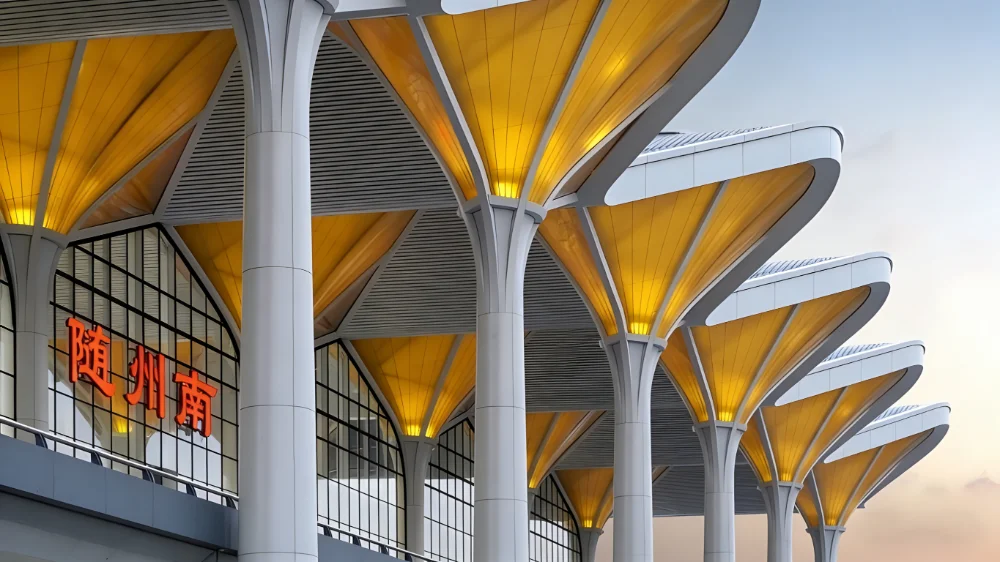
PTFE membrane can be considered for larger, more permanent, or higher-specification walkway canopy projects. It offers stronger long-term weather resistance and is suitable for public buildings, transport facilities, and projects with higher durability expectations.
ETFE Film
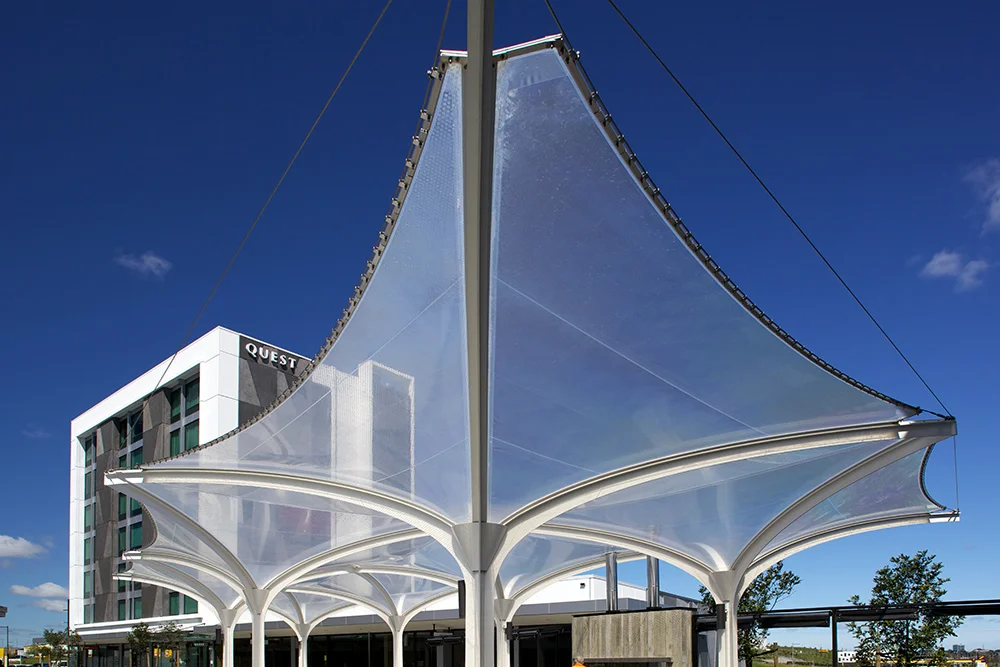
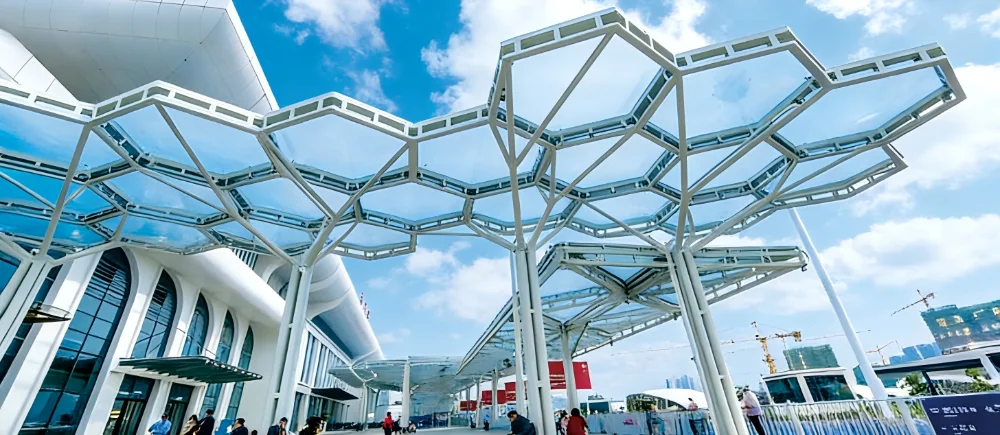
ETFE can be used where transparency, daylight transmission, or a lighter architectural roof effect is required. It is suitable for selected pedestrian corridors, atrium-connected walkways, public links, and projects where natural light is an important design requirement.
Material selection should not only depend on appearance. Buyers should also consider UV exposure, fire performance requirements, cleaning access, budget range, local climate, and expected service life.
Steel Frame, Support Layout, and Drainage Coordination
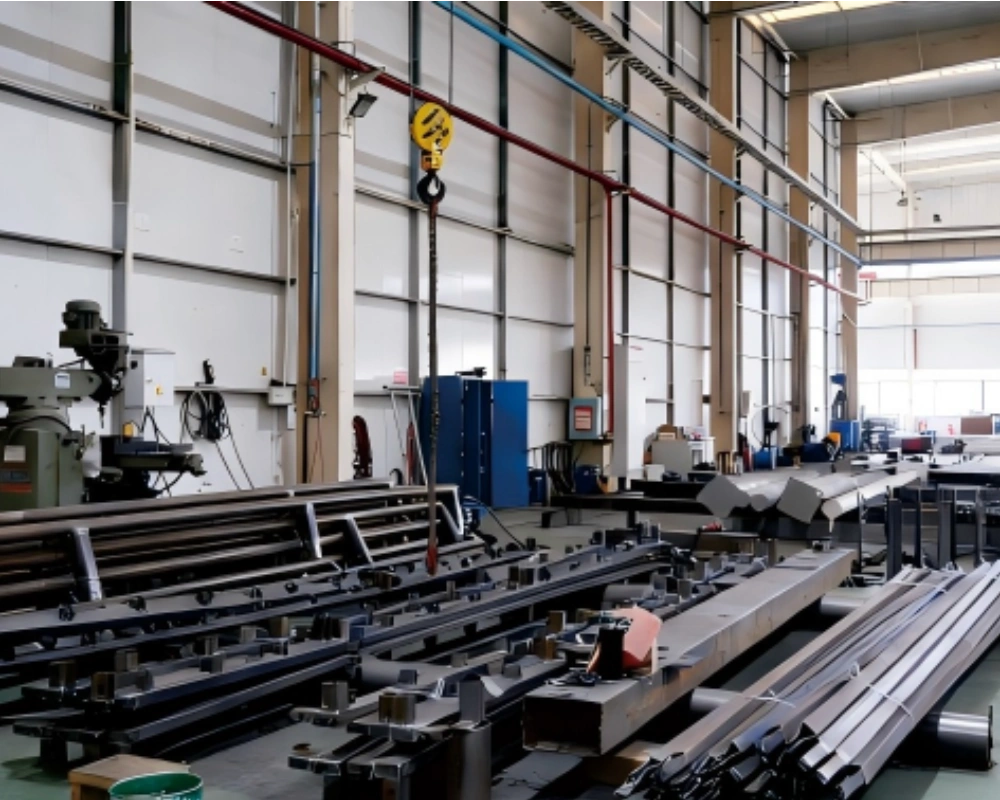
The steel support frame determines how the walkway canopy fits the route. For long or narrow pedestrian spaces, the frame should provide stability without creating obstacles or unsafe pinch points.
Important steel and layout details include:
- Single-side or double-side column arrangement
- Cantilever, arched, or frame-supported canopy layout
- Column spacing along the route
- Connection between membrane edges and steel members
- Base plate and anchor bolt arrangement
- Drainage-related steel detailing
- Hot-dip galvanizing or coating specification
- Frame color and surface finish
- Component marking for site installation
- Packing sequence for overseas delivery
For schools, commercial sites, and public routes, column placement must be handled carefully. Supports should not block main entrances, emergency access, wheelchair routes, vehicle drop-off areas, or high-traffic walking paths.
Custom Layouts for Straight, Linked, or Curved Routes
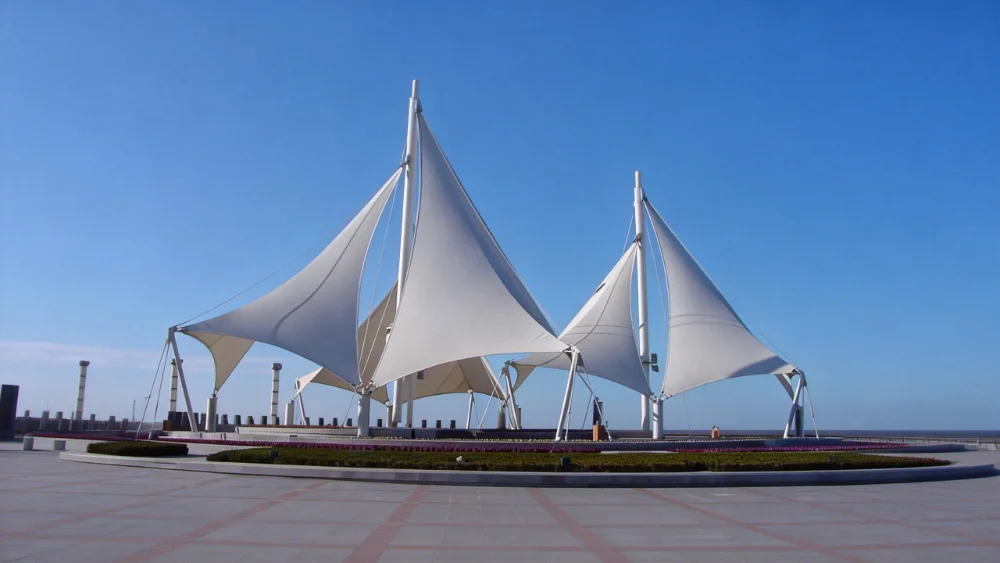
Covered walkway canopy systems are often customized because each site has different route geometry and surrounding conditions. Some projects need a simple repeated canopy system, while others require a canopy that follows a curved path, connects several buildings, or passes around existing landscape features.
Timi can support different walkway canopy directions, including:
- Straight walkway canopy runs
- Repeated modular canopy bays
- Curved pedestrian walkway covers
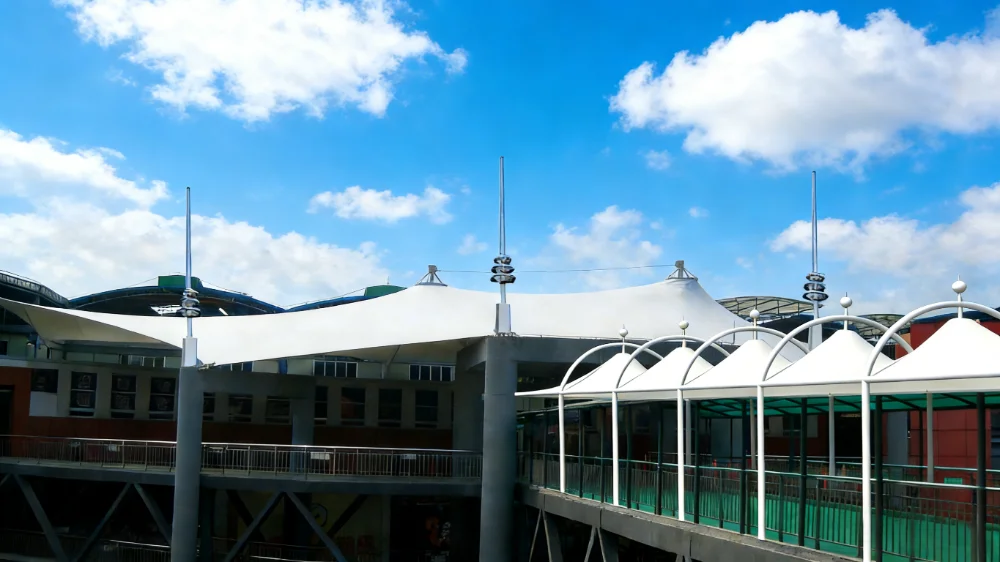
- Linked canopies between buildings
- Entrance-connected canopy extensions
- Cantilever walkway canopy concepts
- Open-sided covered corridors
- School and campus walkway systems
- Commercial access route canopies
- Custom steel frame colors and finishes
- Drainage and gutter coordination
- Layout adjustment around doors, walls, trees, lighting, or site restrictions
A good walkway canopy should look clean, but it also needs to be practical for fabrication, shipment, installation, drainage, and long-term public use.
Fabrication and Overseas Project Support
Timi supports covered walkway canopy projects from early communication to fabrication and shipment preparation. For overseas buyers, clear component marking, drawing coordination, and packing logic are important because local contractors often handle foundation and installation after the goods arrive on site.
Project support may include:
- Reviewing drawings, site photos, or route sketches
- Confirming suitable membrane material options
- Coordinating steel frame and membrane connection details
- Reviewing route width, column layout, and drainage direction
- Preparing components according to confirmed drawings
- Marking membrane and steel components for site installation
- Supporting packing and loading for overseas shipment
- Providing installation-related drawings or technical communication
For long walkway projects, organized component marking is especially important. It helps local contractors identify repeated bays, connection points, column positions, and installation sequence more easily.
Related Engineering Support
Covered walkway canopy systems should be evaluated as complete outdoor structures. In addition to the visible membrane roof, buyers may also need to review foundation, material selection, steel frame protection, drainage, installation logic, and documentation requirements.
Related support topics include:
- Foundation conditions for tensile membrane structures
- PVDF, PTFE, and ETFE material selection
- Steel support structure and corrosion protection
- On-site project management for membrane structures
- Quality assurance and documentation support
- Engineering compliance for local project requirements
These factors help project teams reduce uncertainty before production and installation.