لا يقتصر اختيار مادة الغشاء المستخدمة في الهياكل الشدّية على مجرد الاختيار بين PVDF وPTFE وETFE. بل يتعين على المشترين أيضًا تقييم تركيبة المادة، والأداء الهيكلي، ومتطلبات السلامة من الحرائق، ونفاذية الضوء، وطرق التصنيع، وأنظمة الدعم الفولاذية، والصيانة على المدى الطويل.
يجب أن تتوافق المواصفات المناسبة للأغشية مع موقع المشروع، ووظيفة المبنى، وظروف التشغيل المتوقعة، ومعايير البناء المحلية. يشرح هذا الدليل الاختلافات الرئيسية في المواصفات بين أنظمة الأغشية المصنوعة من PVDF وPTFE وETFE، ويسلط الضوء على المعلومات الفنية التي يجب على المشترين التأكد منها قبل تقديم الطلب.
فهم الأنظمة الثلاثة لمواد الأغشية
نسيج بوليستر مطلي بالـ PVC مع طبقة خارجية من الـ PVDF
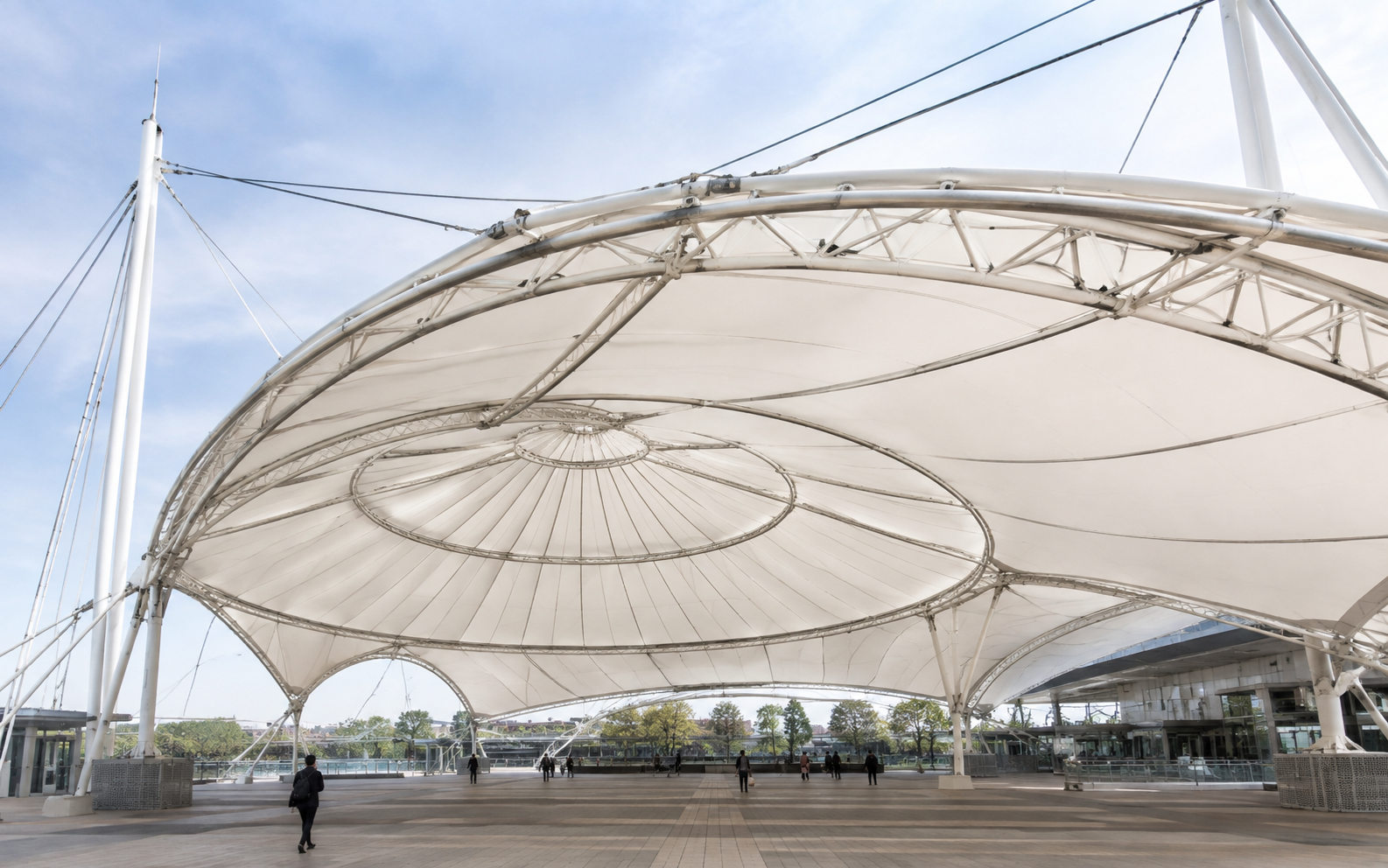
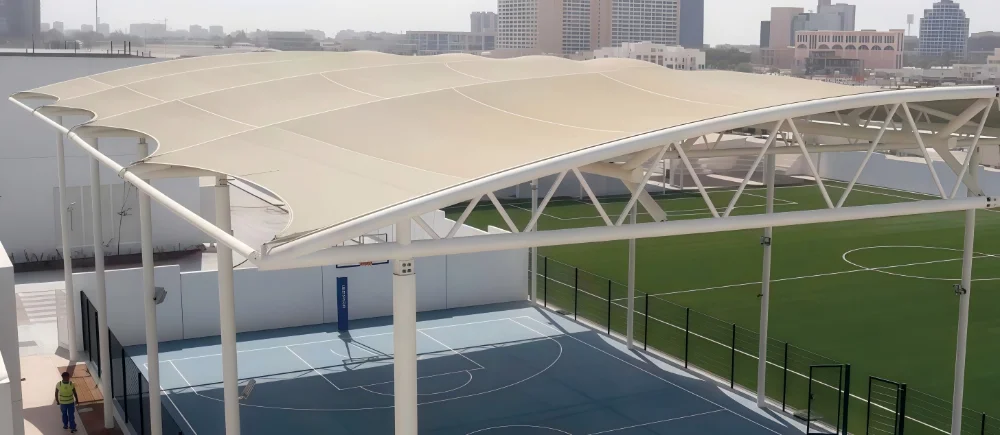
يشير مصطلح «غشاء PVDF» عمومًا إلى نسيج أساسي من البوليستر مطلي بالـ PVC ومُغطى بطبقة سطحية واقية من مادة PVDF. ويُستخدم على نطاق واسع في المظلات التجارية، ومواقف السيارات المغطاة، والممرات المغطاة، وهياكل المداخل، والمسارح الخارجية، والأسقف الشدّية ذات الامتداد الصغير إلى المتوسط.
يوفر النسيج الأساسي المصنوع من البوليستر قوة الشد، بينما يعزز طلاء البولي فينيل كلوريد (PVC) مقاومة العوامل الجوية وقابلية اللحام. وتساعد الطبقة الخارجية المصنوعة من البولي فينيل فلوريد (PVDF) على تقليل تلوث السطح وتعزز مقاومة التعرض للأشعة فوق البنفسجية.
غالبًا ما يتم اختيار غشاء PVDF عندما يتطلب المشروع تصميمًا مرنًا، وتصنيعًا فعالًا، واستثمارًا تنافسيًّا، ودورة إنتاج قصيرة نسبيًّا.
غشاء من الألياف الزجاجية المطلي بـ PTFE
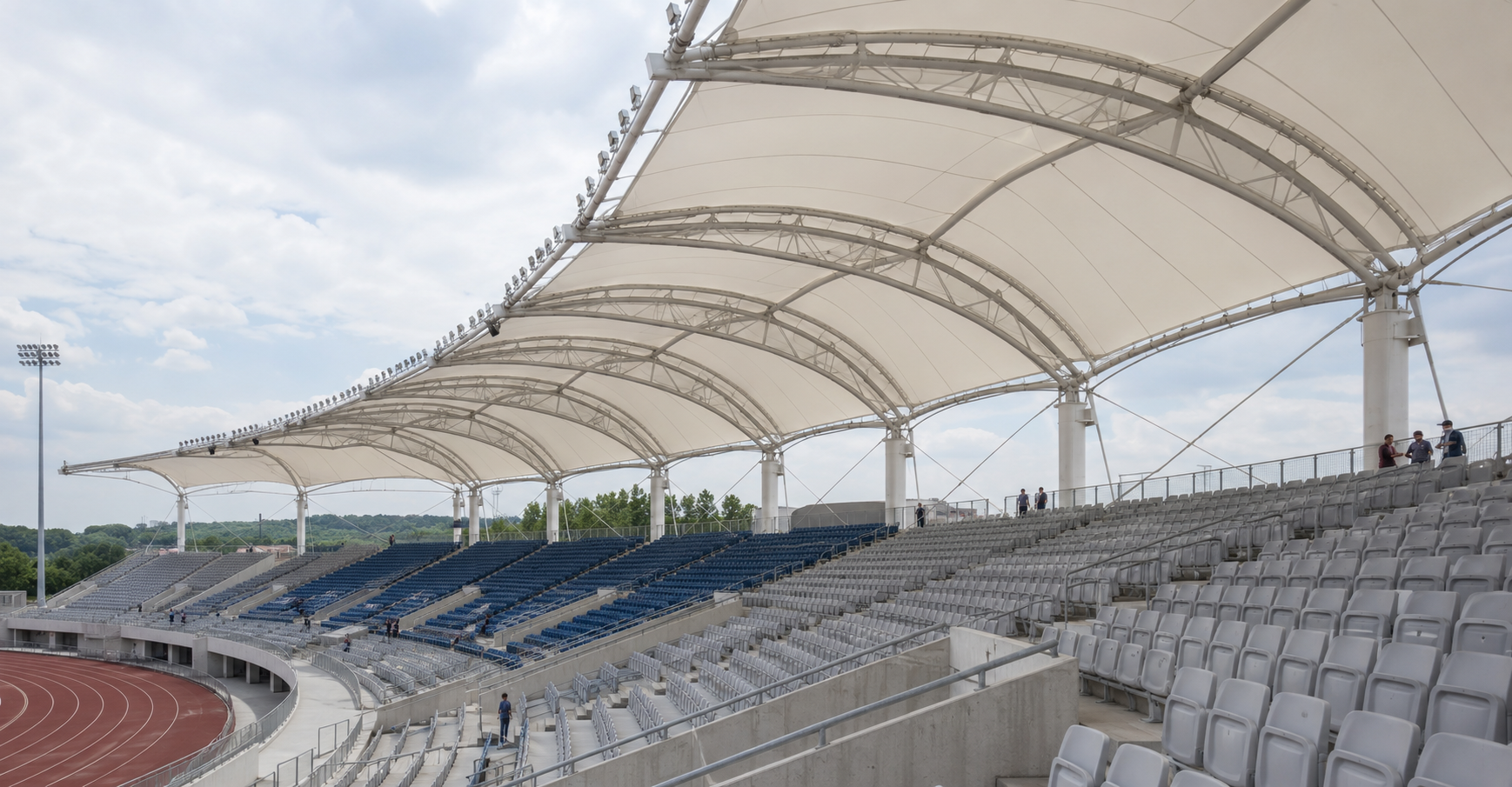
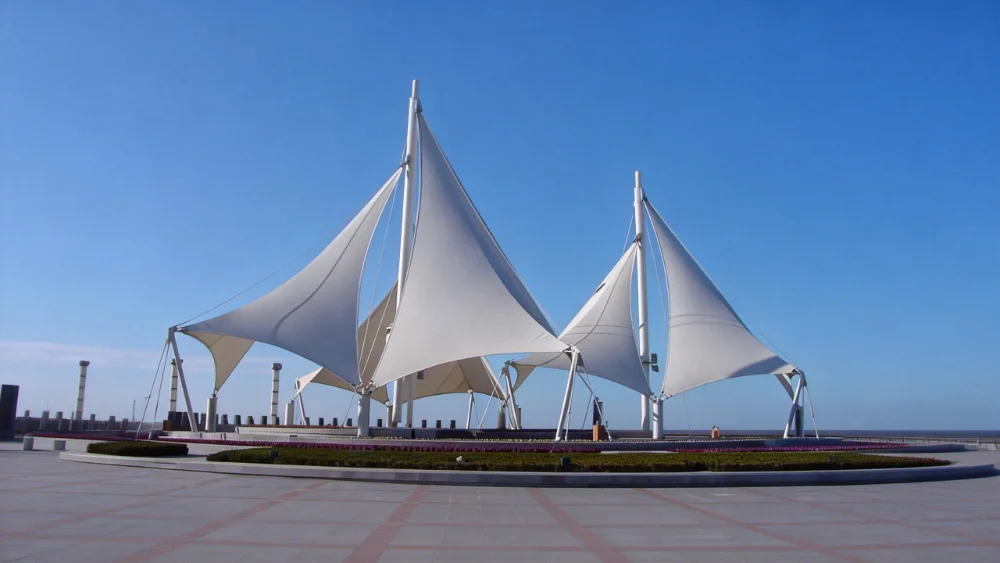
يستخدم غشاء البولي تيترافلوروإيثيلين (PTFE) الألياف الزجاجية المنسوجة كأساس هيكلي، بينما يُستخدم البولي تيترافلوروإيثيلين (PTFE) كطبقة واقية. ويُستخدم هذا الغشاء عمومًا في المنشآت العامة الكبيرة أو طويلة الأمد، بما في ذلك أسقف الملاعب، ومباني المطارات، ومحطات السكك الحديدية، وقاعات المعارض، ومراكز النقل.
بالمقارنة مع مواد الأغشية المصنوعة من البوليستر، يتميز نسيج الألياف الزجاجية بثبات أبعاد عالٍ ومعدل استطالة منخفض. وهذا يجعل مادة PTFE مناسبة للهياكل ذات المسافات الكبيرة بين الدعامات التي تتطلب أداءً مستقرًا على المدى الطويل.
تتطلب الأغشية المصنوعة من مادة PTFE عادةً إجراءات متخصصة في القطع واللحام والتركيب والشد. وينبغي تصميم الهيكل الفولاذي الداعم وتفاصيل الوصلات كجزء من نظام الأغشية الكامل.
أنظمة رقائق ووسائد ETFE
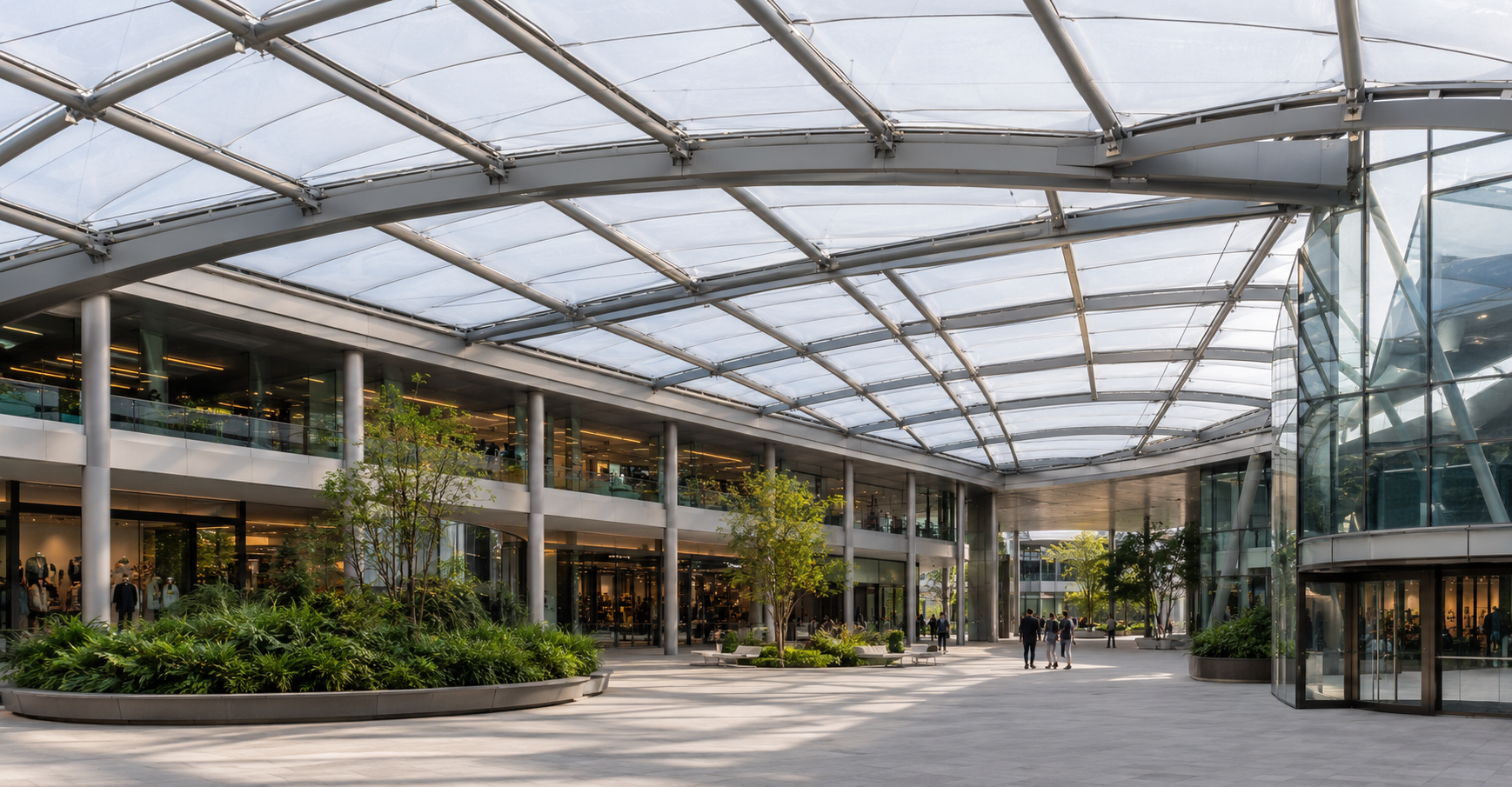
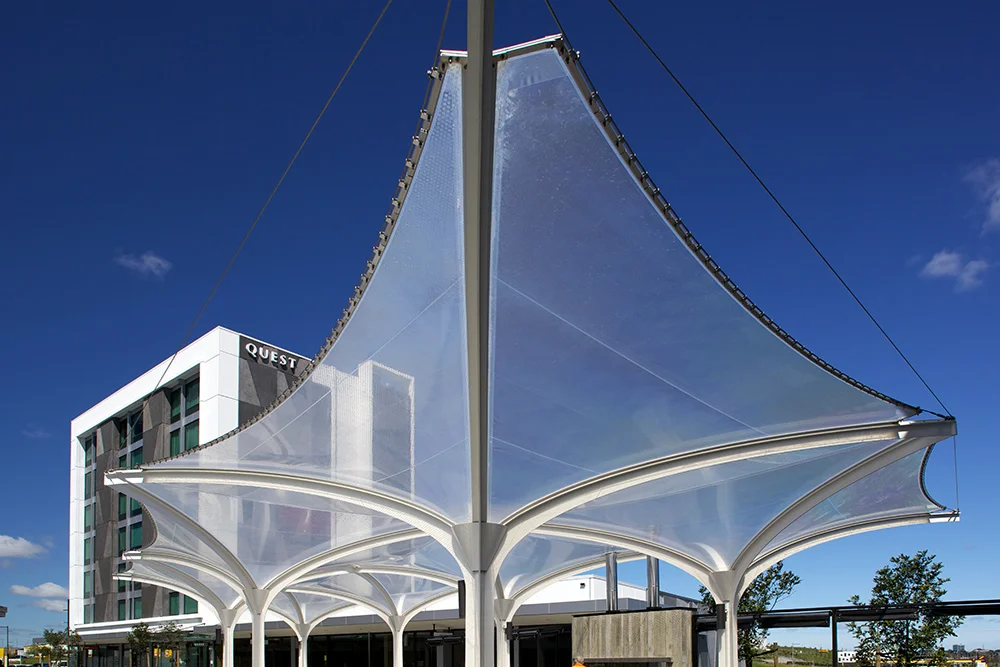
ETFE عبارة عن رقائق من البوليمر الفلوري الشفافة أو الشفافة جزئيًا، وليست نسيجًا غشائيًّا منسوجًا. وتُستخدم بشكل متكرر في الأتريوم، والمناور، والأسقف الشفافة، وواجهات المباني، والحدائق النباتية، والمساحات العامة التجارية.
يمكن تركيب مادة ETFE كنظام رقائق أحادي الطبقة أو كنظام وسائد هوائية متعدد الطبقات. وتشمل أنظمة الوسائد عادةً مقاطع الألمنيوم، ومكونات الإحكام، ومعدات تزويد الهواء، وأجهزة الاستشعار، وأجهزة التحكم.
ونظرًا لأن مادة ETFE خفيفة الوزن وشديدة الشفافية، فإنها تقلل من «الوزن البصري» لهيكل السقف، بينما تسمح في الوقت نفسه بدخول ضوء النهار الطبيعي إلى المبنى. ومع ذلك، يجب أن يأخذ تصميم النظام بأكمله في الاعتبار ضغط الرياح، وحمل الثلوج، والتصريف، والتحكم في النفخ، والأداء الصوتي، واكتساب الحرارة الشمسية.
تعرف على المزيد عن
أنظمة الأسقف والواجهات المصنوعة من مادة ETFE
مقارنة مواصفات PVDF وPTFE وETFE
| بند المواصفات | نسيج بوليستر مطلي بـPVC مع طبقة تشطيب سطحية من PVDF | نسيج ألياف زجاجية مطلي بـPTFE | رقائق ETFE |
|---|---|---|---|
| البناء الأساسي | نسيج بوليستر مطلي بطبقة من البولي فينيل كلوريد (PVC) ومعالج سطحياً بمادة البولي فينيل فلوريد (PVDF) | نسيج من الألياف الزجاجية مطلي بـ PTFE | رقائق فلوروبوليمر شفافة أو مطبوعة |
| النموذج النموذجي للنظام | غشاء قماشي مشدود | غشاء قماشي مشدود | رقائق أحادية الطبقة أو وسادة هوائية |
| الشفافية | عادةً ما تكون شفافة | عادةً ما تكون شفافة | تتوفر شفافية عالية |
| السلوك الهيكلي | مرنة مع استطالة معتدلة | ثبات عالٍ في الأبعاد | رقائق خفيفة الوزن تتطلب التحكم في الشكل والشد |
| طريقة التصنيع | قطع الألواح واللحام بالحرارة أو بالترددات العالية | تصنيع ولحام الألواح الغشائية المتخصصة | لحام الرقائق، أو تثبيت مقاطع الألمنيوم، أو تجميع الوسائد |
| التطبيقات الشائعة | مواقف السيارات، والمداخل، والممرات، والمظلات التجارية | الملاعب ومباني النقل والأسقف العامة الكبيرة | الردهات، والمناور، والواجهات، والأسقف الشفافة |
| أولويات المشتريات | الوزن، والقوة، وجودة الطلاء، وأداء اللحام | القوة، والأداء في حالات الحريق، وجودة التصنيع، والاستقرار على المدى الطويل | سماكة الرقاقة، والطباعة، ونظام المقطع الجانبي، ومعدات النفخ والتحكم |
تختلف قيم وأداء مواد الأغشية باختلاف الشركة المصنعة، وسلسلة المنتجات، ووزن المادة، وسماكة الرقاقة، ومتطلبات المشروع. وينبغي دائمًا التأكد من المواصفات النهائية من خلال ورقة البيانات الفنية الخاصة بالمورد والمراجعة الهندسية الخاصة بالمشروع.
المعايير الفنية التي ينبغي على المشترين مقارنتها
وزن المادة وسماكتها
غالبًا ما يُستخدم وزن المادة كمرجع أساسي في عمليات الشراء، ولكن لا ينبغي اعتباره المؤشر الوحيد للجودة. فقد تختلف الأقمشة الأساسية وتركيبات الطلاء وقوة الشد والمعالجات السطحية بين مادتين غشائيتين متشابهتين في الوزن.
يجب على المشترين طلب سلسلة المنتج المحددة، والوزن الإجمالي للمواد، وتركيب الطلاء، والسماكة الاسمية. أما بالنسبة لأنظمة ETFE، فيجب التأكد بشكل منفصل من سماكة الرقاقة وعدد الطبقات.
قوة الشد وقوة التمزق
تتعرض الهياكل الغشائية باستمرار للشد وضغط الرياح والأحمال البيئية المتكررة. يجب على المشترين مقارنة مقاومة الشد ومقاومة التمزق في كل من اتجاهي السداة واللحمة.
يجب أن تتوافق هذه القيم مع الحسابات الإنشائية وتصميم ألواح الغشاء. وقد يؤدي اختيار الغشاء بناءً على المظهر أو السعر فقط إلى زيادة خطر حدوث تشوه مفرط أو تلف في الوصلات أو فشل مبكر.
تصنيف الحرائق
تتوقف متطلبات السلامة من الحرائق على البلد الذي يُنفذ فيه المشروع، ونوع المبنى، والجهة المختصة بإصدار التراخيص. وقد تتطلب المباني العامة، ومرافق النقل، والمرافق الرياضية، والمساحات التجارية تقارير اختبار مقاومة الحريق محددة.
يجب على المورد التأكيد على ما إذا كانت سلسلة الأغشية المقترحة قد خضعت للاختبار وفقًا للمعيار المطلوب. ولا يكفي دائمًا تقديم بيان عام عن المنتج للحصول على الموافقة على المشروع.
نفاذية الضوء والتحكم في أشعة الشمس
يؤثر نفاذية الضوء على سطوع الأماكن الداخلية، والراحة الحرارية، ومظهر المبنى. وعادةً ما توفر مواد PVDF وPTFE ضوءًا طبيعيًّا منتشرًا، في حين أن مادة ETFE يمكنها توفير شفافية أعلى بكثير.
بالنسبة للأسطح والواجهات المصنوعة من مادة ETFE، يمكن للمشترين أيضًا تحديد أنماط مطبوعة أو معالجات سطحية أو طبقات متعددة من الرقائق المعدنية للتحكم في الكسب الحراري الناتج عن أشعة الشمس والوهج.
أداء اللحام والوصلات
يتم تجميع السقف الغشائي النهائي من عدة ألواح مصنعة. ولذلك، فإن متانة الوصلات وجودة اللحام لا تقلان أهمية عن مادة الغشاء نفسها.
يجب على المشترين التأكد من طريقة اللحام، وعرض التداخل، وإجراءات اختبار العينات، ومعايير الفحص. أما بالنسبة للمشاريع الكبيرة، فقد يكون من الضروري إجراء تصنيع تجريبي أو اختبار قوة خط اللحام قبل الشروع في الإنتاج الضخم.
معالجة الأسطح وتنظيفها
يؤثر سطح الغشاء على مقاومة الأوساخ، وثبات اللون، ومتطلبات الصيانة. وعادةً ما يتم اختيار طلاءات PVDF وPTFE لأنها توفر سطحًا وقائيًا أملسًا نسبيًّا.
ومع ذلك، فإن انحدار الصرف، ومصادر التلوث المجاورة، وتراكم الغبار، وهطول الأمطار في المنطقة ستؤثر أيضًا على مظهر السقف على المدى الطويل.
المستندات التي يجب على المشترين طلبها قبل الموافقة
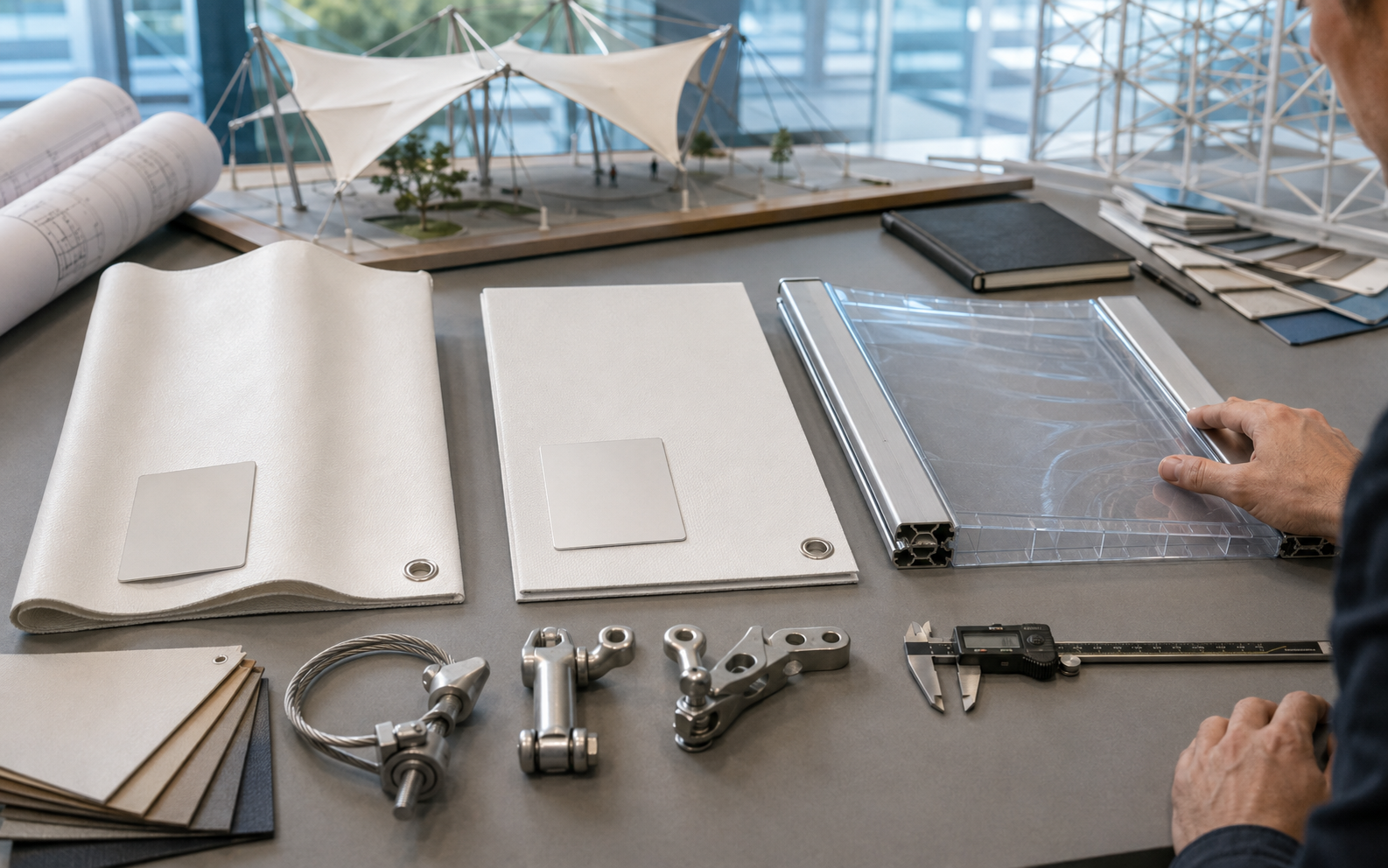
قبل الموافقة على مادة الغشاء، ينبغي على المشترين طلب حزمة كاملة من الوثائق الفنية. وقد تشمل هذه الحزمة، حسب طبيعة المشروع، ما يلي:
- ورقة البيانات الفنية
- الشركة المصنعة للمواد وسلسلة المنتجات
- تقرير اختبار الحريق
- شهادة فحص الدفعة
- نتائج اختبارات مقاومة الشد والتمزق
- عينة لون المادة
- بيانات نفاذية الضوء
- تقرير اختبار اللحام أو خط اللحام
- شروط الضمان
- متطلبات التعبئة والنقل
للحصول على حزمة كاملة لهيكل الغشاء، قد يطلب المشتري أيضًا شهادات المواد الفولاذية، ورسومات التصنيع، وتفاصيل التوصيلات، ومواصفات البراغي، وسجلات الطلاء، وقوائم التعبئة، ورسومات التركيب.
كيفية مقارنة عروض أسعار الهياكل الغشائية
قد يبدو أن عرضي أسعار يصفان نفس هيكل الغشاء، لكنهما يتضمنان نطاقات توريد مختلفة تمامًا. يجب على المشترين التأكد مما إذا كان كل عرض أسعار يشمل نفس المواد والأعمال الهندسية ودعم التركيب.
تشمل بنود المقارنة المهمة ما يلي:
- العلامة التجارية للغشاء، وسلسلة المنتجات، ومواصفات المواد
- وزن الهيكل الفولاذي ودرجة جودة الفولاذ
- معالجة الأسطح أو نظام الحماية من التآكل
- الكابلات، والمشابك، والألواح، والمسامير، ومكونات التوصيل
- الحسابات الإنشائية والتصميم التفصيلي
- تصميم الأغشية وتصنيعها
- تفاصيل الصرف وتجميع مياه الأمطار
- التعبئة والتغليف والنقل للتصدير
- التركيب في الموقع أو تقديم إرشادات التركيب عن بُعد
- وثائق الفحص وتغطية الضمان
قد لا يشمل عرض السعر المنخفض مكونات التوصيل المهمة أو الخدمات الهندسية أو مسؤوليات التركيب. وينبغي على المشترين مقارنة النظام بأكمله بدلاً من الاكتفاء بمقارنة سعر الغشاء للمتر المربع فقط.
العوامل الهندسية التي تؤثر على اختيار المواد
موقع المشروع والمناخ
تؤثر كل من سرعة الرياح، وحمل الثلج، وهطول الأمطار، وتقلبات درجات الحرارة، والتعرض للأشعة فوق البنفسجية، وظروف التآكل الساحلي، على المواصفات النهائية.
قد تتطلب المشاريع المقامة في البيئات الساحلية أو الصناعية حماية أقوى ضد التآكل للهيكل الفولاذي والملحقات المعدنية. كما تتطلب المشاريع التي تتعرض لأمطار غزيرة تصميم منحدرات تصريف ومنافذ تصريف مياه بعناية.
الامتداد الهيكلي والهندسة
تعتمد الهياكل الغشائية على الأسطح ذات الانحناء المزدوج والشد المسبق المتحكم فيه. وينبغي تقييم طول الامتداد ونقاط الدعم وارتفاع العمود والكابلات الطرفية وانحناء الغشاء بشكل متكامل.
قد لا تكون المادة المناسبة لمظلة مدخل صغيرة مناسبة لسقف ملعب كبير. وينبغي إتمام الحسابات الإنشائية قبل الموافقة النهائية على المواد.
فترة الخدمة المتوقعة
تؤثر مدة الخدمة المتوقعة على اختيار نظام الأغشية، وطريقة حماية الفولاذ، وخطة الصيانة. وعادةً ما تختلف المتطلبات الفنية والمتعلقة بالميزانية بين المنشآت التجارية المؤقتة والمباني العامة الدائمة.
شروط التركيب
يمكن أن يؤثر الوصول إلى الموقع، وتوافر الرافعات، وارتفاع العمل، والمباني المحيطة، وقدرات اليد العاملة المحلية على تصميم الألواح الغشائية والمكونات الفولاذية.
بالنسبة للمشاريع الخارجية، يمكن أن يسهم التجميع المسبق في المصنع، والمكونات المرقمة بوضوح، ورسومات التركيب التفصيلية في تقليل مخاطر البناء في الموقع.
ما هي المعلومات التي يجب على المشترين تقديمها؟
للحصول على توصية دقيقة بشأن المواد وعرض أسعار دقيق، يجب على المشترين تقديم ما يلي:
- موقع المشروع
- وظيفة المبنى
- المساحة المطلوب تغطيتها
- الرسومات المتوفرة أو أبعاد الموقع
- مادة الغشاء المفضلة
- متطلبات السلامة من الحرائق ومتطلبات الموافقة
- متطلبات الشفافية أو الإضاءة الطبيعية
- الأحوال المحلية للرياح والثلوج والأمطار
- نطاق الأعمال المطلوبة للهياكل الفولاذية
- مسؤولية التركيب
- الجدول الزمني المتوقع للتسليم
في حالة عدم توفر الرسومات، يمكن استخدام الصور الملتقطة في الموقع والرسومات التخطيطية والأبعاد التقريبية لإجراء مراجعة أولية للمفهوم.
اختيار نظام الأغشية المناسب
غالبًا ما تكون الأغشية المصنوعة من مادة PVDF مناسبة للمظلات التجارية والمشاريع التي تتطلب تصميمًا مرنًا واستثمارًا تنافسيًّا. أما الأغشية المصنوعة من مادة PTFE، فتُعتبر خيارًا شائعًا للمنشآت العامة الكبيرة وطويلة الأجل. ويُفضل استخدام مادة ETFE عندما تكون الشفافية وإدخال ضوء النهار والتصميم المعماري الخفيف الوزن من العوامل المهمة.
ومع ذلك، لا ينبغي أن يستند اختيار المواد إلى جدول مقارنة بسيط فحسب. بل يجب أن يراعي القرار النهائي الحسابات الإنشائية، والقوانين المحلية، ومتطلبات السلامة من الحرائق، والظروف البيئية، والقدرات التصنيعية، والتكلفة الإجمالية للمشروع.
للحصول على نظرة عامة على المواد الثلاث، اقرأ مقالتنا
مقارنة بين مواد الأغشية: PVDF مقابل PTFE مقابل ETFE
طلب توصية بشأن المواد اللازمة لمشروع معين
تقدم شركة TMStructure خدمات اختيار مواد الأغشية، والتصميم الهيكلي، وتصنيع الفولاذ، وتصميم أنماط الأغشية، والتفتيش في المصنع، والتعبئة والتغليف للتصدير، وإرشادات التركيب للمشاريع الدولية.
يرجى إرسال موقع مشروعك وأبعاده ورسوماته ومتطلبات الأداء الخاصة به إلينا. وسيقوم فريقنا الهندسي بتقديم توصيات بشأن نظام الأغشية المناسب وإعداد عرض تقني مخصص للمشروع.
اتصل بشركة TMStructure لمناقشة مشروعك الخاص بالهياكل الغشائية الشدّية.