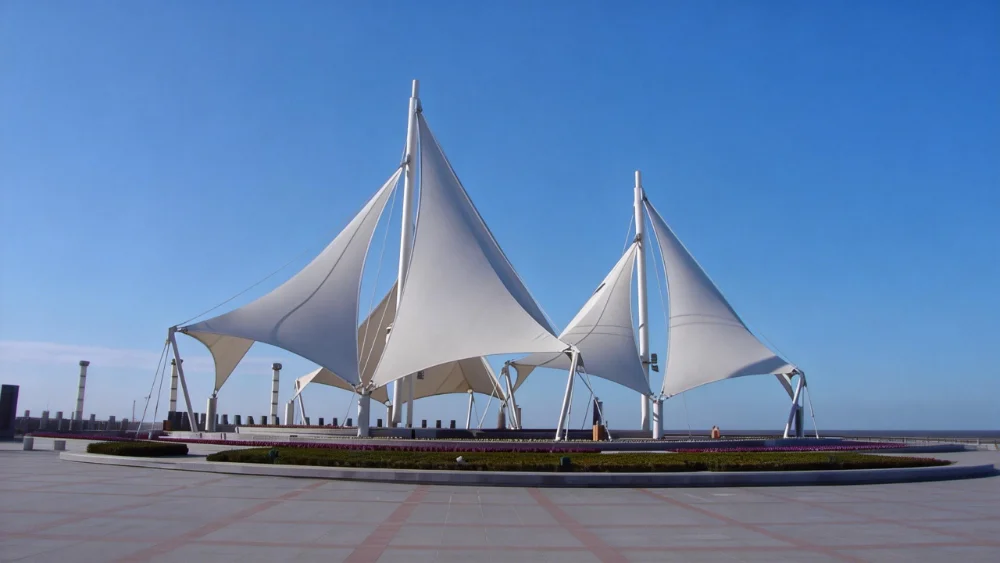
Invernaderos de membrana y plantaciones: estudio de caso sobre cubiertas difusoras de luz
A greenhouse roof is a climate-control surface. Light, heat, humidity and condensation matter more than the shape seen from outside.
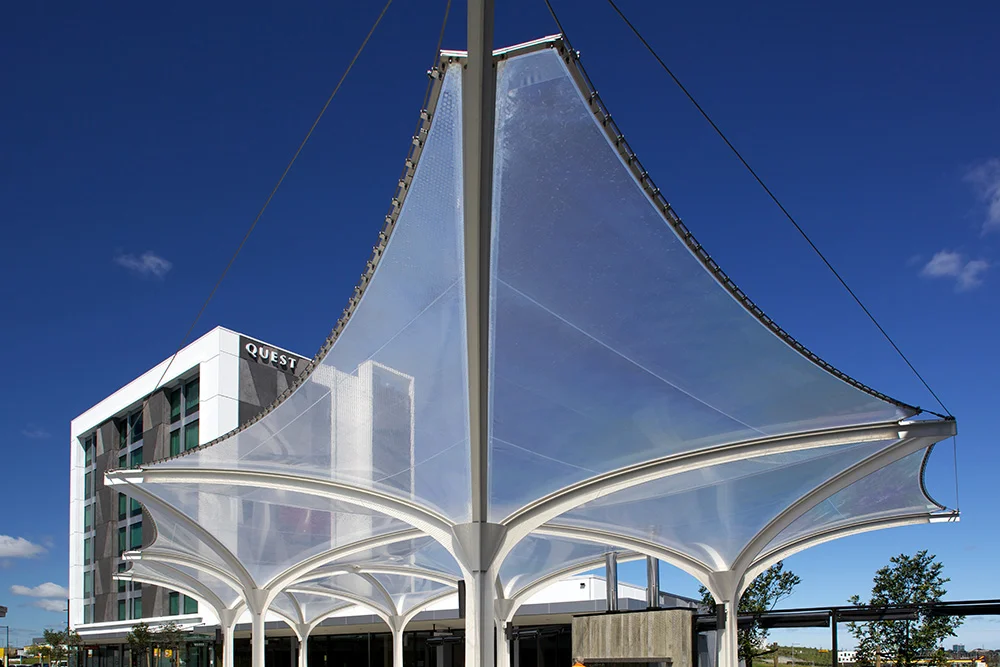
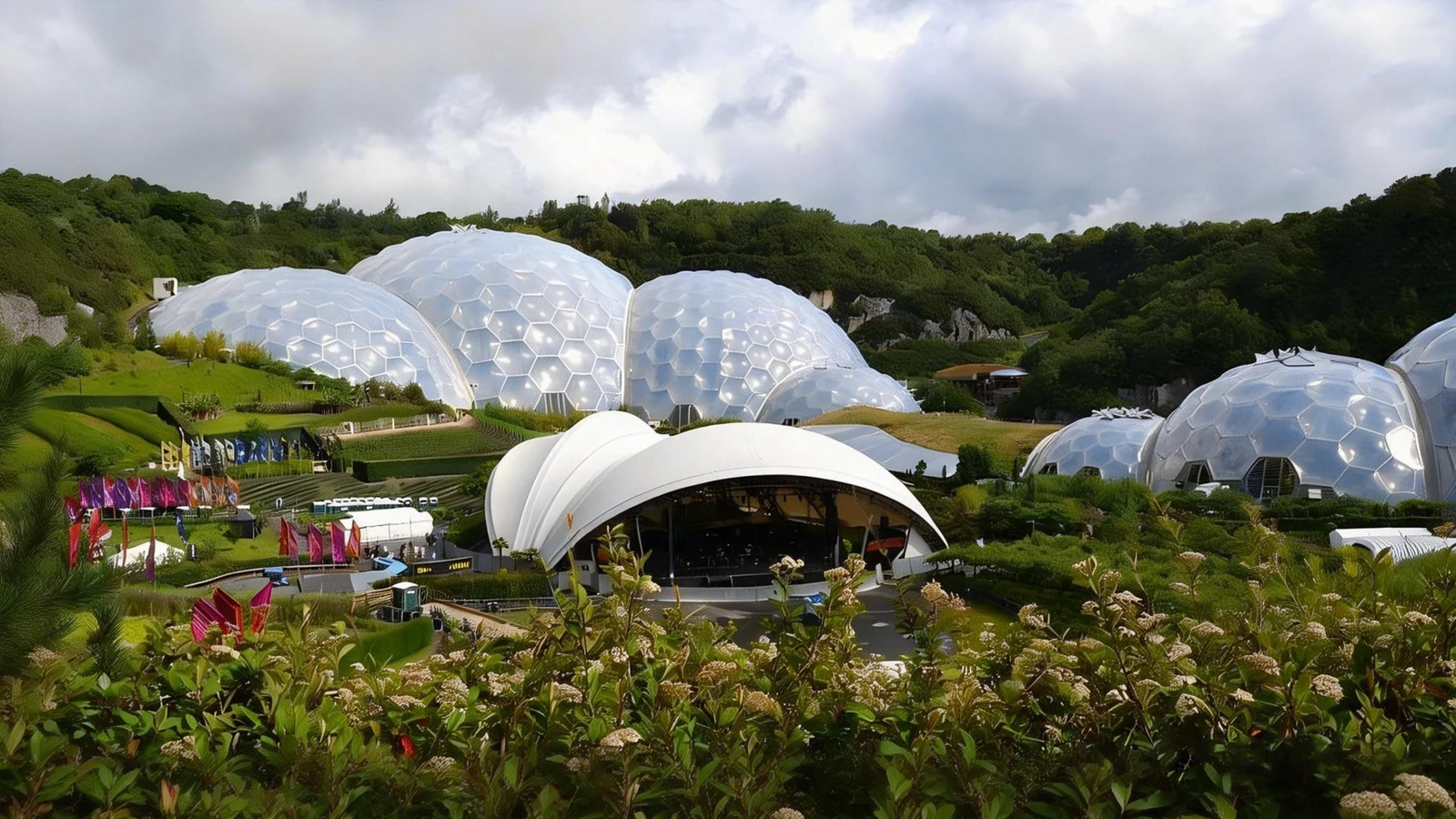
These reference views show ETFE cushion roofs over a botanical complex and a cylindrical conservatory with a lightweight roof.
Resumen del proyecto
| Elemento | Ámbito de referencia |
|---|---|
| Aplicación | Botanical garden, conservatory, plantation cover |
| Typical span | 10–50 m per bay |
| Cover | ETFE cushions 200–300 µm; PVC/PVDF for shade |
| Frame | Galvanised steel or aluminium extrusions |
| Factores determinantes del diseño | Light, insulation, condensation, snow and wind |
Lo que debe resolver el diseño
- Balance light and heat. More transmission is not always better; shading and diffusion may be needed.
- Control condensation. Detail the roof so water runs to a gutter rather than dripping onto plants.
- Ventilate at two levels. Extract hot moist air at the ridge and supply fresh air low down.
- Protect the frame. Humidity accelerates corrosion, so steel and fixings need a suitable finish.
Formas de tejados en este conjunto de referencia
ETFE cushion roof
Two or more films are welded at the perimeter and inflated. The air layer provides insulation, while the curved surface gives the roof its stiffness.
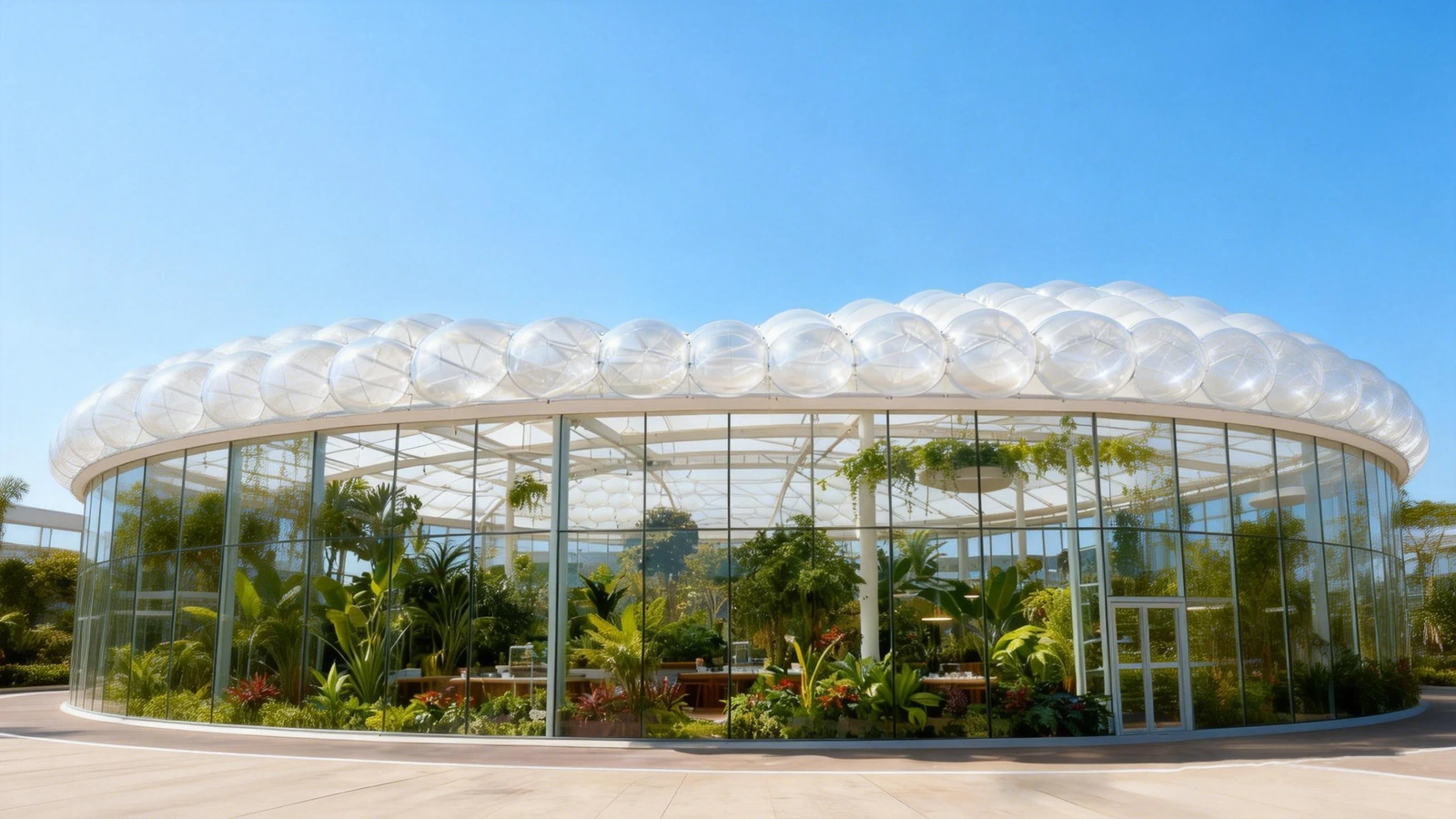
Large free-form complex
Cushions can cover complex plan shapes with a relatively light frame. Individual cushions can be replaced without dismantling the whole roof.
Materiales y entrega
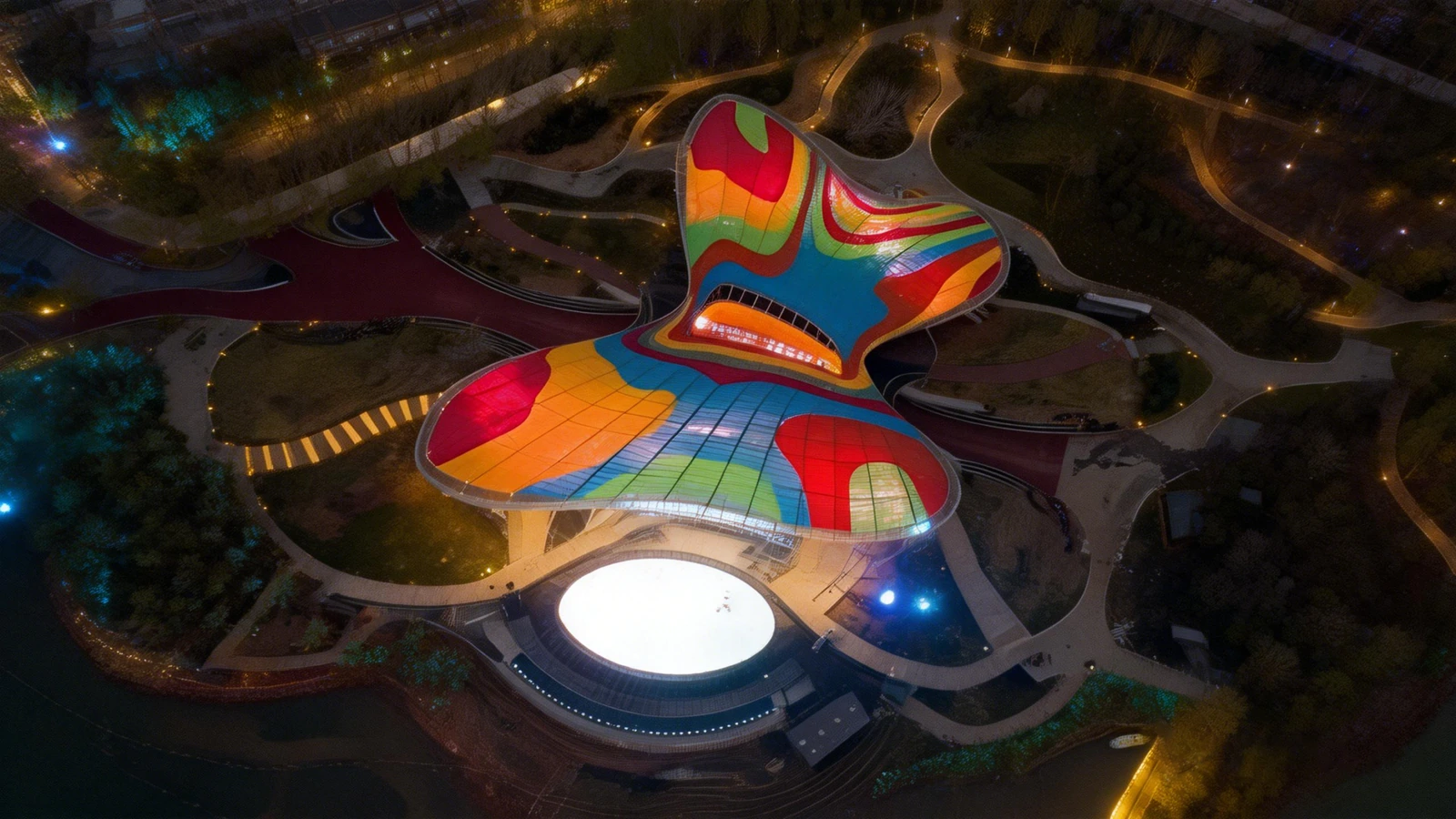
ETFE is chosen for daylight and low weight. PVC/PVDF is more economical for shade houses and plantation covers where maximum light is not the priority.
- ETFE film 200–300 µm per layer
- Aluminium extrusions and galvanised steel frame
- Inflation system with pressure monitoring
Preguntas frecuentes
Is ETFE suitable for a greenhouse?
Yes. ETFE transmits a high proportion of daylight, is lightweight and can be printed for shading. Multi-layer cushions improve insulation.
How is condensation handled?
Through ventilation, roof slope and drainage details that lead condensation to a gutter. The inner surface should not drip onto plants.
How long do ETFE cushions last?
Typically 20–30 years, depending on film grade, UV exposure and maintenance. Individual cushions can be replaced.
Hablar sobre un proyecto similar
Send the growing requirements, site climate and plan dimensions. We will review the cover and structural options.
Lecturas relacionadas: Sistemas de cubiertas y fachadas de ETFE
Envía el resumen de tu proyecto · Gama de productos de estructuras de membrana