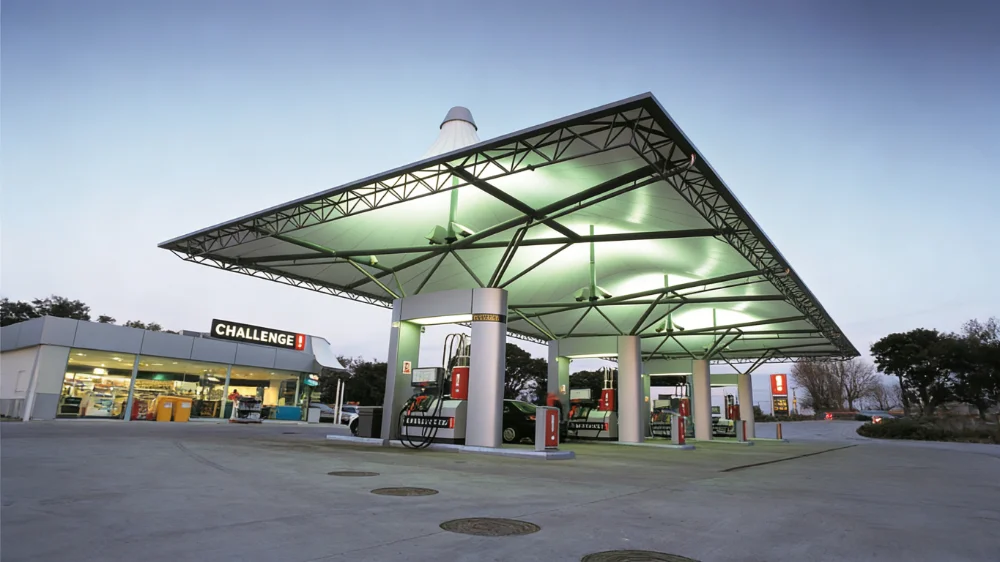
Stations-service et abris de recharge pour véhicules électriques destinés aux sites d'utilisation des véhicules
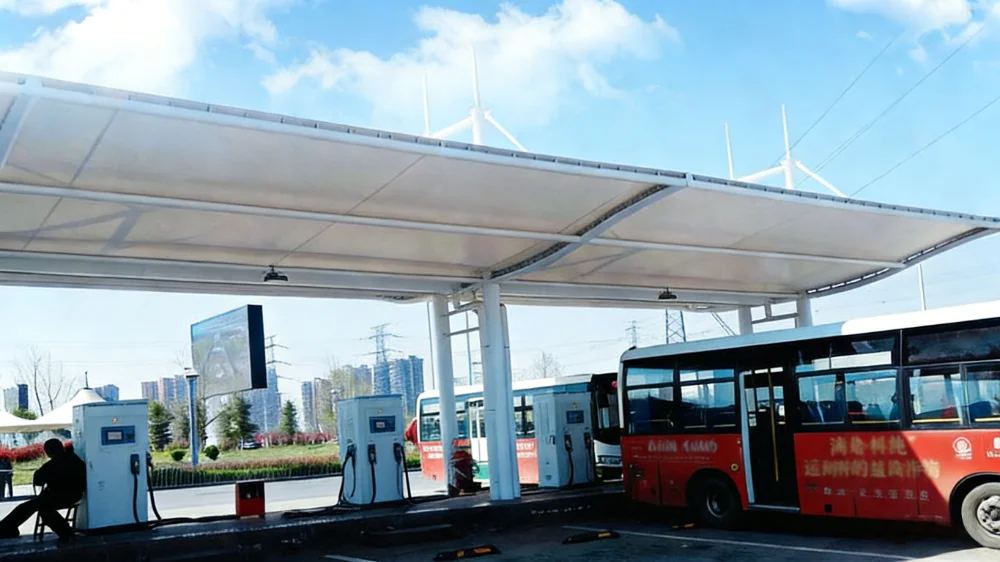
Les auvents pour stations-service et bornes de recharge de véhicules électriques sont utilisés dans les stations-service, les zones de recharge de véhicules électriques, les aires de service en bord de route, les points de service de transport, les parkings commerciaux et les sites d'utilisation de véhicules qui nécessitent une protection contre les intempéries, une circulation fluide des véhicules, la protection des équipements et une identité visuelle reconnaissable.
Contrairement à un auvent classique, l'auvent d'une station-service doit être conçu en tenant compte de la hauteur libre nécessaire aux véhicules, des équipements de recharge ou de ravitaillement, des voies d'attente, de l'espace de manœuvre, de l'éclairage, de la signalisation, de l'évacuation des eaux pluviales, des accès pour l'entretien et de l'exposition à long terme aux intempéries. La structure doit protéger les véhicules, les usagers, les équipements et les zones de travail sans entraver le fonctionnement quotidien de la station.
Timi accompagne la réalisation de projets sur mesure d'auvents à membrane tendue destinés aux stations-service et aux aires de recharge pour véhicules électriques. L'entreprise intervient notamment dans le choix des matériaux de membrane, la coordination de la charpente métallique, la vérification de la hauteur libre pour les véhicules, la planification du drainage, la prise en compte des charges dues au vent, la préparation de la fabrication, l'emballage pour l'exportation et la documentation relative à l'installation pour les projets à l'international.
Lieux d'utilisation des stations-service et des abris de recharge pour véhicules électriques
Les structures des auvents des stations-service peuvent être adaptées à différents environnements d'utilisation des véhicules. La configuration de l'auvent doit être étudiée en fonction de la fonction du site, du flux de circulation, de l'emplacement des équipements, du type de véhicules et des conditions climatiques locales.
| Domaine d’application | Orientation de conception typique |
|---|---|
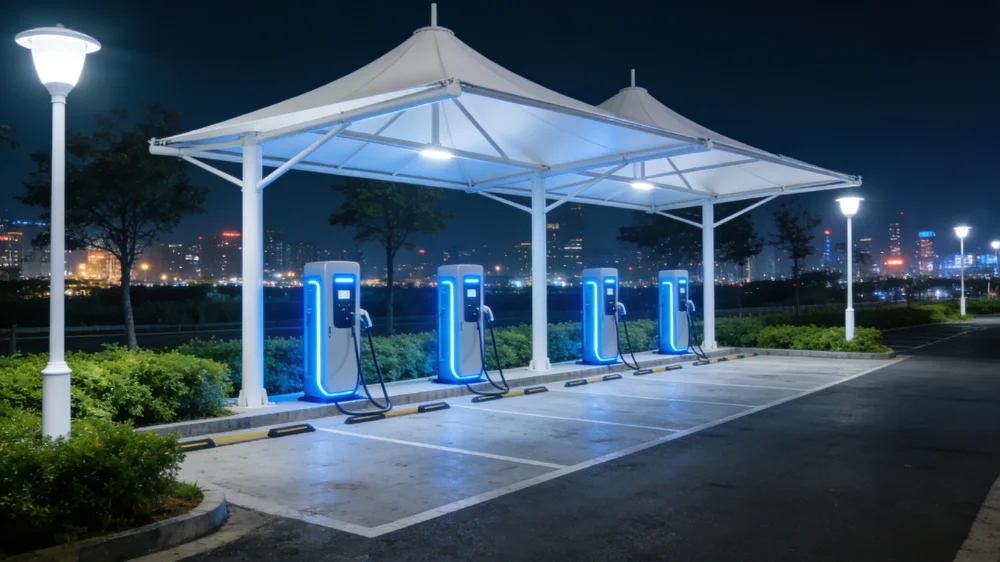
| Bornes de recharge pour véhicules électriques | Protection contre les intempéries pour les bornes de recharge, les véhicules, les zones de câblage, les utilisateurs et les zones d'attente |
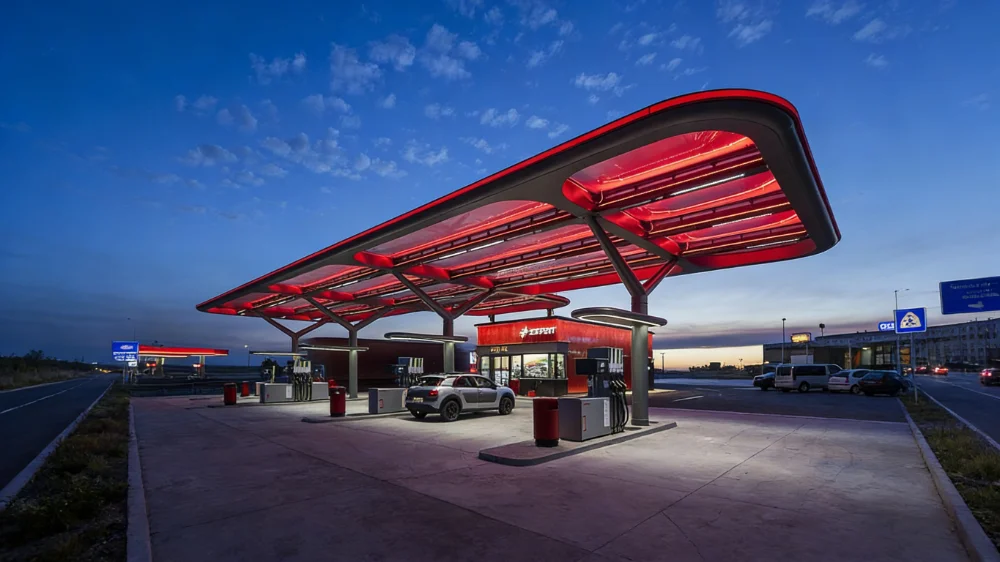
| Stations-service | Couverture par un auvent autour des points de ravitaillement, des zones de paiement, des îlots de service et des voies de circulation des véhicules |
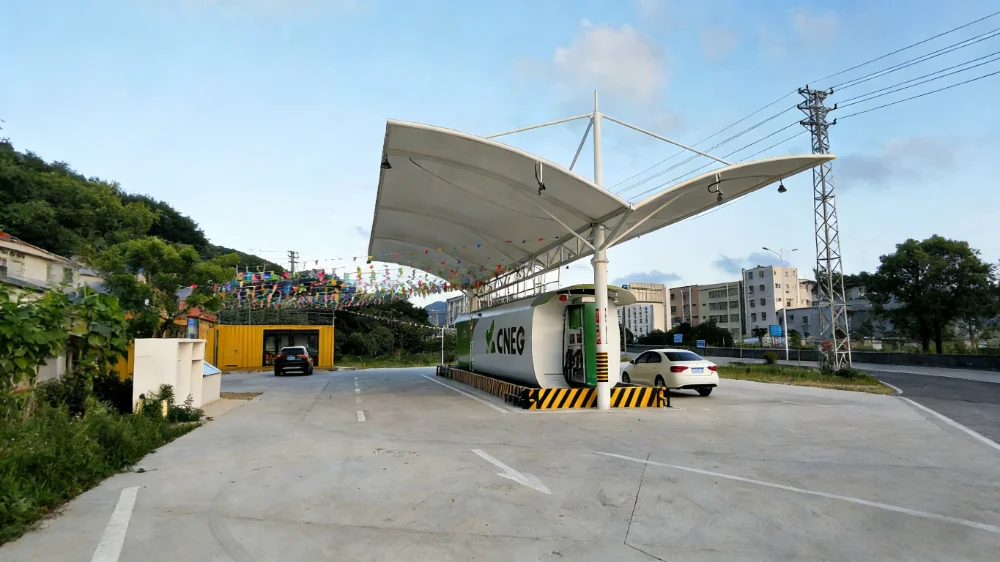
| Zones d'assistance routière | Protection contre le soleil et la pluie pour les véhicules, les aires de service, les zones piétonnes et les aires de repos |
| Points de service de transport | Auvents destinés aux installations réservées aux véhicules, aux zones de correspondance et aux zones de service des transports publics |
| Aires de recharge commerciales | Zones de recharge couvertes pour les centres commerciaux, les parcs de bureaux, les hôtels et les complexes à usage mixte |
| Infrastructures de recharge pour flottes de véhicules | Auvents pour bus électriques, véhicules logistiques, flottes d'entreprise et zones de recharge dans les dépôts |
| Sites combinant stationnement et recharge | Structures d'ombrage intégrées pour les places de stationnement équipées de bornes de recharge pour véhicules électriques |
| Installations de service sur autoroute | Modèles de verrières de plus grandes dimensions destinés aux zones de service à forte fréquentation et à une utilisation en extérieur à long terme |
Dans le cas d'une borne de recharge pour véhicules électriques, l'auvent doit protéger les équipements de recharge et les utilisateurs, tout en garantissant la liberté de mouvement des câbles, l'accès des véhicules et la facilité des travaux d'entretien. Pour les projets de stations-service ou d'assistance routière, l'auvent doit également tenir compte des îlots de ravitaillement, des trajectoires de manœuvre des véhicules, de l'éclairage, de la signalisation et de l'évacuation des eaux de pluie.
POINTS DE CONCEPTION À CONFIRMER DÈS LE DÉBUT
Une station-service ou un auvent de recharge pour véhicules électriques doit être étudié dans le cadre global du site d'utilisation des véhicules. De nombreux problèmes liés au site proviennent de détails qui n'ont pas été validés suffisamment tôt, tels que l'emplacement des bornes, la disposition des équipements, le sens d'écoulement des eaux, la hauteur libre ou les conflits avec la signalétique et l'éclairage.
Les points clés à confirmer comprennent :
- Itinéraires d'entrée, de sortie, de file d'attente et de virage des véhicules
- Hauteur libre requise pour les voitures, les SUV, les fourgonnettes, les bus ou les véhicules de service
- Emplacements pour bornes de recharge, pompes à carburant, armoires de commande ou îlots de service
- Disposition des colonnes et distance de sécurité par rapport aux voies de circulation
- Passage des câbles, accès des utilisateurs et espace réservé à la maintenance autour des bornes de recharge pour véhicules électriques
- Éclairage, signalisation, caméras, indicateurs de hauteur maximale et systèmes d'orientation
- Pente d’évacuation des eaux, direction des chéneaux et points finaux de rejet
- Gestion des eaux de pluie à proximité des équipements de recharge, des points de ravitaillement et des zones piétonnes
- Exposition au vent, précipitations, charge de neige, poussière et conditions d'échappement
- Protection anticorrosion et finition de surface de l’ossature en acier
- Accès pour l'entretien des éclairages, de la surface de la membrane, des éléments de drainage et des équipements
- Itinéraire d'installation, accès pour le levage et espace de travail disponible sur le chantier
- Position des fondations, boulons d'ancrage, réseaux souterrains et revêtement existant
Dans le cadre de projets de bornes de recharge pour véhicules électriques et de stations-service, l’auvent ne doit pas se contenter d’offrir de l’ombre. Il doit également contribuer à garantir la sécurité du site, à en assurer l’organisation et à le rendre fonctionnel pour la circulation quotidienne des véhicules et l’entretien des équipements.
Dégagement des véhicules et protection des équipements
La hauteur libre pour les véhicules est l'un des critères de conception les plus importants à prendre en compte dans les projets d'auvents pour stations-service. L'auvent doit offrir une hauteur libre suffisante pour les véhicules susceptibles d'utiliser le site, notamment les voitures particulières, les SUV, les fourgonnettes, les véhicules de flotte, les bus, les camions ou les véhicules d'entretien.
L'emplacement des colonnes doit également faire l'objet d'un examen minutieux. Les supports ne doivent pas obstruer les baies de recharge, les pompes à carburant, les portières des véhicules, le passage des câbles, les accès d'urgence, la signalétique ou les voies d'entretien. Pour les bornes de recharge de véhicules électriques, il convient de laisser suffisamment d'espace autour des chargeurs, des câbles et des armoires de commande. Dans le cadre de projets de stations-service, la disposition de l'auvent doit respecter les îlots de service, l'accès aux équipements et la circulation des véhicules.
Un auvent de station-service fonctionnel doit permettre :
- Circulation des véhicules dégagée
- Accès sécurisé aux équipements
- Protection des zones de recharge ou de ravitaillement
- Espaces d'attente confortables pour les usagers
- Visibilité des panneaux, des feux et des points de paiement
- Accès pour l'entretien des équipements et des éléments de la verrière
- Évacuation des eaux loin des zones électriques ou techniques
Si ces points ne sont pas pris en compte dès les premières étapes de la conception, la verrière risque de poser des problèmes d'exploitation, même si la structure elle-même est de bonne facture.
OPTIONS DE MATÉRIAUX DE MEMBRANE
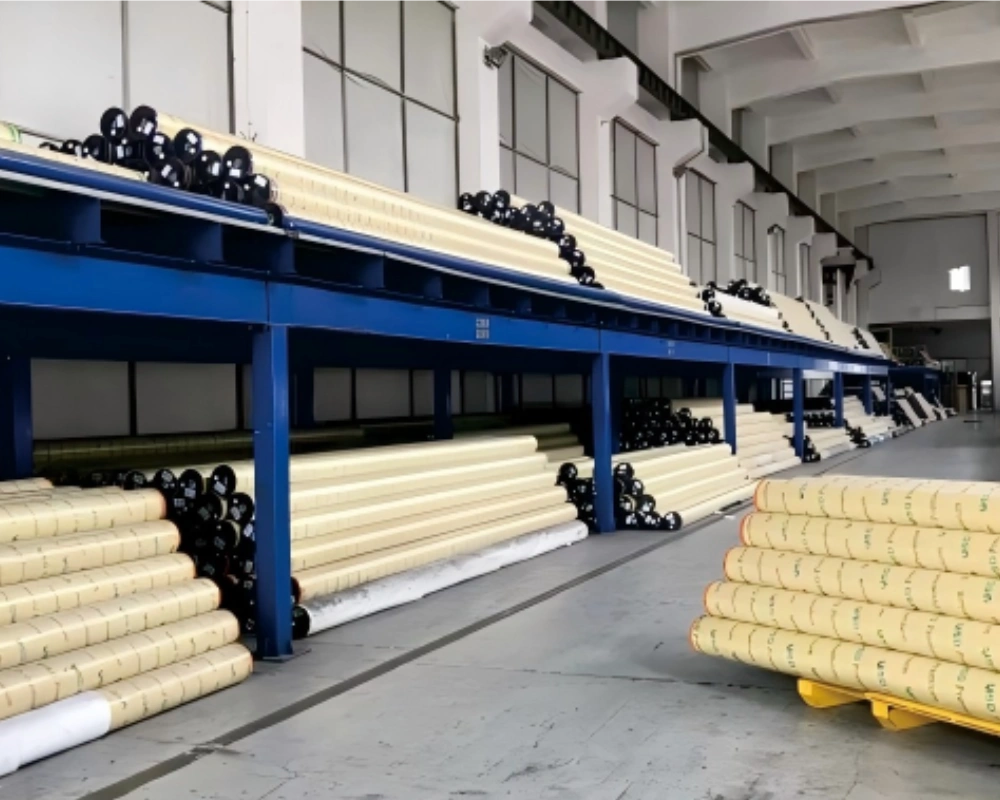
Les stations-service et les abris de recharge pour véhicules électriques sont exposés au soleil, à la pluie, au vent, à la poussière, aux gaz d'échappement des véhicules, à la chaleur dégagée par les équipements et aux conditions climatiques extérieures à long terme. Le choix des matériaux doit tenir compte de la durée de vie, de la facilité de nettoyage, de l'aspect esthétique, des exigences en matière de sécurité incendie, du budget et du climat local.
Toile de polyester enduite de PVC avec finition de surface PVDF
Les membranes en PVC/PVDF sont couramment utilisées pour la réalisation d'auvents de stations-service en extérieur, de couvertures pour les aires de recharge de véhicules électriques, d'abris routiers et de structures d'ombrage dans les infrastructures de transport. Elles offrent une bonne résistance aux intempéries, une grande souplesse dans les options de conception et permettent de maîtriser les coûts du projet.
Ce matériau est souvent adapté lorsque le projet nécessite une verrière efficace, légère et d'un coût maîtrisé pour les zones de circulation quotidienne des véhicules.
Toile en fibre de verre enduite de PTFE
La membrane en PTFE peut être envisagée pour les projets d'auvents de stations-service de plus grande envergure, plus permanents ou répondant à des exigences techniques plus élevées. Elle offre une meilleure résistance aux intempéries à long terme et convient aux infrastructures publiques, aux aires de service des transports et aux sites nécessitant une plus grande durabilité.
Film ETFE
L'ETFE peut être utilisé lorsque la transparence, la transmission de la lumière du jour ou un effet architectural plus léger pour la toiture sont requis. Il peut convenir à certaines stations de recharge, à des aires de service commerciales ou à des infrastructures de transport où la lumière naturelle et l'esthétique moderne font partie des exigences de conception.
Pour les projets de stations-service, le choix des matériaux doit également tenir compte des gaz d'échappement des véhicules, de l'accumulation de poussière, des contraintes de nettoyage au-dessus des voies de circulation et de l'exposition à long terme à proximité des zones où se trouvent les équipements.
OSSATURE EN ACIER, PROTECTION ANTICORROSION ET ÉVACUATION DES EAUX
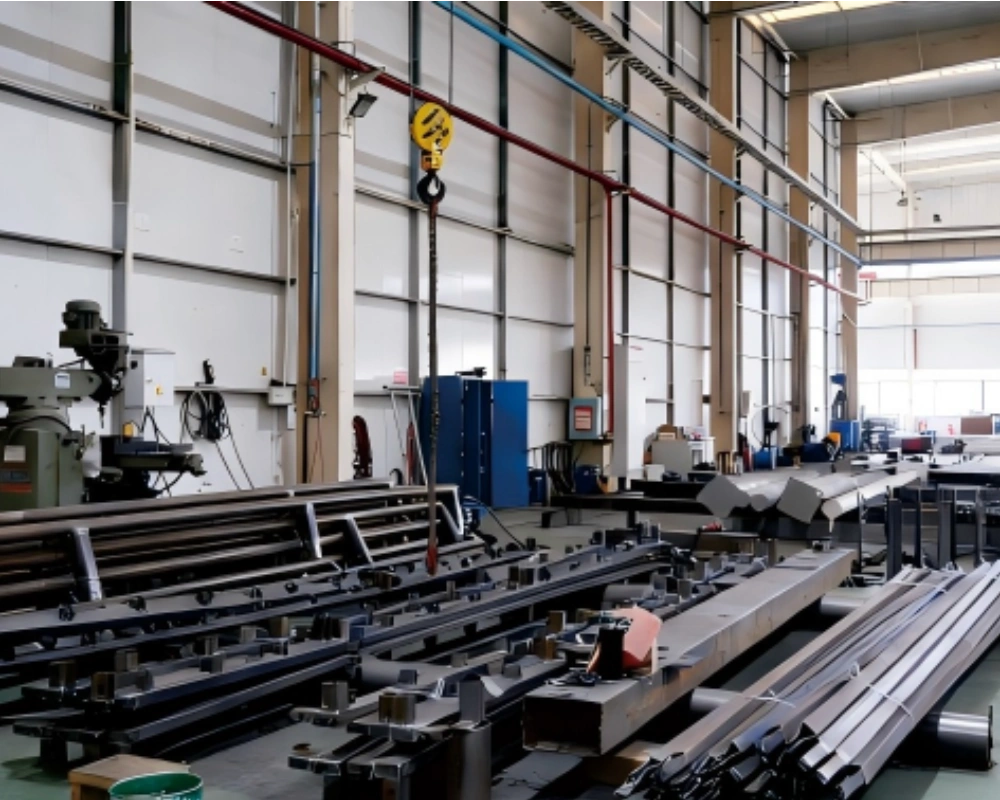
La charpente en acier est un élément essentiel de l'auvent d'une station-service. Elle doit supporter la tension de la membrane, résister aux charges dues au vent, garantir une hauteur libre suffisante pour le passage des véhicules et rester stable malgré une exposition prolongée aux intempéries.
Les détails importants relatifs à l’acier et à l’évacuation des eaux comprennent :
- Disposition des poteaux et des poutres autour des voies de circulation
- Disposition des platines de base et tiges d’ancrage
- Raccordement entre les rives de membrane et les éléments en acier
- Spécification de galvanisation à chaud ou de revêtement
- Protection des zones soudées et des platines de raccordement
- Coordination des pentes d’évacuation des eaux et des chéneaux
- Évacuer l'eau loin des chargeurs, des pompes à carburant, des armoires techniques et des zones piétonnes
- Espace réservé à l'éclairage, à la signalisation, aux caméras, aux réseaux de câbles et aux accès pour l'entretien
- Marquage des composants pour l'installation sur site
- Séquence d’emballage pour les livraisons internationales
Dans les zones de recharge pour véhicules électriques, le système de drainage doit être éloigné des équipements électriques, des zones de câblage et des zones d'attente des utilisateurs. Dans le cadre de projets de stations-service ou de zones de service, l'évacuation des eaux doit être orientée à l'écart des points de ravitaillement, des voies de circulation, des îlots de service et des voies piétonnes.
Aménagements sur mesure pour différents projets de stations-service
Les projets d'auvents pour stations-service présentent une grande diversité. Certains sites nécessitent un simple toit couvrant quelques bornes de recharge, tandis que d'autres requièrent des systèmes d'auvents plus vastes destinés à plusieurs voies, des îlots de recharge, des points de service ou des zones accueillant différents types de véhicules.
Timi peut accompagner différentes solutions d’auvents, notamment :
- Dispositions des auvents pour bornes de recharge de véhicules électriques
- Structures de auvents pour stations-service
- Auvents pour les aires de service routières
- Couverture des zones de recharge pour flottes
- Systèmes commerciaux d'abris pour bornes de recharge et de stationnement
- Disposition des auvents des aires de service autoroutières
- Structures de auvents pour véhicules à une rangée ou à plusieurs travées
- Extensions d'auvents pour les zones d'attente des piétons
- Couleurs et finitions de surface personnalisées de l’ossature en acier
- Formes de membrane selon l’aspect architectural
- Coordination de l’évacuation des eaux et des chéneaux
- Adaptation de l'agencement autour des chargeurs, des distributeurs, des luminaires, des panneaux de signalisation, des caméras et des équipements techniques
Pour les sites destinés à l'utilisation de véhicules, la conception optimale d'un auvent doit être esthétique, pratique sur le plan structurel, sûre pour la circulation des véhicules et facile à installer et à entretenir par les entrepreneurs locaux.
FABRICATION ET ACCOMPAGNEMENT DES PROJETS INTERNATIONAUX
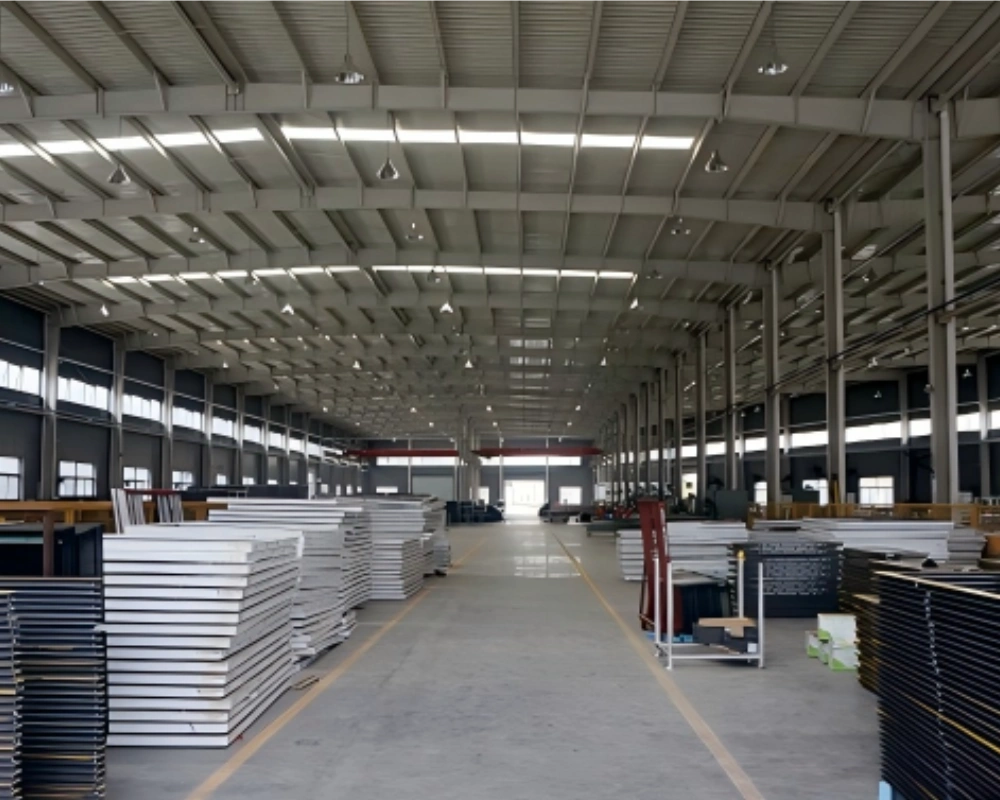
Timi accompagne les projets de stations-service et d'abris de recharge pour véhicules électriques, depuis les premières étapes de communication jusqu'à la fabrication et la préparation des expéditions. Pour les projets à l'international, il est essentiel de disposer de plans clairs, d'un marquage précis des composants et d'une logique d'emballage bien définie, car ce sont souvent les entrepreneurs locaux qui se chargent des fondations et de l'installation une fois les marchandises arrivées sur le chantier.
L’accompagnement de projet peut inclure :
- Examen des plans, photos du site ou implantations préliminaires
- Confirmation des options de matériaux de membrane adaptées
- Coordination des détails de raccordement entre l’ossature en acier et la membrane
- Vérification de la garde au sol des véhicules, de la disposition des supports et du sens d'écoulement des eaux
- Vérification de l'emplacement des bornes de recharge, des zones de distribution de carburant, de la signalisation, de l'éclairage et des conflits entre les équipements
- Préparation des composants selon les plans confirmés
- Repérage des composants de membrane et d’acier pour l’installation sur site
- Assistance à l’emballage et au chargement pour expédition internationale
- Fourniture de plans liés à l’installation ou d’échanges techniques
Pour les projets de stations-service à l'étranger, le marquage des composants et la documentation relative à l'installation revêtent une importance particulière, car la structure peut être mise en place à proximité d'îlots de recharge, de points de ravitaillement, de systèmes d'éclairage, de signalétique, de chemins de câbles, de voies de circulation et de zones revêtues existantes.
ACCOMPAGNEMENT D’INGÉNIERIE ASSOCIÉ
Les stations-service et les auvents de recharge pour véhicules électriques doivent être considérés comme des structures complètes destinées à l'utilisation des véhicules. Outre la toiture à membrane visible, les acheteurs devront peut-être également examiner les fondations, la protection de la charpente métallique, le drainage, l'espace libre nécessaire aux équipements, la séquence d'installation et les exigences locales en matière de conformité.
Pour ces projets, il convient d'examiner conjointement, avant la fabrication, l'emplacement des fondations, la disposition des équipements, la hauteur libre pour les véhicules, la protection anticorrosion de l'acier et l'évacuation des eaux de drainage. Ces facteurs revêtent une importance particulière lorsque l'auvent est installé au-dessus de baies de recharge, de points de ravitaillement, de voies de service ou de zones d'exploitation existantes.