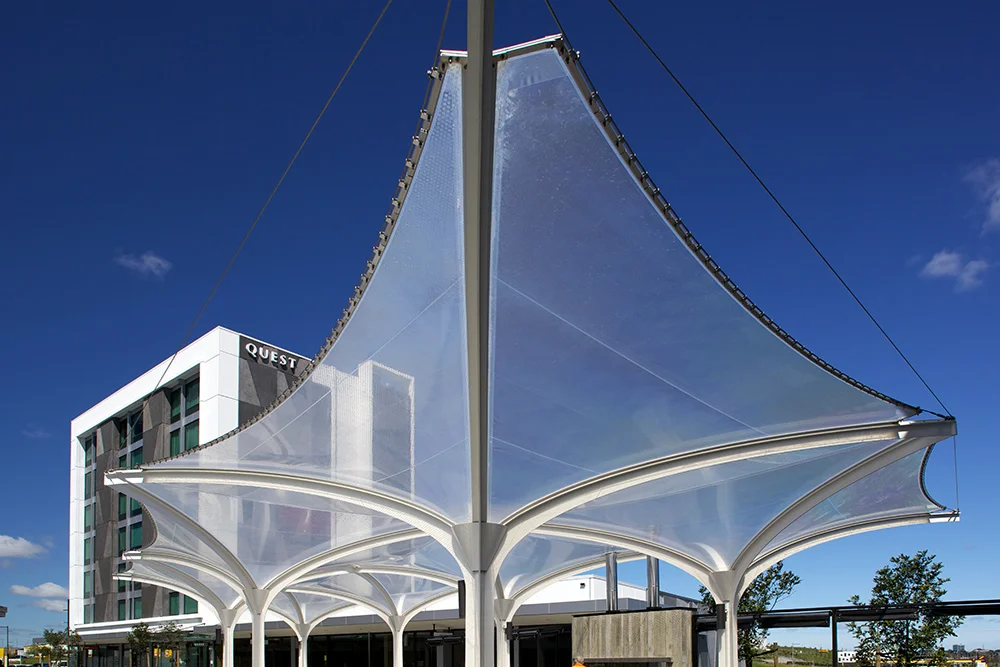
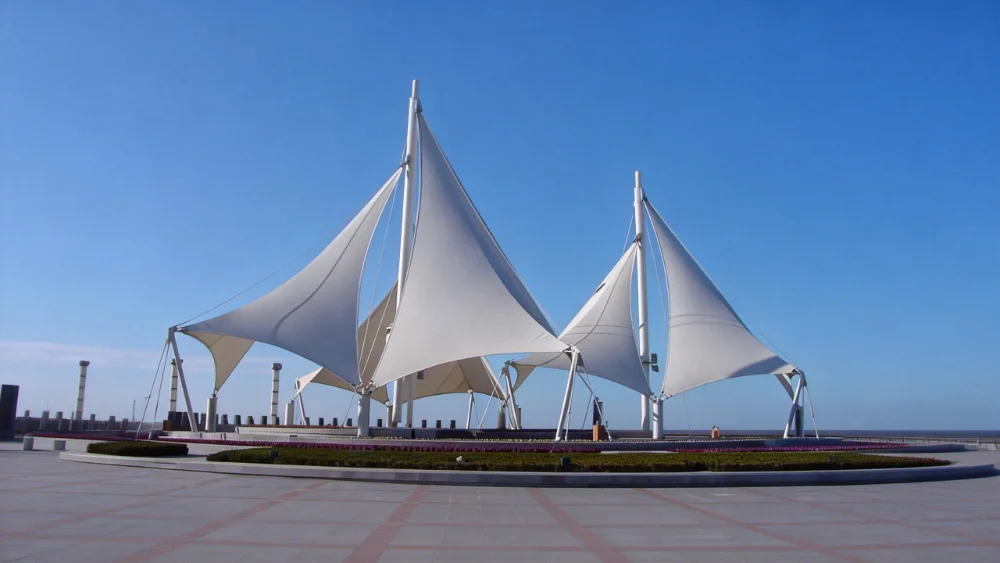
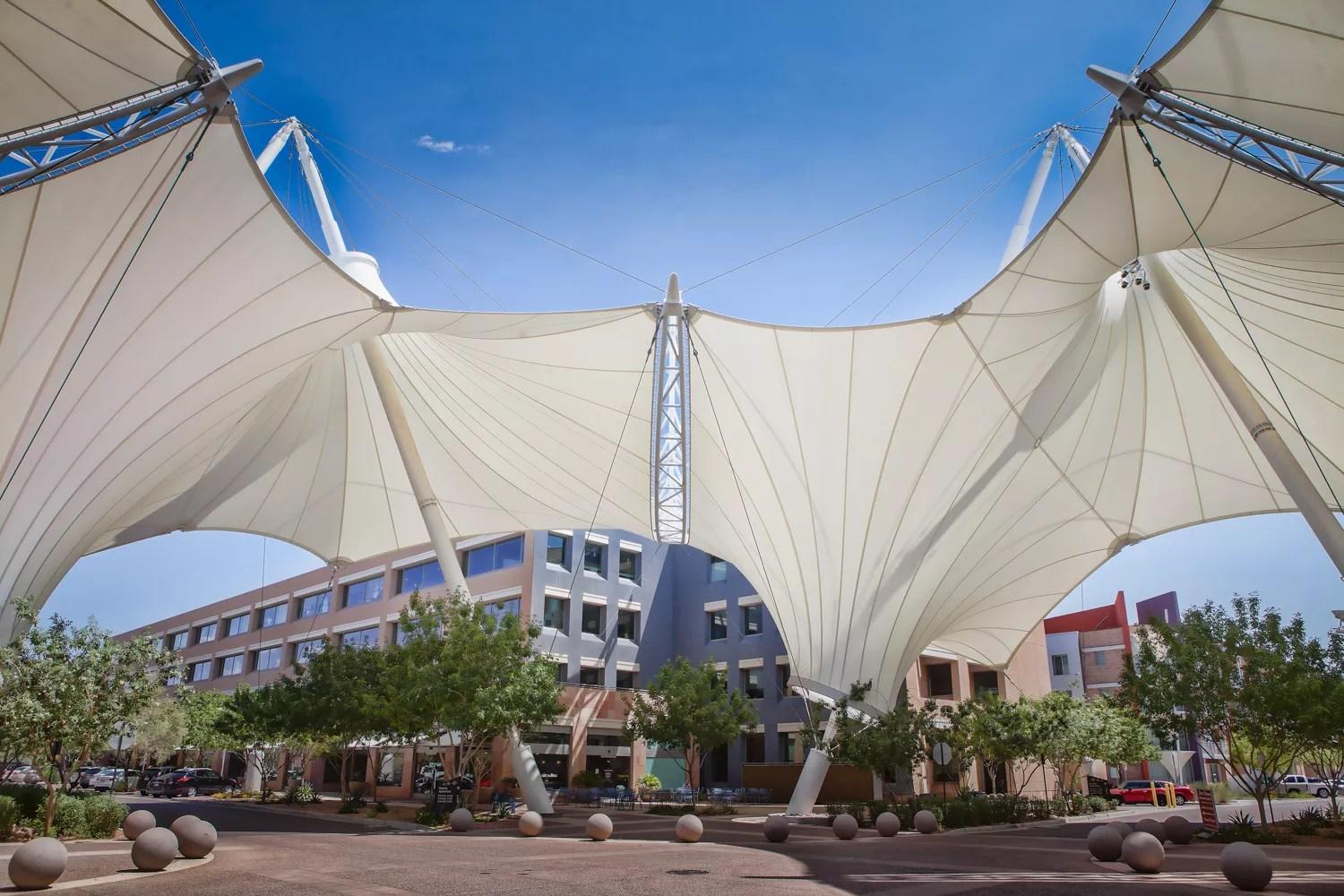
ETFE roof systems have become an increasingly popular choice for modern architectural projects that require lightweight structures, natural daylight and unique visual design.
Compared with traditional glass roofs, ETFE membrane roofing provides excellent transparency with significantly lower structural weight, making it suitable for stadiums, commercial buildings, transportation facilities and large public spaces.
What Is an ETFE Roof System?
An ETFE roof system uses ETFE (ethylene tetrafluoroethylene) film as the main architectural material.
The system is usually designed as single-layer panels or multi-layer ETFE cushions supported by aluminum profiles and steel structures.
Unlike conventional roofing materials, ETFE is extremely lightweight and flexible, allowing architects to create large transparent roof areas with distinctive architectural forms.
Why ETFE Is Used in Modern Architectural Projects
1. Lightweight Structure Design
One of the biggest advantages of ETFE roofing is its low structural weight.
Because ETFE film is much lighter than glass, supporting structures can often be optimized for large-span applications while maintaining architectural flexibility.
2. Natural Daylight and Transparency
ETFE systems can provide excellent daylight transmission, helping create bright and comfortable interior spaces.
Depending on the selected film specification, architects can control transparency, solar protection and visual effects through printing patterns, layers and surface treatments.
3. Weather Resistance and Durability
ETFE film is designed for long-term outdoor applications and can withstand sunlight, temperature changes and weather exposure.
With proper engineering design and installation, ETFE roof systems can provide reliable performance for many years in commercial and public buildings.
Common Applications of ETFE Roof Systems
Stadium and Sports Facilities
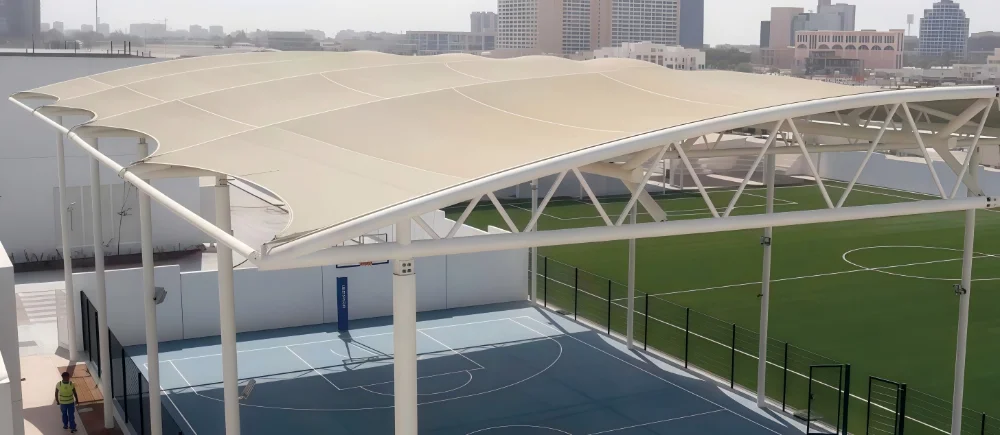
ETFE roofs are widely used in stadium projects because they combine lightweight construction with excellent natural lighting performance.
Explore stadium membrane roof solutions.
Commercial Buildings and Atriums
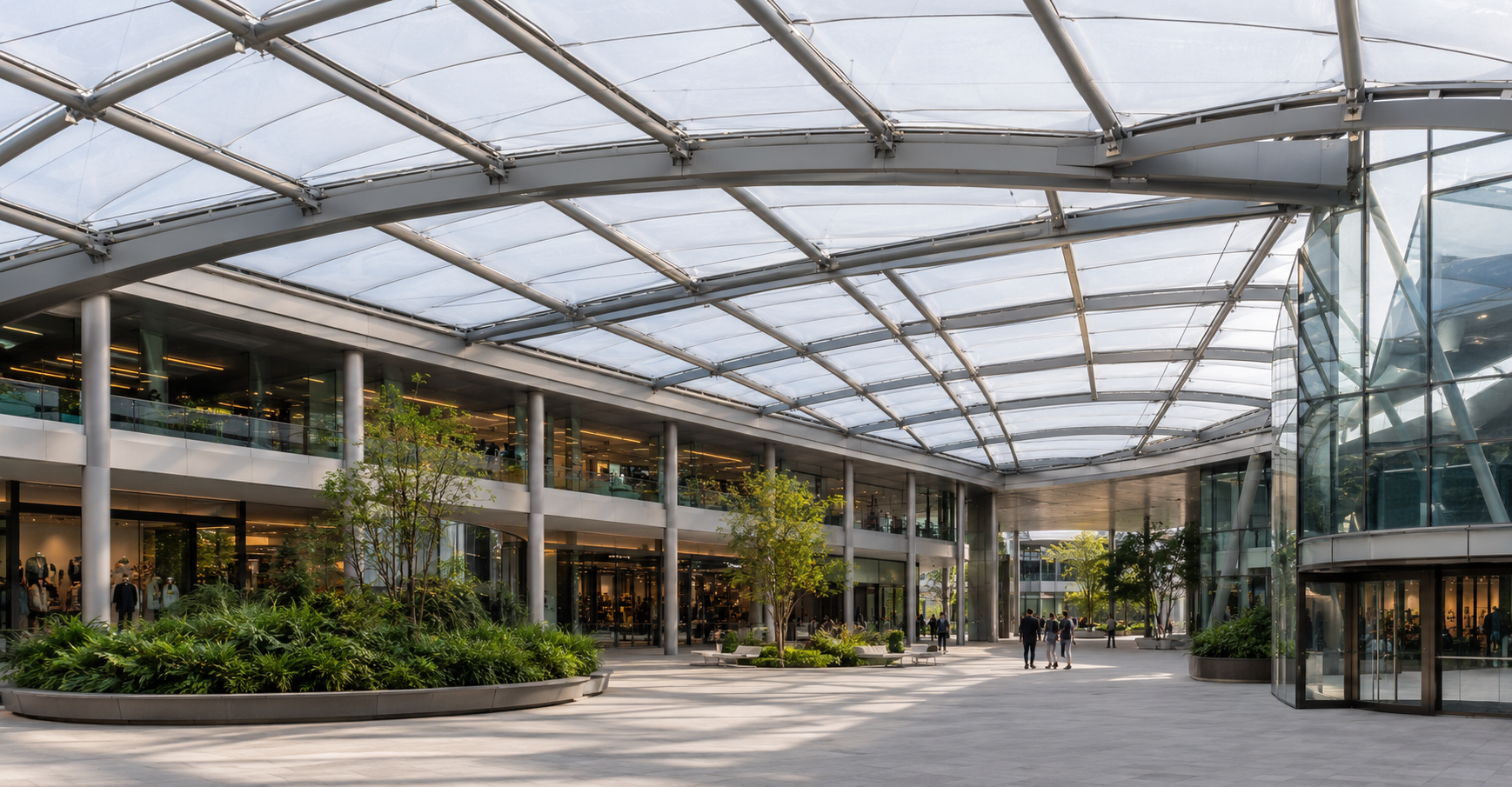
Shopping centers, exhibition halls and mixed-use developments often use ETFE roofs to create bright indoor environments while maintaining architectural identity.
Transportation Hubs
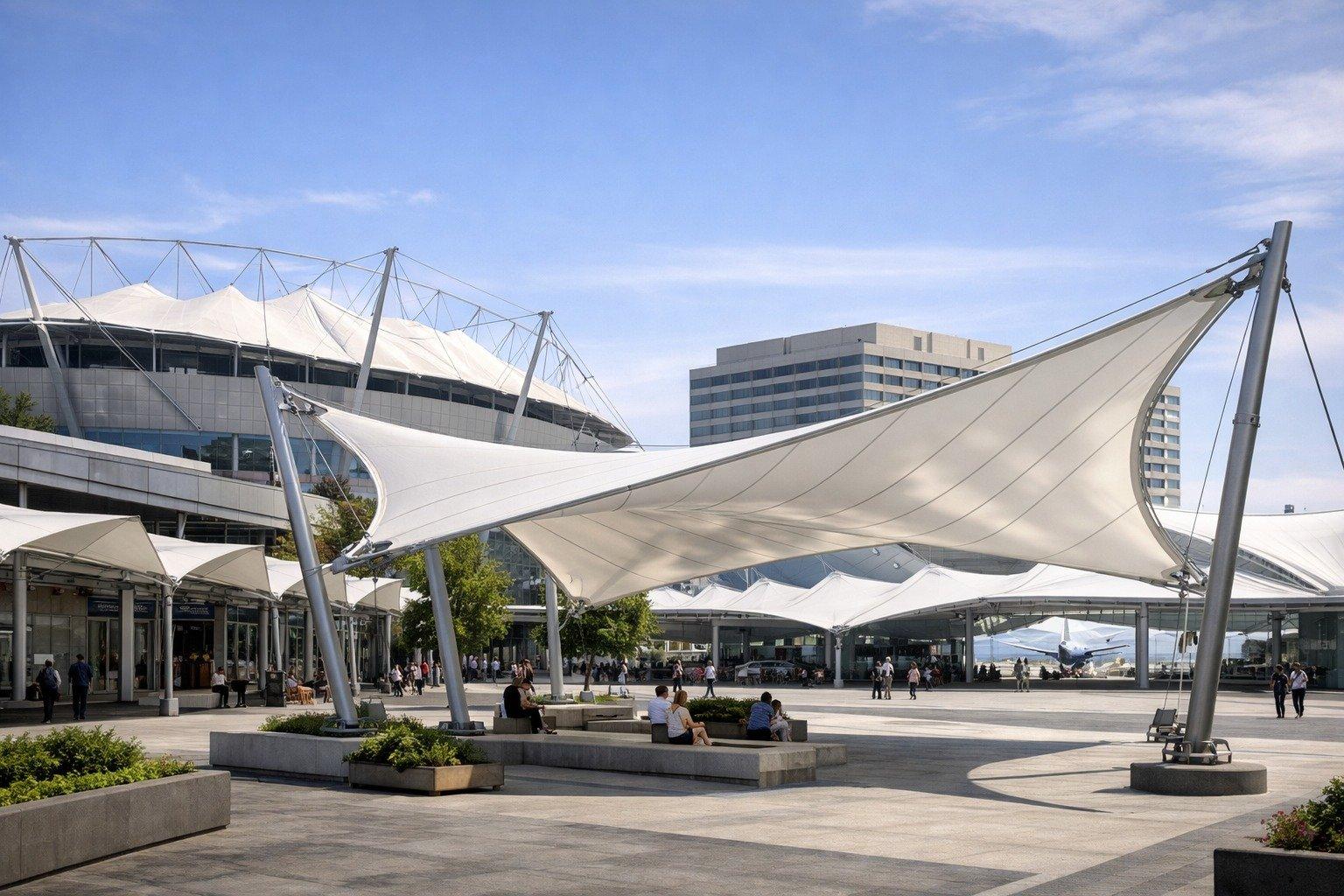
Airports, railway stations and public transportation facilities benefit from ETFE systems because they can cover large areas without creating heavy structural loads.
Landscape and Public Spaces
ETFE can also be used for special architectural spaces where designers want a lightweight transparent shelter with a modern appearance.
ETFE Cushion Roof vs Glass Roof
| Feature | ETFE Roof | Glass Roof |
|---|---|---|
| Weight | Very lightweight | Heavy supporting structure required |
| Transparency | Excellent daylight transmission | High transparency |
| Structural flexibility | Suitable for complex forms | More limited |
| Maintenance | Self-cleaning surface characteristics | Requires regular cleaning |
| Architectural style | Lightweight futuristic appearance | Traditional transparent architecture |
Important Design Considerations for ETFE Roof Projects
A successful ETFE roof requires coordination between membrane design, steel structure, drainage and building engineering systems.
- Structural analysis for wind and snow loads
- ETFE cushion shape and pressure control
- Aluminum profile connection design
- Rainwater drainage planning
- Lighting and solar performance requirements
- Installation and maintenance access
ETFE Roof Engineering and Manufacturing Process
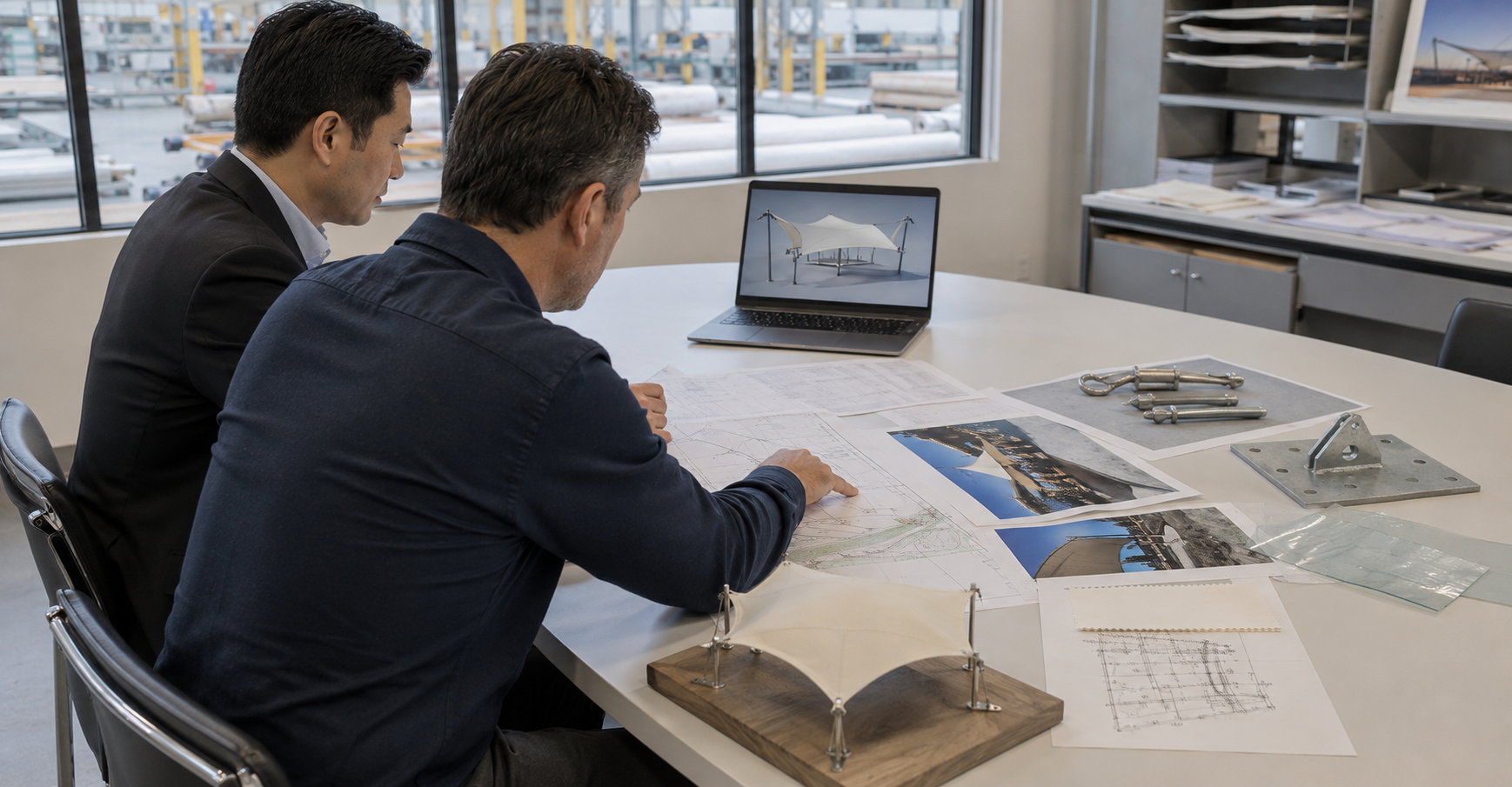
Professional ETFE roof projects normally include several stages:
- Project requirement review
- Architectural and structural design coordination
- ETFE panel design and fabrication
- Aluminum profile and steel structure production
- Factory inspection and installation preparation
The final performance of an ETFE roof depends not only on the membrane material but also on accurate engineering, fabrication quality and installation experience.
Conclusion
ETFE roof systems provide architects and developers with a lightweight, durable and visually impressive solution for modern buildings.
From stadiums and transportation hubs to commercial atriums and public spaces, ETFE technology continues to expand the possibilities of transparent architectural design.