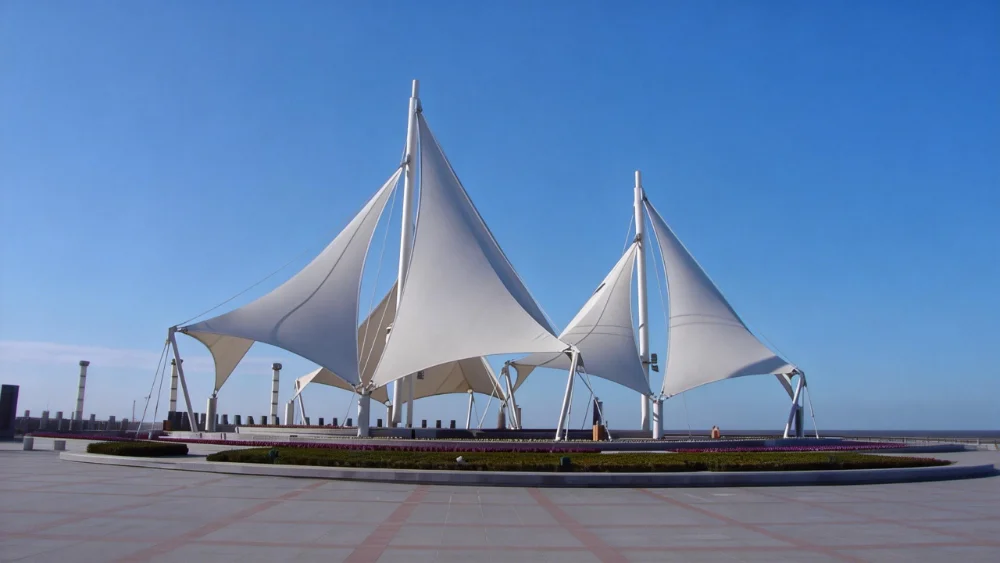
A tank cover is an environmental barrier first and a roof second. It contains odour, reduces evaporation, limits algae and keeps debris out, while letting gas out and people in.
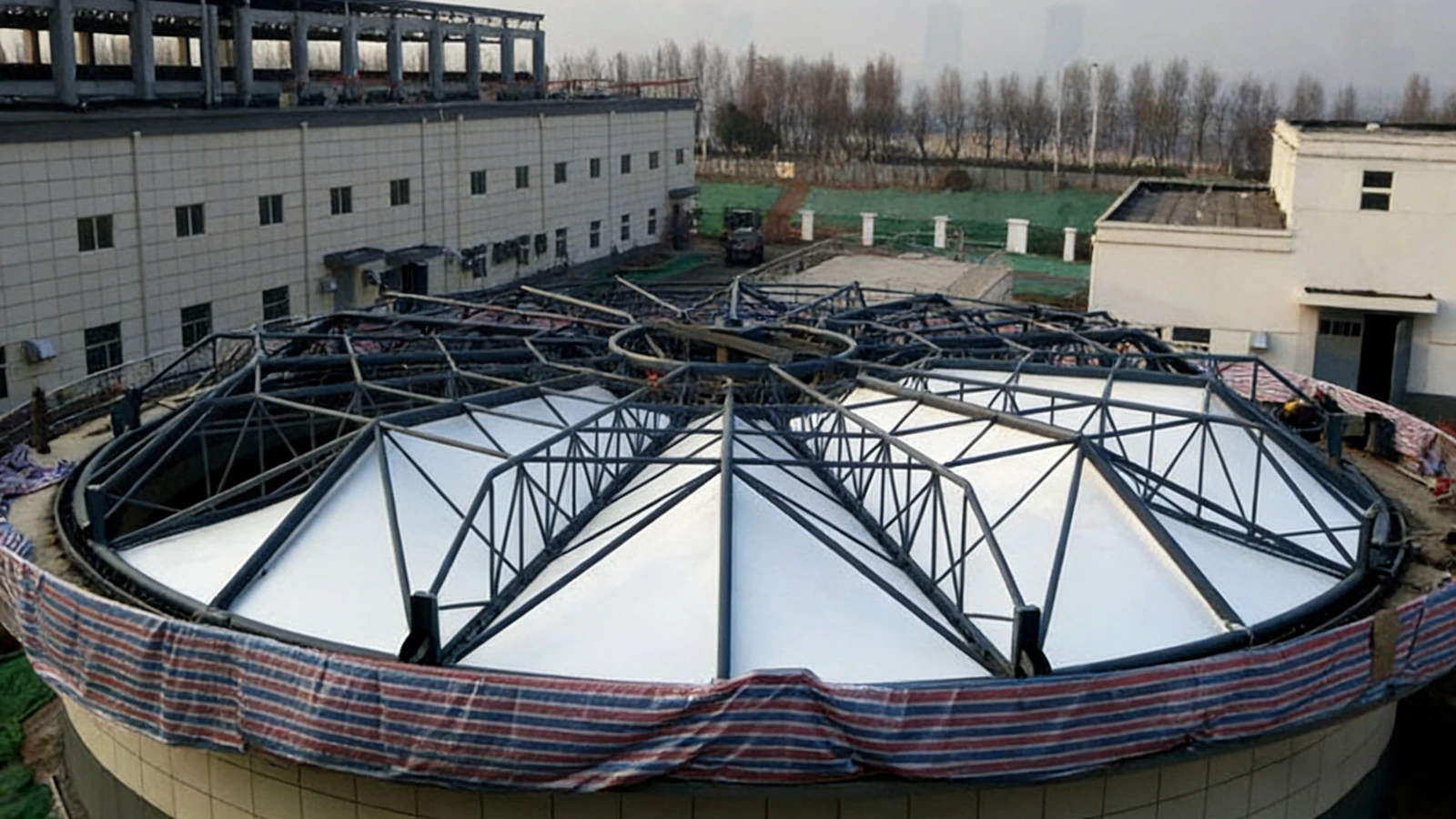
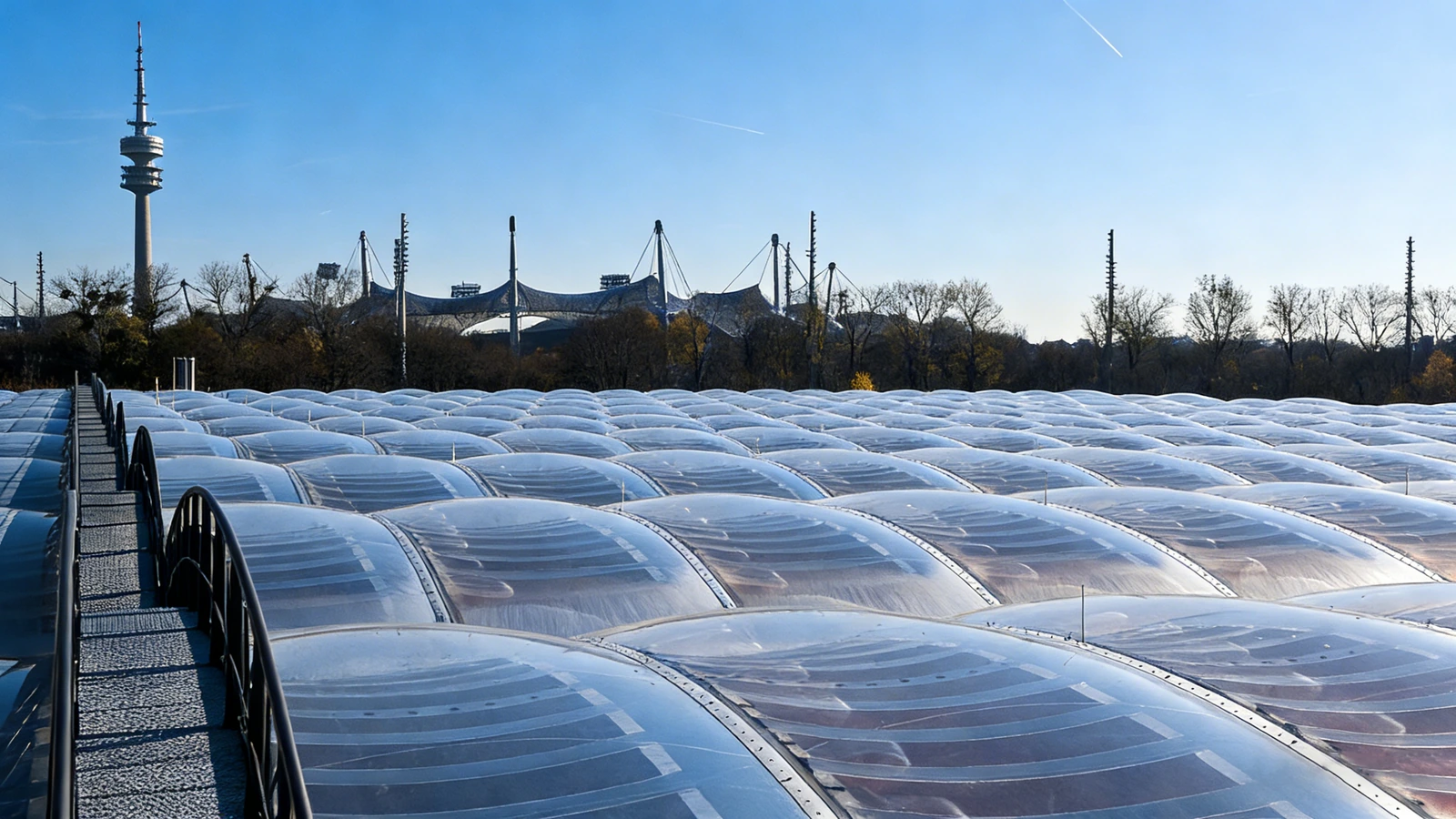
These reference views show a peaked cover over a treatment tank, a circular tank cover and a large basin array.
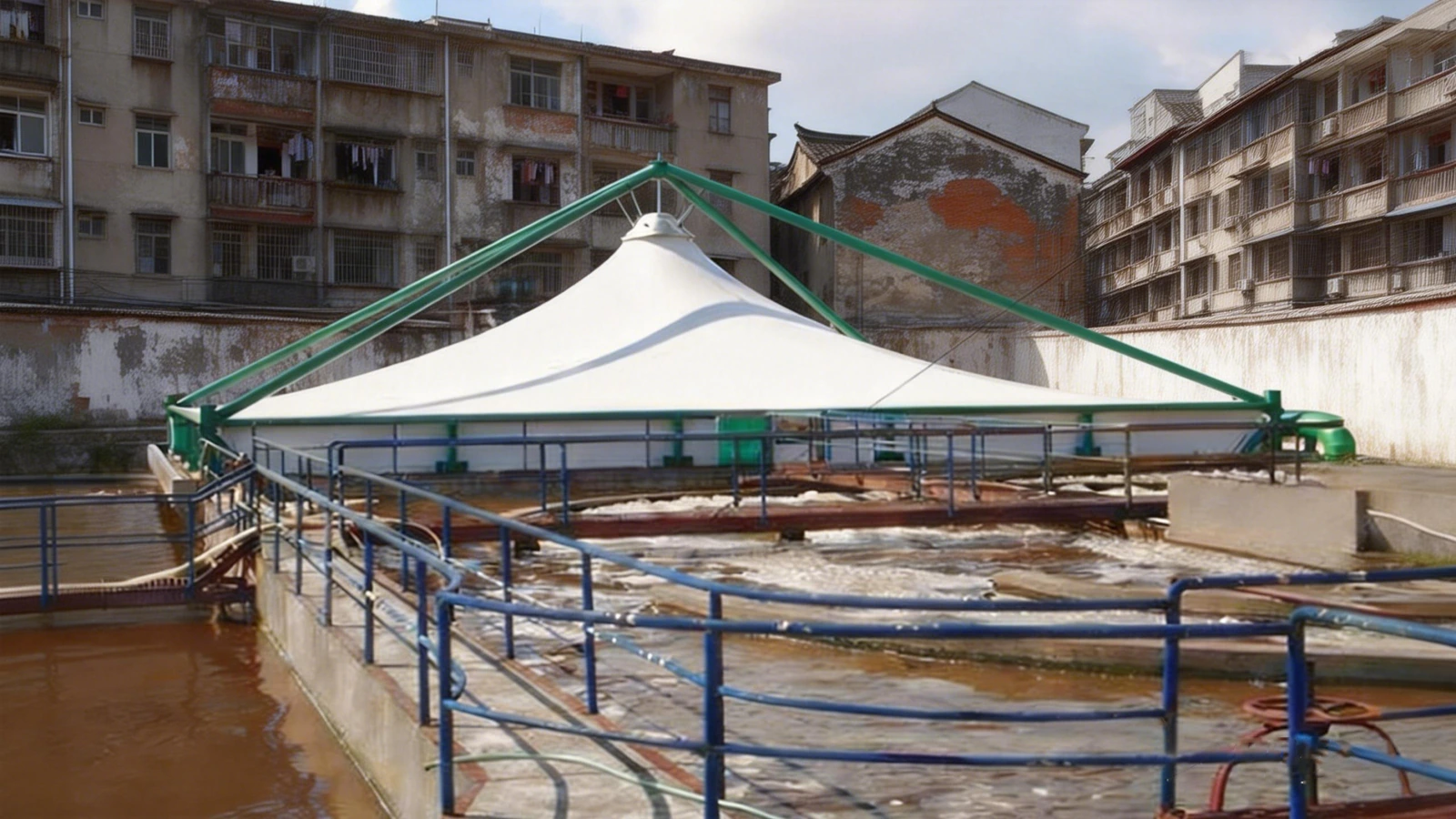
Project snapshot
| Item | Reference scope |
|---|---|
| Application | Wastewater, aeration, sludge and reservoir tanks |
| Typical tank size | 6–60 m diameter |
| Forms | Peaked cover, circular cover, low-profile basin cover |
| Membrane and frame | PVC/PVDF or HDPE; coated steel or stainless |
| Design drivers | Odour, gas venting, access, corrosion |
What the design has to solve
- Contain gas, but let it out. Provide controlled extraction and pressure relief.
- Select for the atmosphere. Hydrogen sulphide and humidity attack steel and aluminium.
- Design access. Hatches, walkways and lifting points are part of the cover.
- Check perimeter uplift. Large lightweight covers are sensitive to wind and snow drift.
Roof forms in this reference set
Circular tank cover
A circular cover follows the tank wall and can be divided into segments for maintenance. The membrane is tensioned to a perimeter ring and a central support.
Basin array
Repeated low-profile covers control odour across a large treatment site. Repetition reduces cost and allows the covers to be installed in phases.
Materials and delivery
PVC/PVDF and HDPE are common cover materials. The choice depends on the gas composition, temperature and expected service life.
- PVC/PVDF 900–1100 g/m² or HDPE 1.0–2.0 mm
- Galvanised steel; stainless or FRP for high H2S exposure
- Stainless A4 fixings and isolation washers
Frequently asked questions
What is the main purpose of a tank cover?
To contain odour and gas, reduce evaporation, limit algae growth and keep debris out of the water. It also improves safety by controlling access.
Can the cover be walked on?
Only where a designated walkway with fall protection has been designed. The membrane itself is not a walking surface.
How is gas extracted?
Through a dedicated extraction point at the high point, connected to an odour-control system. Pressure relief is designed with the process engineer.
Discuss a similar project
Send the tank dimensions, process conditions and access requirements. We will review the cover form and materials.
Related reading: Sustainable membrane structure design