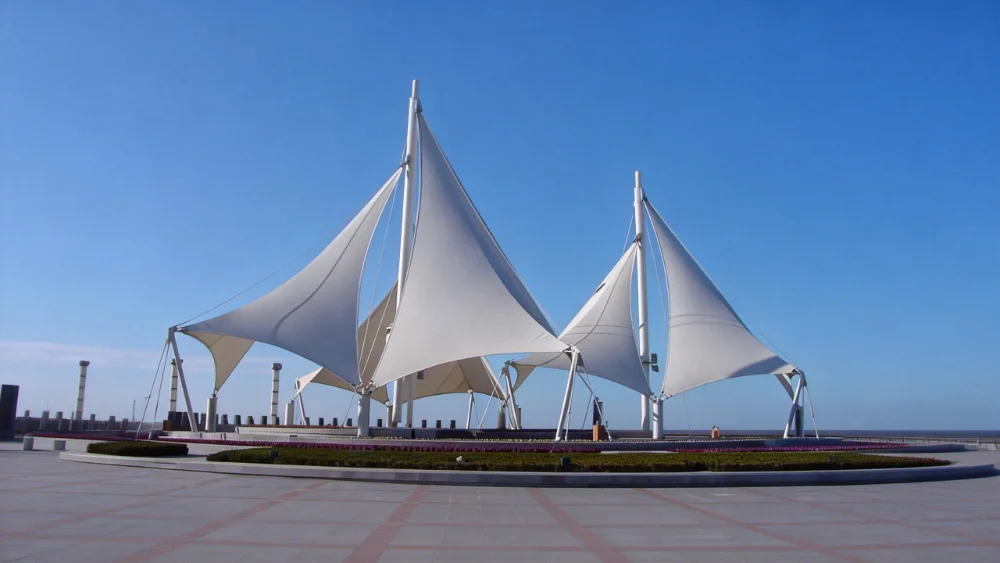
Tensile Membrane Structures for Commercial Outdoor Spaces: Benefits, Materials, and Project Planning
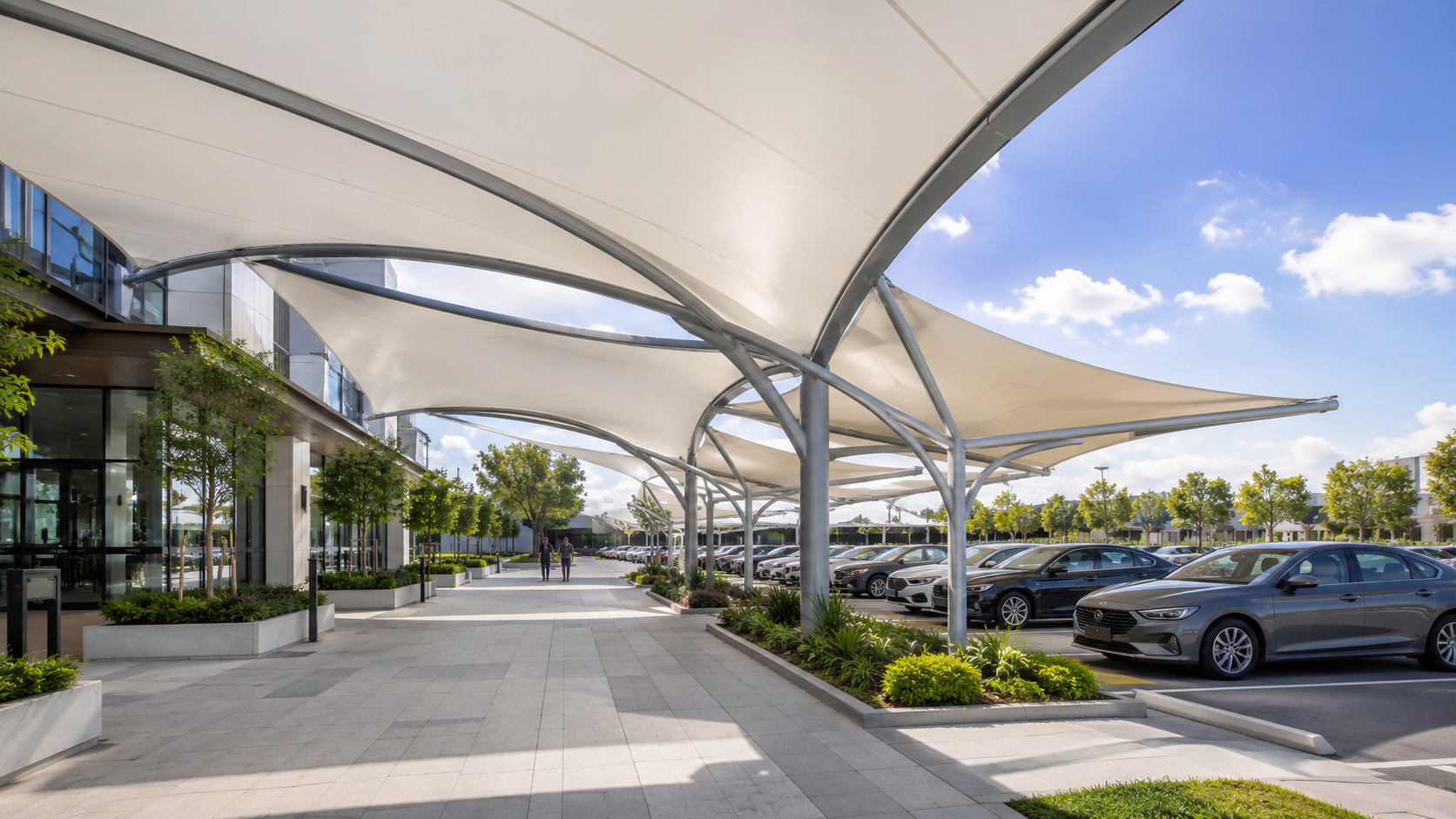
Commercial outdoor spaces are no longer designed only for basic shelter. For shopping centers, office buildings, hotels, schools, stadiums, transport facilities, and public landscapes, outdoor areas need to be functional, durable, visually attractive, and comfortable for daily use. This is why tensile membrane structures have become a practical solution for many modern projects.
Compared with conventional rigid roofing systems, tensile membrane structures offer a lightweight architectural form, flexible design possibilities, good weather protection, and efficient coverage for large or irregular spaces. They can be used for car parking canopies, walkway covers, entrance canopies, rooftop sunshades, sports stands, toll station roofs, landscape shelters, and many other commercial applications.
What Is a Tensile Membrane Structure?
A tensile membrane structure is a building system that uses tensioned fabric membrane materials supported by steel frames, cables, masts, or other structural components. Instead of relying on heavy roof panels, the membrane surface is stretched into a stable shape that can resist wind, rain, sunlight, and other outdoor conditions.
The final structure usually combines three main parts:
- Membrane fabric, such as PVC/PVDF, PTFE, or ETFE
- Steel support structure, including columns, beams, arches, or trusses
- Connection and tensioning system, including cables, plates, clamps, and fixing details
This combination allows the structure to remain lightweight while still providing reliable coverage and a distinctive architectural appearance.
Why Commercial Projects Choose Tensile Membrane Structures
1. Lightweight Roof Design
One of the biggest advantages of tensile membrane structures is their lightweight nature. This makes them suitable for projects where a heavy roof may not be ideal, such as rooftop areas, existing buildings, long-span walkways, and open public spaces.
A lighter structure can also help reduce the visual heaviness of the building. Instead of creating a bulky roof, the membrane surface forms a clean and elegant shape that blends well with modern architecture.
2. Flexible Architectural Appearance
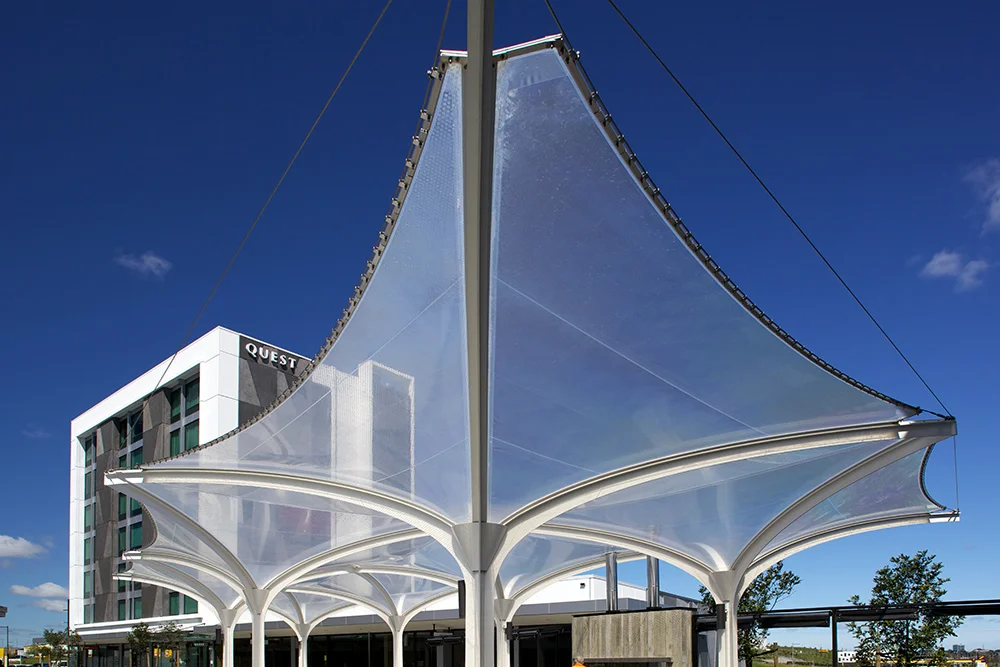
Tensile membrane structures can be designed in many forms, including curved roofs, wave shapes, umbrella structures, arch-supported canopies, conical forms, and customized free-form designs. This flexibility is especially valuable for commercial projects that need both function and visual impact.
For example, a shopping mall entrance canopy should not only protect visitors from rain and sunlight, but also strengthen the building’s first impression. A park landscape canopy should provide shade while becoming part of the visual identity of the space.
3. Efficient Weather Protection
Outdoor commercial areas are often exposed to strong sunlight, rain, wind, and changing temperatures. A well-designed tensile membrane canopy can improve comfort by providing shade, reducing direct solar exposure, and protecting people, vehicles, and equipment from weather.
Typical applications include:
- Parking areas
- Pedestrian walkways
- Hotel drop-off areas
- Commercial building entrances
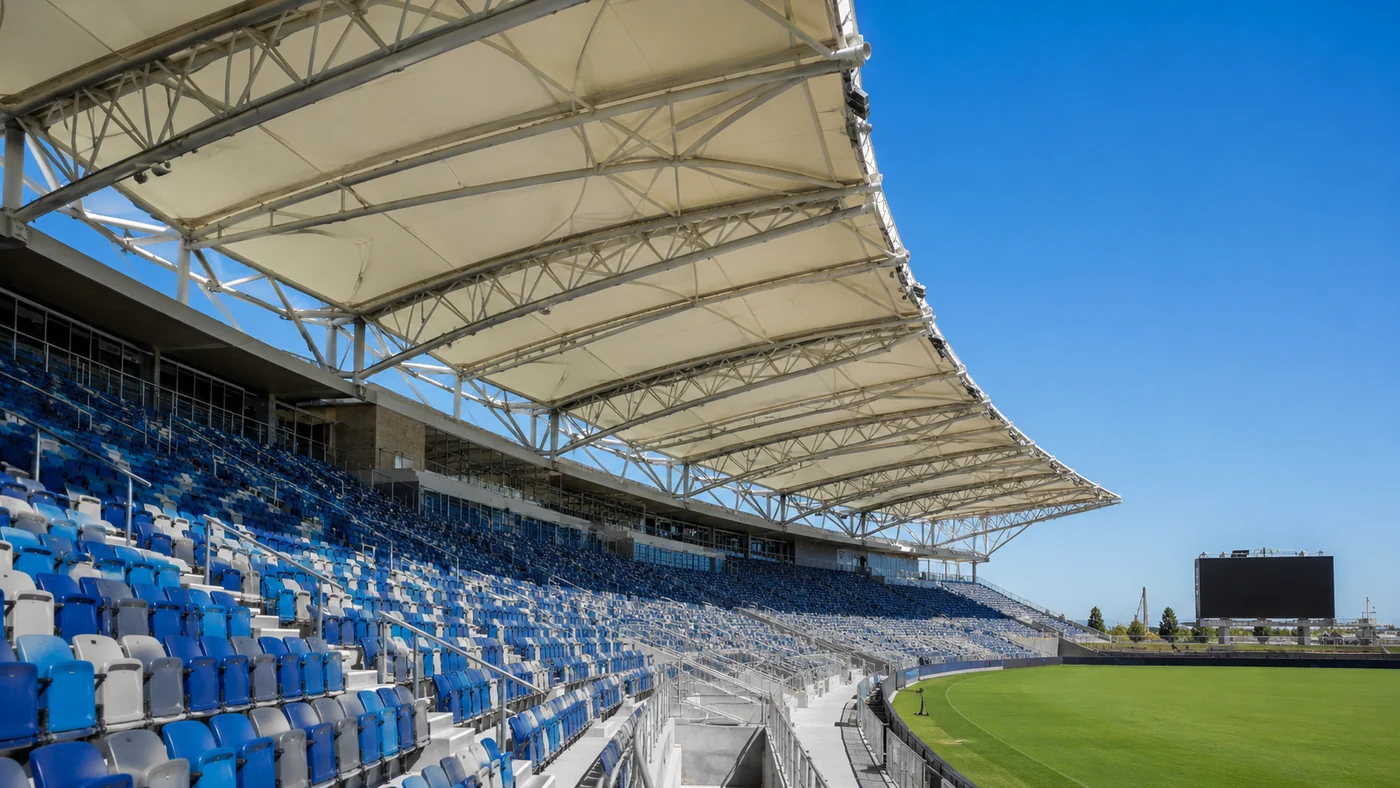
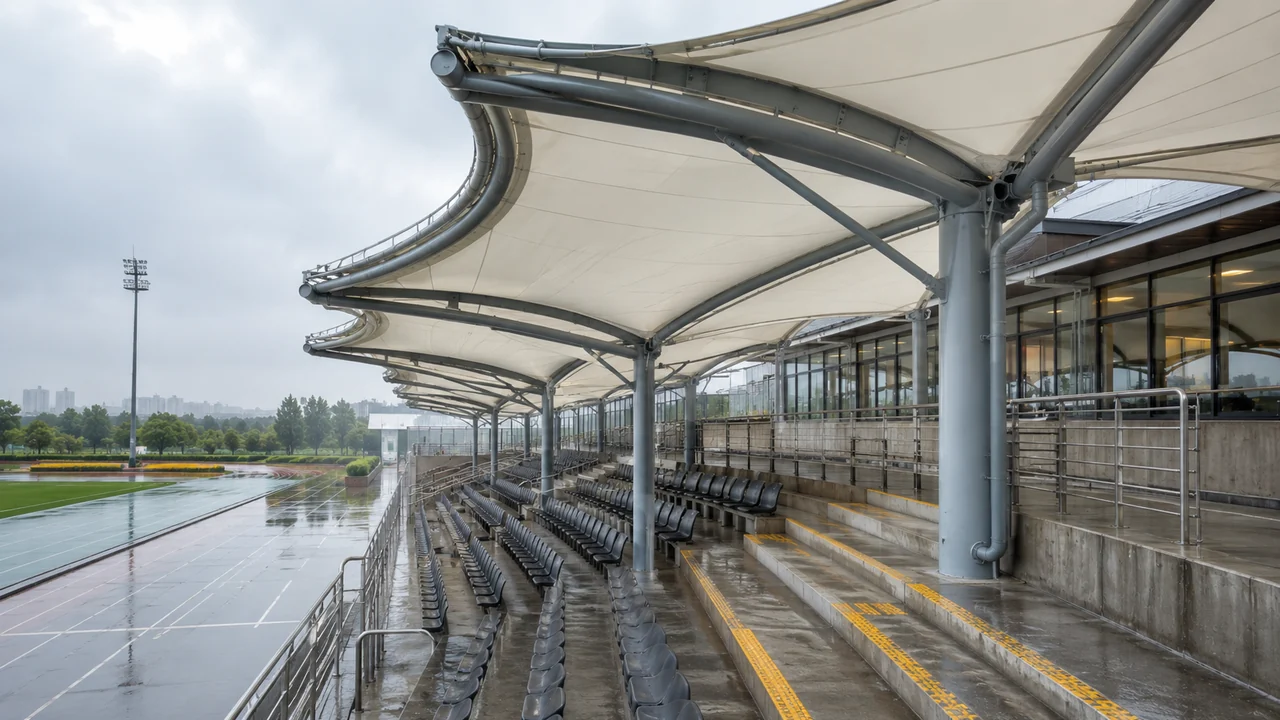
- Sports stands
- Outdoor waiting areas
- Public transport facilities
- Scenic area shelters
The membrane material and structural design should be selected according to the project location, climate conditions, expected service life, and maintenance requirements.
4. Suitable for Large and Irregular Spaces
Many commercial outdoor projects are not simple rectangular spaces. They may involve curved pathways, open plazas, uneven site conditions, existing buildings, or specific circulation routes. Tensile membrane structures can be adapted to these conditions more flexibly than many traditional roof systems.
For large-span areas such as stadium stands, toll plazas, transport terminals, or public squares, membrane structures can create wide covered areas with fewer intermediate supports, helping to keep the space open and easy to use.
Common Applications in Commercial Outdoor Projects
Car Parking Canopies
Membrane structure carports are widely used in commercial parking lots, residential communities, office buildings, schools, hotels, and public facilities. They protect vehicles from sunlight, rain, and falling debris while improving the overall appearance of the parking area.
For parking canopy projects, important design factors include parking layout, column spacing, drainage direction, vehicle height clearance, wind load, and long-term coating performance of the steel structure.
Walkway Covers
Covered walkways are useful for campuses, hospitals, commercial centers, industrial parks, airports, scenic areas, and public transportation zones. A tensile membrane walkway cover can connect buildings, protect pedestrians, and create a more comfortable walking route.
The design should consider pedestrian flow, lighting, drainage, foundation conditions, and how the canopy connects with surrounding buildings.
Entrance Canopies
An entrance canopy is both a functional shelter and a branding element. It is often used at hotels, malls, office towers, exhibition halls, schools, and public buildings. A well-designed membrane entrance canopy can make the entrance more recognizable while improving the visitor experience.
For entrance projects, the canopy form should match the architectural style of the main building and provide enough coverage for people waiting, entering, or leaving the building.
Rooftop Sunshade Structures
Rooftop areas are increasingly used for restaurants, lounges, gardens, fitness areas, and public activity spaces. Tensile membrane sunshade structures can help convert exposed rooftop areas into usable commercial spaces.
Because rooftop projects often involve wind uplift, limited load capacity, existing waterproofing layers, and difficult installation access, early design coordination is especially important.
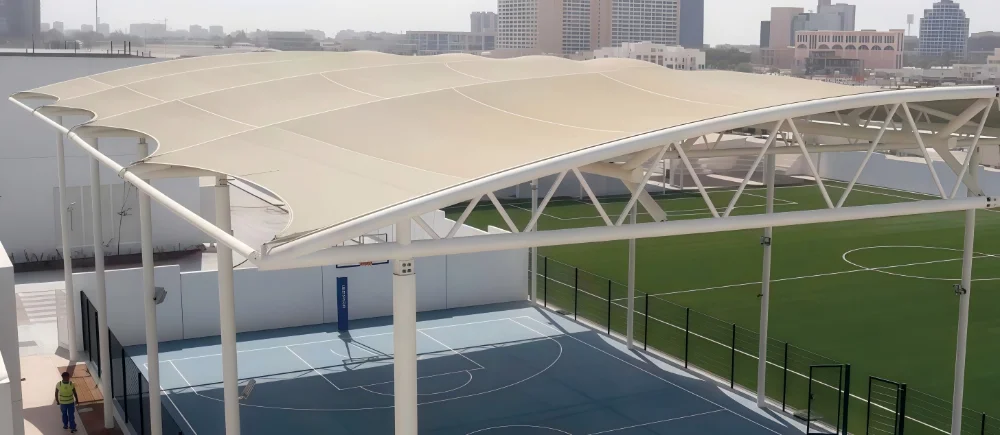
Sports and Public Facility Canopies
Sports stands, playgrounds, swimming pools, public squares, and recreation areas often require shade and rain protection without closing the space completely. Membrane canopies can provide comfortable coverage while keeping the area open, bright, and visually attractive.
For these projects, the structure should consider crowd movement, safety requirements, visibility, drainage, and long-term durability.
Choosing the Right Membrane Material
Different membrane materials have different performance characteristics. The right choice depends on budget, project type, service life, climate, light transmission, fire performance, and architectural requirements.
PVC/PVDF Membrane
PVC/PVDF membrane is commonly used for practical commercial canopy projects. It offers good flexibility, cost efficiency, weather resistance, and a wide range of application possibilities. It is often suitable for carports, walkways, entrance canopies, landscape shelters, and general outdoor shade structures.
PTFE Membrane
PTFE membrane is often selected for projects that require stronger long-term durability, better weather resistance, and higher specification performance. It can be suitable for stadiums, transport facilities, large public buildings, and landmark structures.
ETFE Film
ETFE is different from traditional fabric membrane materials. It is often used for transparent or semi-transparent roof systems, atriums, skylights, façades, and modern architectural envelopes. ETFE can provide excellent light transmission and a lightweight appearance, making it suitable for projects that require natural daylight.
Key Factors Before Starting a Membrane Structure Project
Before requesting a quotation or starting detailed design, project owners should prepare basic project information. This helps the manufacturer understand the application scenario and recommend a more practical solution.
Useful information includes:
- Project application, such as carport, walkway, entrance, rooftop, stadium, park, or toll plaza
- Project location and local climate conditions
- Approximate coverage area, length, width, and height
- Site photos, layout drawings, or architectural references
- Preferred membrane material or color
- Wind load, snow load, or local building requirements if available
- Foundation conditions or existing structure information
- Expected service life and maintenance requirements
- Installation schedule and delivery requirements
The more complete the project information is, the easier it is to evaluate structure type, material direction, steel frame design, fabrication method, packing, shipping, and installation support.
Why Early Design Coordination Matters
A tensile membrane structure is not just a fabric roof. It is an integrated engineering system involving structure, membrane patterning, steel fabrication, connection details, drainage, coating, packing, and installation.
If design coordination starts too late, problems may appear during fabrication or installation. For example, the membrane shape may not match the steel frame properly, drainage may be insufficient, or anchoring conditions may not meet the actual site requirements.
Early coordination helps control these risks and makes the project easier to manage from concept to completion.
Conclusion
Tensile membrane structures provide a practical and attractive solution for many commercial outdoor spaces. Whether the project is a parking canopy, walkway cover, entrance shelter, rooftop sunshade, sports stand, or public facility roof, the right membrane system can improve comfort, protect people and assets, and enhance the architectural value of the space.
For a successful project, buyers should not only compare prices. They should also consider material selection, structural design, climate conditions, fabrication quality, installation support, and long-term maintenance.
If you are planning a membrane structure project, share your project location, dimensions, application scenario, and design expectations with our team. We can help review suitable structure options, membrane material direction, and quotation details for your next step.