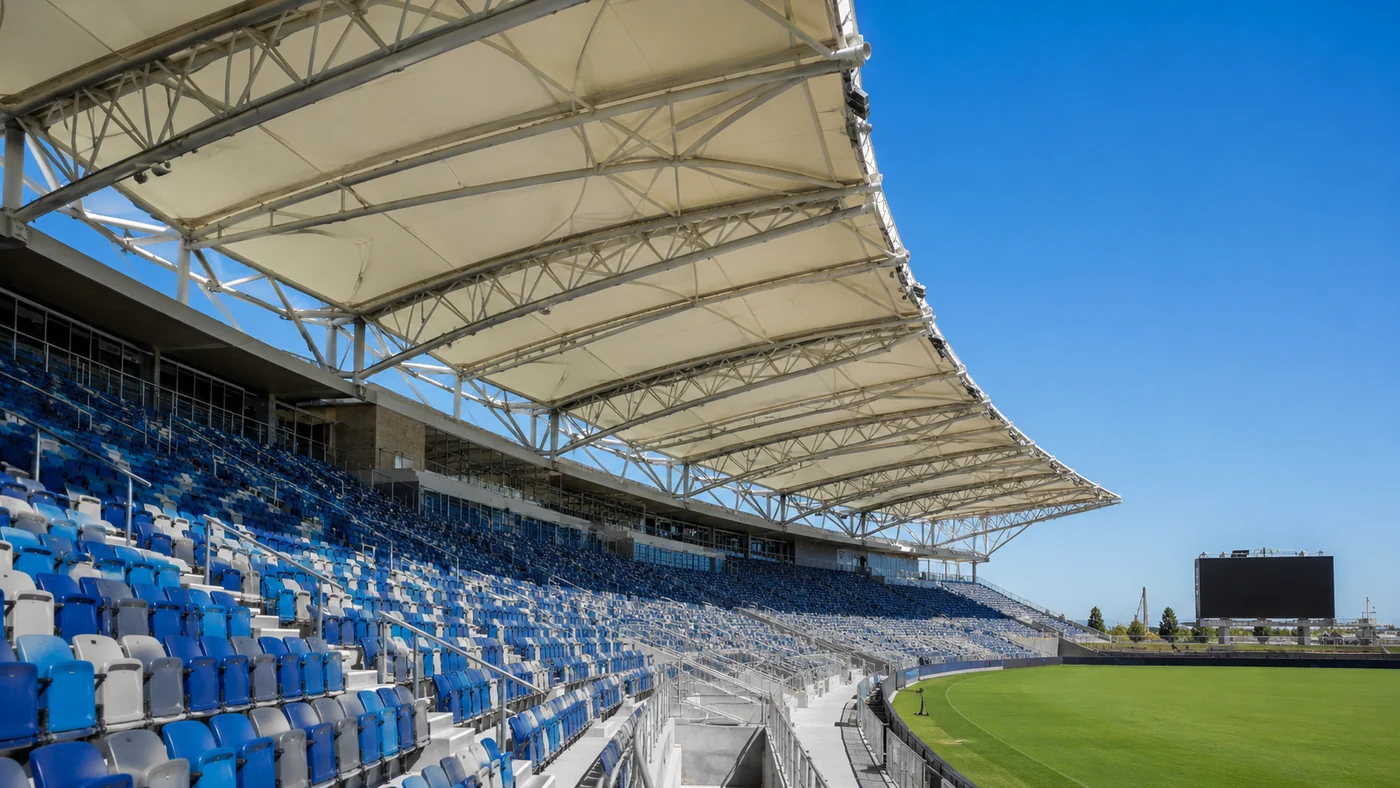
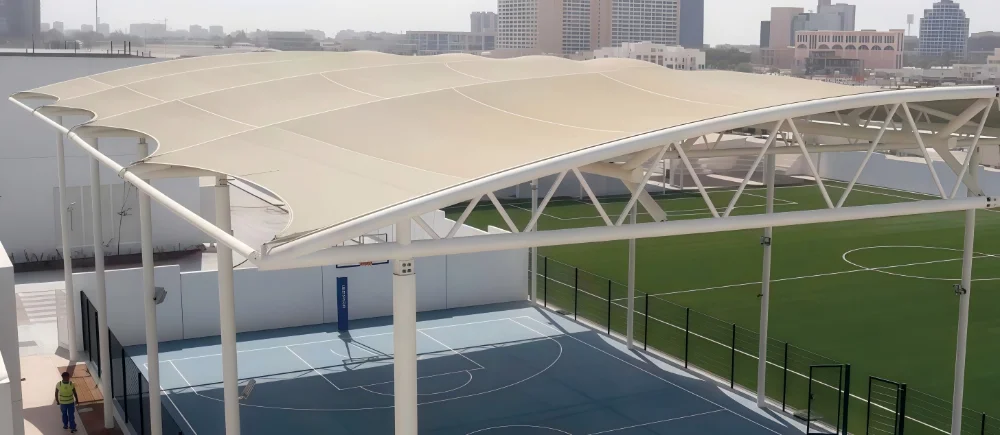
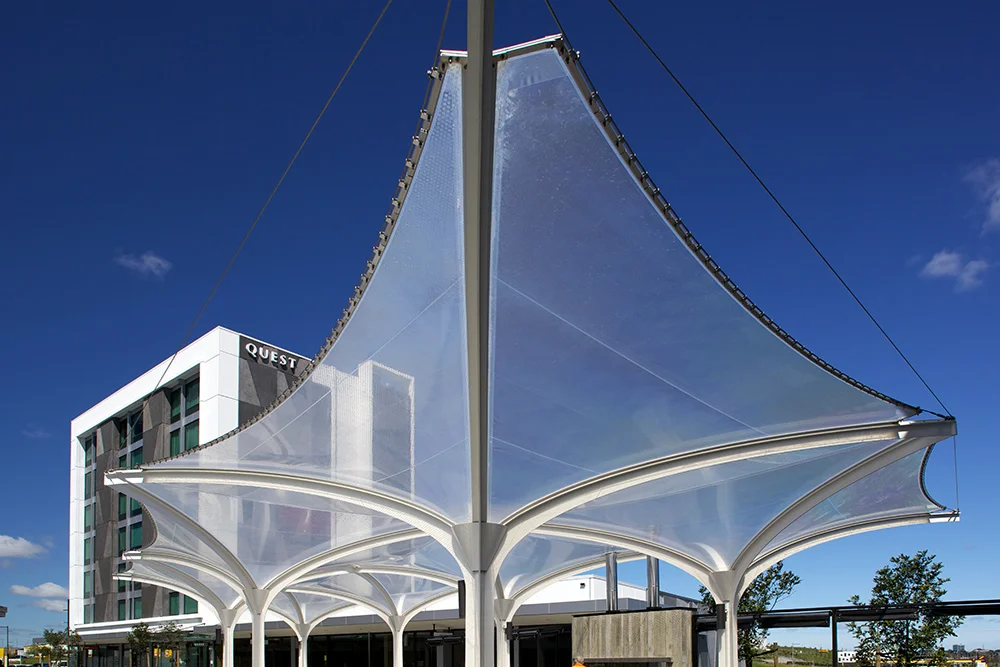
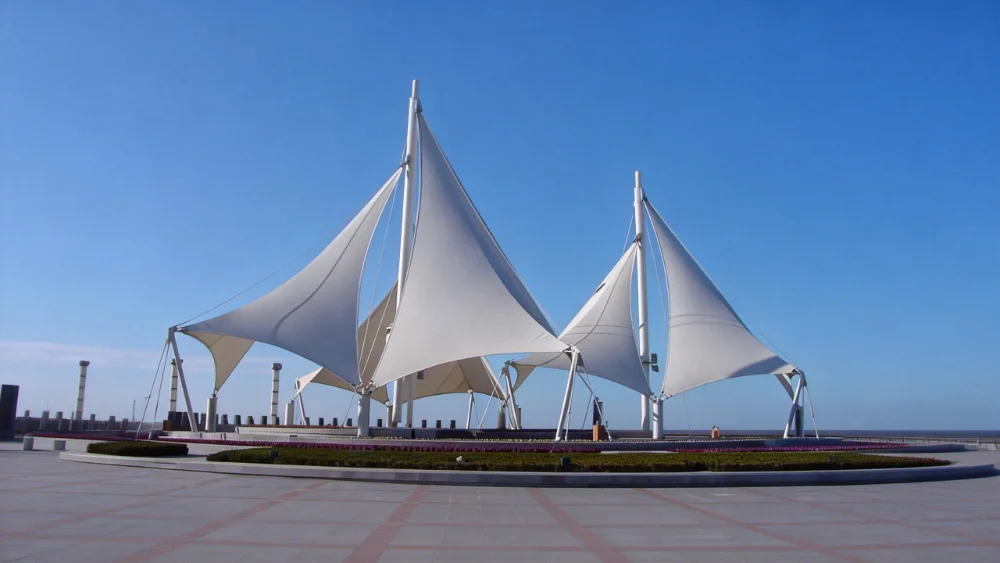
Walkway canopies are an important part of modern public, commercial, and industrial environments. They provide weather protection, improve pedestrian comfort, and help create a more organized outdoor circulation system. For many projects, tensile membrane structures have become a practical and attractive solution for walkway canopy systems.
Compared with traditional metal roofing or concrete-covered corridors, tensile membrane walkway canopies offer a lighter structure, flexible shapes, good daylight performance, and a clean architectural appearance. They are widely used in schools, hospitals, shopping centers, parks, transport stations, factories, hotels, and public buildings.
For project owners, architects, and contractors, choosing the right walkway canopy is not only about appearance. It also involves span design, drainage, wind resistance, material selection, maintenance, and long-term durability.
1. Why Walkway Canopies Are Important
Outdoor walkways often connect different buildings, parking areas, entrances, gardens, sports areas, and public facilities. Without a suitable cover, pedestrians may be exposed to rain, strong sunlight, wind, and heat.
A well-designed walkway canopy can help solve these problems by creating a more comfortable and protected passage. In commercial spaces, it can also improve the customer experience. In schools, hospitals, and factories, it helps support safer and more efficient daily movement.
Common walkway canopy applications include:
- Pedestrian corridors between buildings
- Covered walkways in schools and universities
- Hospital and healthcare facility walkways
- Shopping mall outdoor passages
- Hotel and resort pathways
- Factory and industrial site walkways
- Park and landscape pedestrian routes
- Bus station and transport connection areas
For large projects, the walkway canopy may also become part of the overall architectural identity.
2. Why Use Tensile Membrane Structures for Walkway Covers?
Tensile membrane structures are especially suitable for walkway canopy systems because they combine lightweight materials with strong structural performance. The membrane surface is tensioned over a steel framework, forming a stable and elegant covering system.
Lightweight Structure
Membrane materials are much lighter than glass, concrete, or traditional metal roofing. This reduces the load on the supporting steel structure and foundation. For long pedestrian corridors, a lightweight system can help simplify installation and reduce overall structural complexity.
Flexible Architectural Shapes
Tensile membrane canopies can be designed in different shapes, including curved, arched, wave-shaped, single-slope, double-slope, or customized geometric forms. This allows the canopy to match different architectural styles and project requirements.
Comfortable Natural Light
Many membrane materials allow soft natural light to pass through while reducing direct glare and heat. This creates a bright and comfortable walking environment without making the space feel dark or enclosed.
Good Weather Protection
A properly designed membrane walkway canopy can protect pedestrians from rain and sunlight. With good slope and drainage planning, rainwater can be guided away from the walking area effectively.
3. Key Design Factors for a Membrane Walkway Canopy
A successful walkway canopy project requires more than installing a cover over a path. The structure should be designed according to the site environment, local climate, pedestrian flow, and architectural requirements.
Span and Column Layout
The span and column layout directly affect the appearance, cost, and usability of the walkway. Fewer columns can create a more open space, but they may require stronger steel members and more careful structural design.
For narrow walkways, a simple single-side or double-side column system may be enough. For wider pedestrian areas, a larger steel frame or customized support system may be needed.
Canopy Height
The canopy height should provide enough clearance for pedestrians, maintenance access, lighting, signage, and possible emergency movement. For commercial or public projects, the height should also make the space feel open and comfortable.
Drainage Direction
Drainage is one of the most important parts of walkway canopy design. The membrane surface should have enough slope to prevent water accumulation. Rainwater should be directed to gutters, downpipes, or planned drainage points.
Poor drainage can cause water dripping, ponding, stains, and long-term maintenance issues.
Wind Load and Structural Stability
Walkway canopies are usually open structures, which means they may experience wind uplift and lateral wind pressure. The steel structure, membrane tension, anchors, and foundation should be designed according to local wind conditions and relevant project requirements.
Connection with Existing Buildings
In many projects, the walkway canopy connects to existing buildings or entrance areas. The connection details should be carefully planned to avoid water leakage, structural conflict, or visual mismatch.
4. Material Options for Walkway Membrane Canopies
The most common membrane materials used for walkway canopy systems include PVDF-coated polyester fabric, PTFE membrane, and ETFE film systems.
PVDF Membrane
PVDF-coated membrane is widely used in walkway canopy projects because it offers good weather resistance, cost efficiency, and flexible design possibilities. It is suitable for many commercial, educational, industrial, and landscape applications.
PTFE Membrane
PTFE membrane offers stronger durability, better self-cleaning performance, and longer service life. It is often used for high-end public buildings, transport facilities, and long-term architectural projects.
ETFE Film
ETFE is often used when the project requires high transparency and a modern architectural appearance. It is more common in skylights, atriums, stadiums, and special roof structures, but it can also be considered for selected walkway projects.
5. Benefits for Commercial and Public Projects
A tensile membrane walkway canopy can bring practical and visual value to many types of projects.
For commercial spaces, it improves the walking experience and guides visitors between entrances, shops, parking areas, and outdoor facilities. For schools and hospitals, it provides a safer and more comfortable passage during rain or hot weather. For factories and logistics parks, it can improve movement efficiency between buildings.
In landscape and public projects, a membrane walkway canopy can also become a visual feature. Its curved form, clean lines, and light-transmitting surface can create a more modern and attractive environment.
6. Customization Options
Every walkway canopy project has different requirements. The design can be customized based on:
- Walkway width and length
- Column spacing
- Canopy height
- Membrane color
- Steel structure color
- Drainage method
- Lighting integration
- Connection to buildings
- Local wind and rain conditions
- Architectural style
For project planning, it is helpful to prepare basic information such as site drawings, walkway dimensions, project location, expected design style, and photos of the installation area.
7. Maintenance Considerations
Membrane walkway canopies are relatively easy to maintain, but regular inspection is still important. Project owners should check the membrane surface, steel structure, connection points, drainage system, and anchors periodically.
Common maintenance tasks include cleaning surface dust, removing leaves from gutters, checking drainage pipes, inspecting membrane tension, and repainting or maintaining steel components if needed.
With proper design, material selection, and maintenance, a membrane walkway canopy can provide reliable long-term performance.
Conclusion
Tensile membrane walkway canopies are a practical solution for creating comfortable, protected, and visually appealing pedestrian spaces. They are lightweight, flexible in design, and suitable for a wide range of commercial, public, landscape, and industrial applications.
For project owners and contractors, the key to a successful walkway canopy is early planning. Span, column layout, drainage, material selection, wind load, and site connection details should all be considered before production and installation.
If you are planning a covered pedestrian walkway for a commercial, public, or industrial project, a custom tensile membrane structure can provide both functional protection and architectural value.
FAQ
1. What is a tensile membrane walkway canopy?
A tensile membrane walkway canopy is a covered pedestrian structure made with tensioned membrane fabric supported by a steel frame. It is used to protect walkways from rain, sun, and weather exposure.
2. Where can membrane walkway canopies be used?
They can be used in schools, hospitals, shopping centers, hotels, parks, factories, transport stations, and public buildings.
3. Which membrane material is suitable for walkway canopies?
PVDF membrane is commonly used for general walkway projects. PTFE is suitable for higher durability requirements, while ETFE may be used for transparent architectural designs.
4. How should drainage be designed for a walkway canopy?
The canopy should have enough slope to guide rainwater to gutters, downpipes, or planned drainage points. Proper drainage helps prevent water accumulation and dripping.
5. Can the walkway canopy design be customized?
Yes. The size, shape, color, column layout, steel structure, drainage method, and connection details can be customized according to the project requirements.