
When planning an outdoor canopy, walkway cover, parking shelter, stadium shade, entrance roof, or toll plaza canopy, one common question is:
should you choose a tensile membrane structure or a traditional steel roof?
Both systems can provide shade and weather protection, but they are not the same. A traditional steel roof is strong, familiar, and widely used. A
tensile membrane structure
is lighter in appearance, more flexible in shape, and often more suitable for modern architectural projects that need large spans, open space, and a distinctive visual effect.
The better choice depends on your project location, budget, span, appearance requirements, installation conditions, drainage design, and long-term maintenance expectations. This article compares tensile membrane structures and traditional steel roofs from a practical project perspective.
What Is a Tensile Membrane Structure?
A tensile membrane structure is a lightweight architectural system made from tensioned membrane fabric and a supporting steel structure. The membrane is stretched into a stable shape through proper tension, edge cables, steel frames, and connection details.
Common membrane materials include PVDF, PTFE, and ETFE. These materials are often used for outdoor shading, roofing, and architectural canopy projects. Tensile membrane structures are widely used for
car parking canopies,
walkway canopy systems,
entrance canopies,
stadium shading, toll plaza roofing, rooftop sunshade systems, and landscape shade structures.
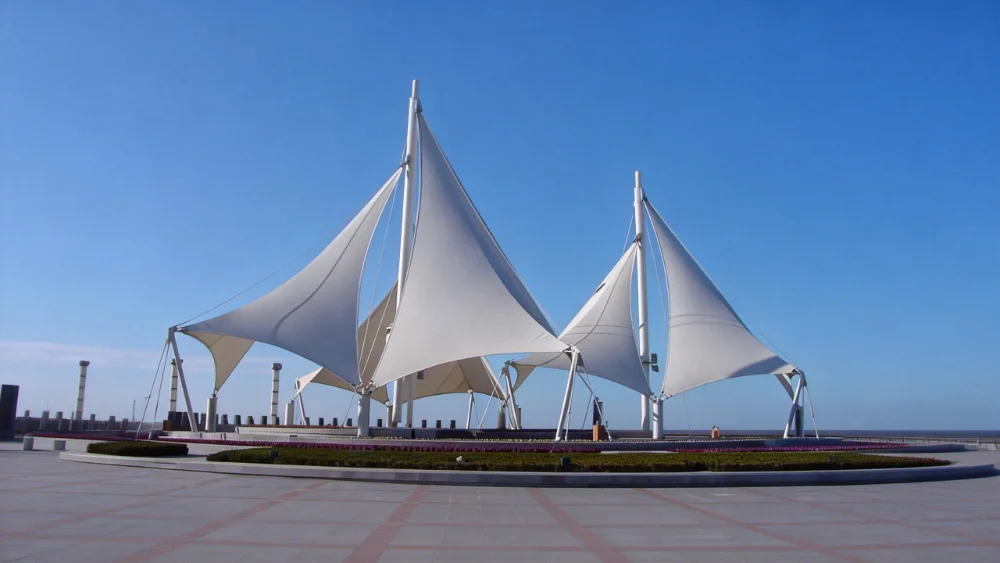
Unlike a flat metal roof, a membrane structure can create curved, wave-like, cone-shaped, or freeform architectural appearances. This makes it attractive for commercial buildings, public facilities, transportation spaces, and projects where the roof is also part of the visual identity.
What Is a Traditional Steel Roof?
A traditional steel roof usually uses a steel frame with metal roofing panels, sandwich panels, or other rigid roof sheets. It is commonly used in factories, warehouses, workshops, industrial sheds, and standard shelter projects.
Steel roofs are known for their strength, simple structure, and wide availability. They are especially suitable for enclosed buildings or projects where the roof must support additional loads, insulation layers, maintenance access, or mechanical equipment.
However, for projects that require a lighter visual effect, large-span shading, or a more architectural appearance, a standard steel roof may look heavy or less flexible in shape.
Quick Comparison: Tensile Membrane Structure vs Traditional Steel Roof
| Comparison Point | Tensile Membrane Structure | Traditional Steel Roof |
|---|---|---|
| Appearance | Lightweight, modern, curved, flexible shape | Solid, regular, more industrial |
| Structural Weight | Relatively lightweight | Heavier |
| Span Capability | Good for large open areas with fewer supports | Often requires stronger beams or more support points |
| Natural Light | Some membrane materials allow soft light transmission | Usually blocks most natural light |
| Design Flexibility | High | Medium to low |
| Installation | Efficient for canopy projects when properly fabricated and planned | Familiar to many local construction teams |
| Maintenance | Needs membrane cleaning, tension inspection, and connection checks | Needs panel, screw, coating, gutter, and corrosion checks |
| Best For | Canopies, public spaces, parking, stadiums, walkways, entrances | Factories, warehouses, workshops, enclosed buildings |
1. Appearance and Architectural Value
One of the biggest advantages of a tensile membrane structure is its appearance. Membrane structures can create smooth curves, soft lines, and dynamic architectural forms. This makes them suitable for projects where the roof is not only functional but also part of the building image.
For example, a shopping mall entrance, hotel drop-off area, urban walkway, sports grandstand, or landscape plaza may need a canopy that looks modern and attractive. In these cases, a tensile membrane structure can provide a more distinctive appearance than a standard metal roof.
For commercial entrances, a custom membrane canopy can also coordinate with the facade, lighting, signage, driveway, pedestrian waiting area, and drainage direction. If your project focuses on building image and entrance recognition, you can refer to
custom entrance canopy membrane structures
for this type of application.
A traditional steel roof is practical, but it usually looks heavier and more regular. It may be suitable for industrial or utility buildings, but less attractive for commercial, public, or architectural spaces.
2. Weight and Structural Load
Tensile membrane structures are usually lighter than traditional steel roof systems. The membrane fabric itself is lightweight, and the supporting steel frame can often be designed with a lighter architectural expression compared with a heavy rigid roof system.
This can be useful for projects where reducing structural load is important, such as rooftop sunshade systems, large-span canopies, and open public spaces. For exposed roof areas, a
rooftop tensile membrane canopy
can help turn an unused rooftop into a shaded and more functional outdoor area.
However, lightweight does not mean simple. A membrane structure still needs proper engineering. Wind load, membrane tension, steel frame design, anchor points, foundation condition, and installation access must all be reviewed carefully.
Traditional steel roofs are heavier, but they may be more suitable when the project requires rigid coverage, insulation, roof-mounted equipment, or an enclosed building system.
3. Span and Column Layout
For parking areas, stadium stands, toll stations, and public walkways, column layout is very important. Too many columns can block vehicle movement, pedestrian flow, sightlines, or usable space.
Tensile membrane structures are often suitable for large open areas because the membrane works together with cables, steel frames, and tensioning systems. This allows the structure to cover a wide space while maintaining a lighter visual effect.
For example, a
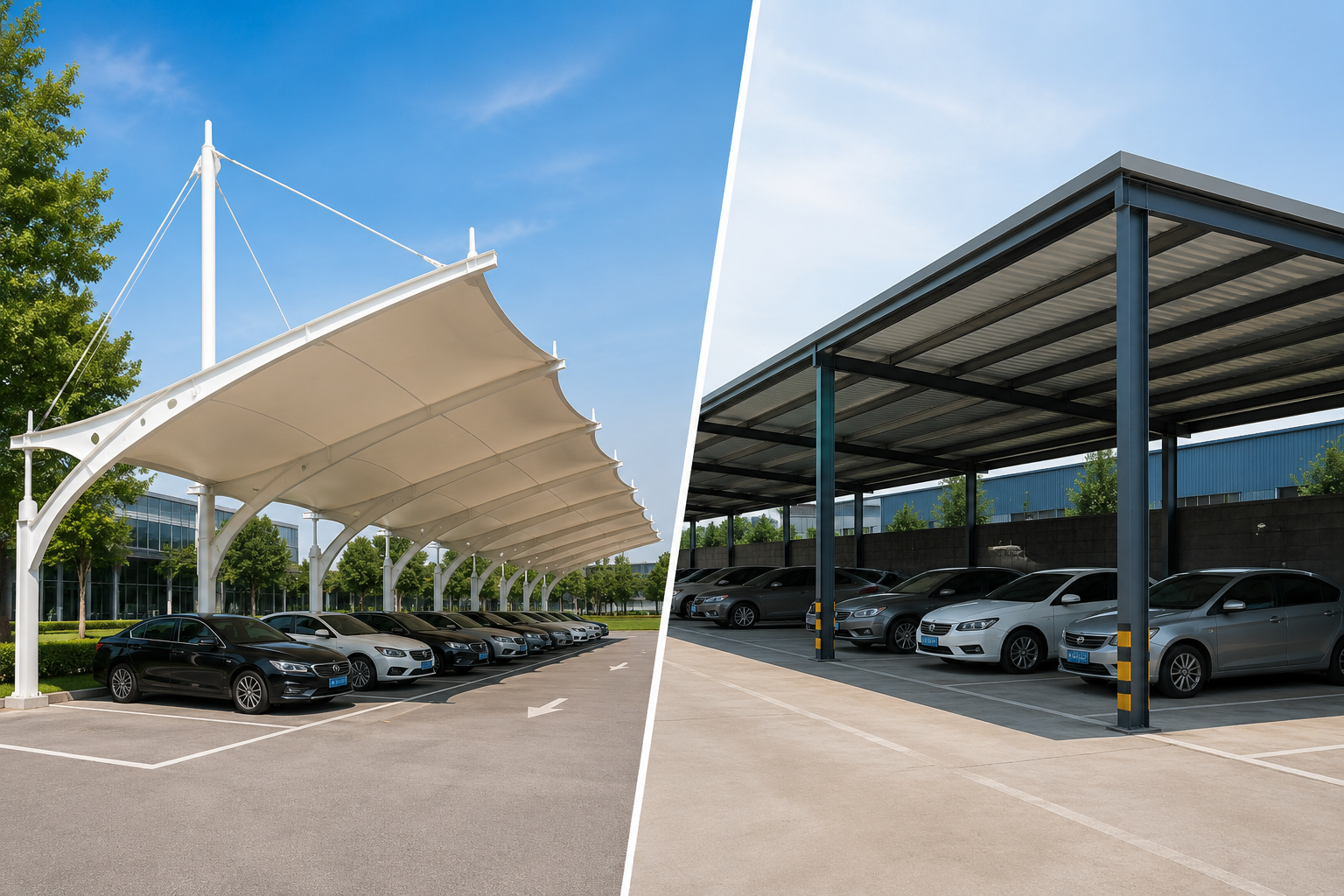
tensile membrane car parking canopy
needs to consider vehicle clearance, parking layout, column spacing, door opening clearance, and drainage direction. A
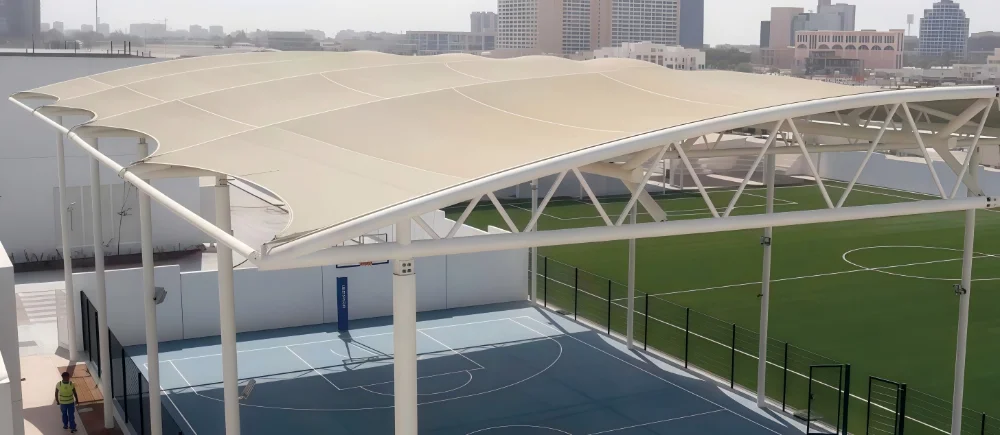
stadium membrane roof structure
needs to consider span, spectator sightlines, seating protection, steel support position, and installation planning.
Traditional steel roofs can also achieve large spans, but they may require heavier beams, more support points, or a larger structural system. This can increase the visual weight and complexity of the project.
4. Light Transmission and Space Comfort
A traditional steel roof blocks most natural light. This can be useful when full shade or enclosure is required, but it may also make the space feel darker.
Some membrane materials can create softer daylight under the canopy. This is especially useful for walkways, entrances, stadium seating areas, commercial outdoor spaces, and public shading projects. The covered area can feel brighter and more open while still receiving sun and rain protection.
For projects where transparency and daylight are important, an
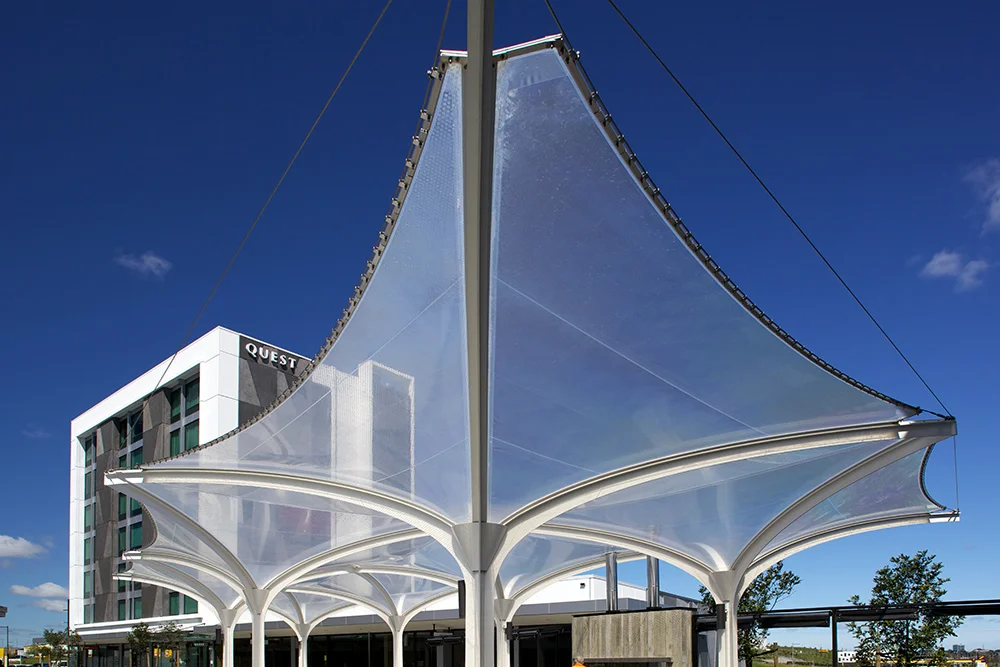
ETFE roof and facade system
may be considered. ETFE systems are often used for atriums, skylights, canopies, public buildings, commercial roofs, and architectural enclosures where daylight transmission and low structural weight are important.
If the project requires full darkness, strong insulation, or an enclosed industrial roof, a traditional steel roof may still be more suitable.
5. Weather Resistance and Drainage
Both tensile membrane structures and traditional steel roofs can perform well outdoors when properly designed. The key is not only the material, but also the shape, slope, connection details, drainage direction, and maintenance plan.
For membrane structures, drainage design is extremely important. The membrane surface must have a proper slope and shape to avoid water ponding. Rainwater should be guided to planned drainage points, gutters, or edge details.
If the shape is poorly designed, water may collect on the membrane surface, creating long-term stress and maintenance problems. For this reason, drainage should be reviewed early in the design stage. You can also read more about
drainage planning for outdoor membrane canopies
before confirming your canopy design.
Traditional steel roofs are usually easier to understand in terms of drainage because they often use standard slopes, roof panels, gutters, and downpipes. However, steel roofs also need good detailing. Poor joints, weak coating, corrosion, or panel damage can cause leakage over time.
6. Construction and Installation
For many canopy projects, tensile membrane structures can be efficient to install once the design and fabrication are completed. The steel frame can be fabricated in sections, shipped to the site, assembled, and then tensioned with the membrane.
This can be useful for projects that need faster installation and less heavy roof panel work. However, installation accuracy is very important. The membrane must be tensioned correctly, and the steel frame, connection plates, cables, and fabric edges need to match the drawings.
If installation is not controlled properly, wrinkles, uneven tension, drainage issues, or alignment problems may appear. That is why buyers should choose a supplier that can provide clear drawings, fabrication control, packing marks, and installation support. Before selecting a supplier, it is helpful to review
how to choose a tensile membrane structure manufacturer.
Traditional steel roofs are more familiar to many local construction teams. Installation can be straightforward when using standard steel frames and metal panels. But for large or complex roofs, the steel quantity, lifting work, panel installation, and waterproof details can still require careful site management.
7. Maintenance Requirements
No outdoor roof system is maintenance-free. A tensile membrane structure needs periodic cleaning and inspection. The owner should check the membrane surface, edge connections, tension condition, cable system, steel frame coating, drainage points, and areas exposed to dust or pollution.
Traditional steel roofs need inspection of roof panels, screws, coating, gutters, flashing, corrosion points, and leakage areas.
In dusty, coastal, industrial, or humid environments, both systems require more attention. For membrane structures, material selection and steel anti-corrosion treatment should be considered from the beginning. For steel roofs, coating quality and panel protection are also important.
8. Cost Considerations
It is not accurate to say that tensile membrane structures are always cheaper than traditional steel roofs, or that steel roofs are always more expensive. The final cost depends on project size, span, membrane material, steel structure complexity, surface treatment, wind and snow load requirements, drainage design, shipping method, and installation support.
For simple industrial buildings, a traditional steel roof may be more economical. For large-span canopies, public shading, architectural entrances, stadium covers, or parking shelters, a tensile membrane structure may provide better overall value because it combines coverage, appearance, and lighter architectural form.
Buyers should compare the complete system, not only the square meter price. A quotation should clearly explain membrane material, steel structure scope, accessories, surface treatment, packing method, delivery terms, and installation support.
When Should You Choose a Tensile Membrane Structure?
A tensile membrane structure may be a better choice when your project needs:
- A modern architectural appearance
- Large-span open coverage
- Fewer columns
- Lightweight roofing
- Bright and open space
- Custom canopy shape
- Efficient installation for outdoor canopy projects
- A visually attractive public or commercial space
It is especially suitable for parking canopies, walkway covers, entrance roofs, stadium and grandstand shading, toll plaza canopies, rooftop sunshade systems, and landscape structures.
For transportation projects, a
toll plaza canopy or toll station roof structure
should consider vehicle lane clearance, column layout, drainage, lighting coordination, and long-term outdoor exposure.
When Should You Choose a Traditional Steel Roof?
A traditional steel roof may be a better choice when your project needs:
- A fully enclosed building
- Heavy-duty industrial roofing
- Strong insulation requirements
- Support for roof-mounted equipment
- A regular rectangular building layout
- Local contractors familiar with standard steel roofing
- A practical industrial appearance rather than an architectural shape
It is often suitable for warehouses, workshops, factories, storage buildings, and enclosed industrial facilities.
Final Recommendation
Tensile membrane structures and traditional steel roofs both have their place. The best choice depends on the project goal.
If your project is mainly an industrial building that needs enclosed space, insulation, and a standard roof system, a traditional steel roof may be the more practical option.
If your project needs a lightweight, modern, large-span, and visually attractive canopy, a tensile membrane structure is often more suitable.
Before making a decision, it is better to review the site dimensions, application, climate conditions, drainage direction, support layout, material options, and installation method. A good supplier should not simply recommend one solution for every project. They should help you understand which structure fits your real site and long-term use.
If you are planning a car parking canopy, stadium canopy, walkway cover, entrance canopy, toll plaza roof, rooftop sunshade, or landscape shade structure, you can send your project dimensions, site photos, drawings, and location to Timi. Our team can help review whether a tensile membrane structure is suitable for your project and provide a practical design direction.
FAQ
Is a tensile membrane structure stronger than a steel roof?
They are strong in different ways. A tensile membrane structure relies on tension, membrane shape, steel frame, cables, and anchor points. A traditional steel roof relies on rigid steel framing and roof panels. The better option depends on the project type, span, load requirement, and site condition.
Is a tensile membrane structure cheaper than a steel roof?
Not always. The cost depends on project size, material, steel structure, span, surface treatment, drainage design, shipping, and installation. For large-span canopy projects, tensile membrane structures may offer good overall value. For simple enclosed industrial buildings, a traditional steel roof may be more economical.
Can a tensile membrane structure be used for parking areas?
Yes. Tensile membrane structures are commonly used for car parking canopies because they can provide shade, rain protection, large-span coverage, and a modern appearance.
Which roof is better for a stadium canopy?
For stadium seating areas and grandstands, tensile membrane structures are often a good choice because they can cover large spaces with a lighter and more architectural appearance. However, the final design should consider wind load, drainage, sightlines, column layout, and installation conditions.
Does a membrane canopy need maintenance?
Yes. The membrane surface, steel frame, cables, connections, drainage points, and tension condition should be inspected regularly. Proper maintenance helps keep the canopy clean, stable, and durable.