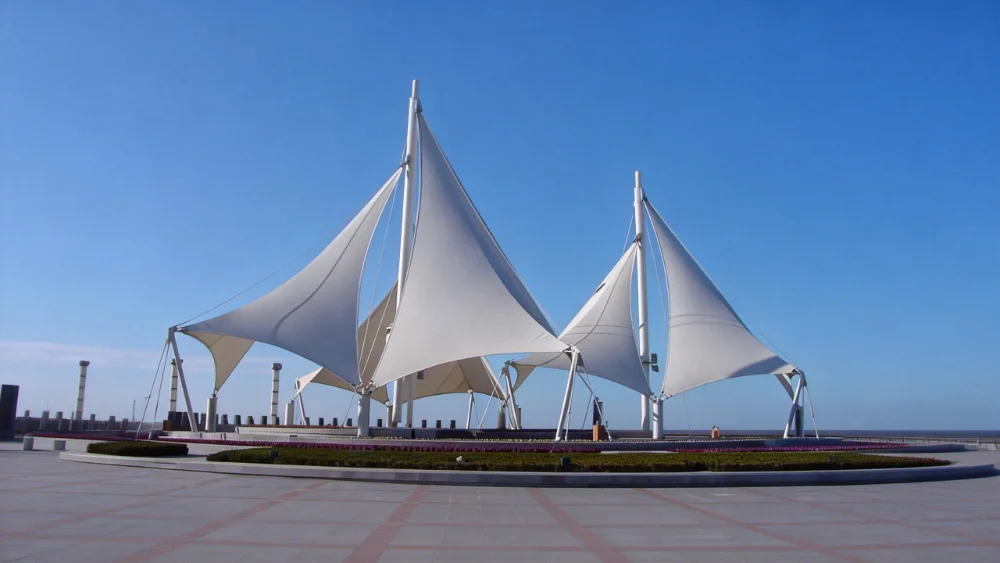
How to Choose the Right Tensile Membrane Structure Company, Manufacturer or Supplier

A tensile membrane structure project usually involves more than one decision. The roof shape, membrane material, steel frame, drainage, foundation and installation method all affect the final result. For this reason, choosing the right company is not only a purchasing decision. It is a project control decision.
In many projects, problems do not appear at the quotation stage. They appear later, when the drawing cannot pass review, the steel frame does not match the site, the drainage route is unclear, or the installation team finds that key accessories were not included in the supply scope. These issues usually come from choosing a supplier before the project requirements are properly checked.
This article explains how to select a suitable tensile membrane structure company, manufacturer or supplier based on project type, technical capability, fabrication control, documentation and site support.
Start With the Project Type, Not the Supplier Name
The right partner depends on what kind of membrane structure is being built. A small parking shade does not need the same level of engineering support as a stadium canopy, transport hub roof or commercial entrance structure. Before comparing companies, the project type should be clear.
| Project Type | Suitable Partner | Reason |
|---|---|---|
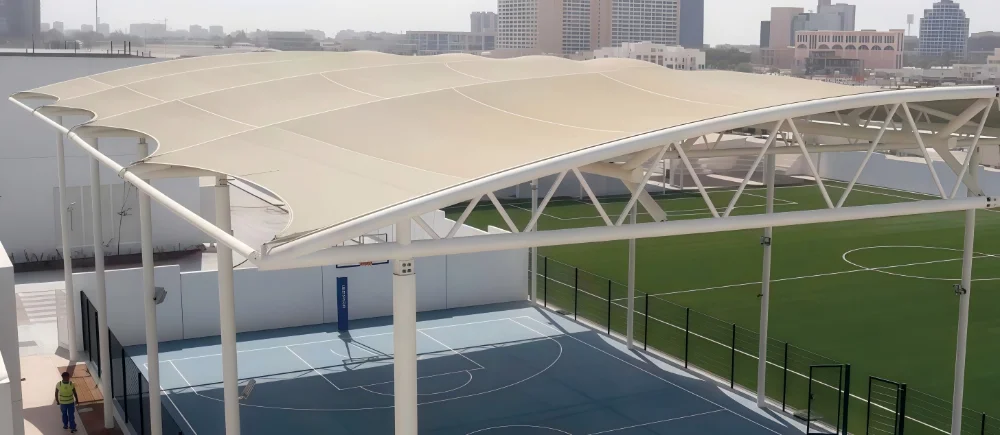
| Small parking shade or simple canopy | Standard manufacturer or canopy supplier | The structure is usually simple and repeatable. |
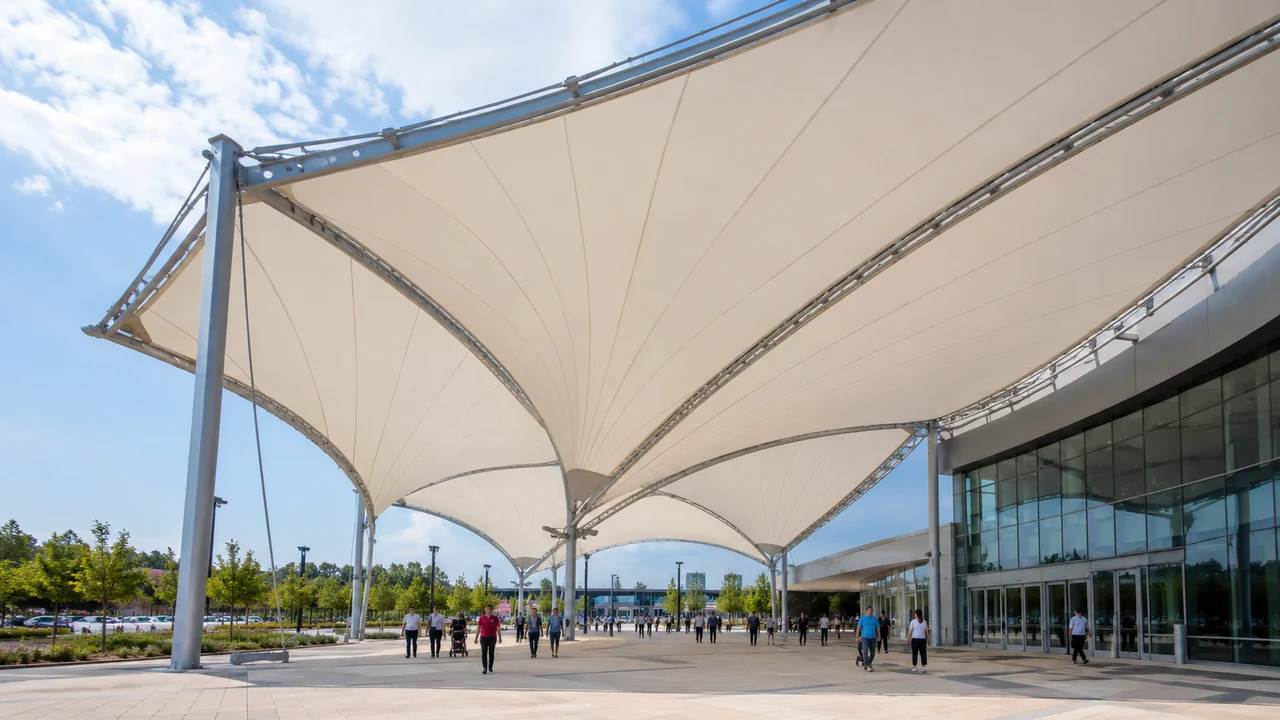
| Commercial entrance canopy | Architect + membrane structure manufacturer | The canopy must match the building facade, entrance flow and connection details. |
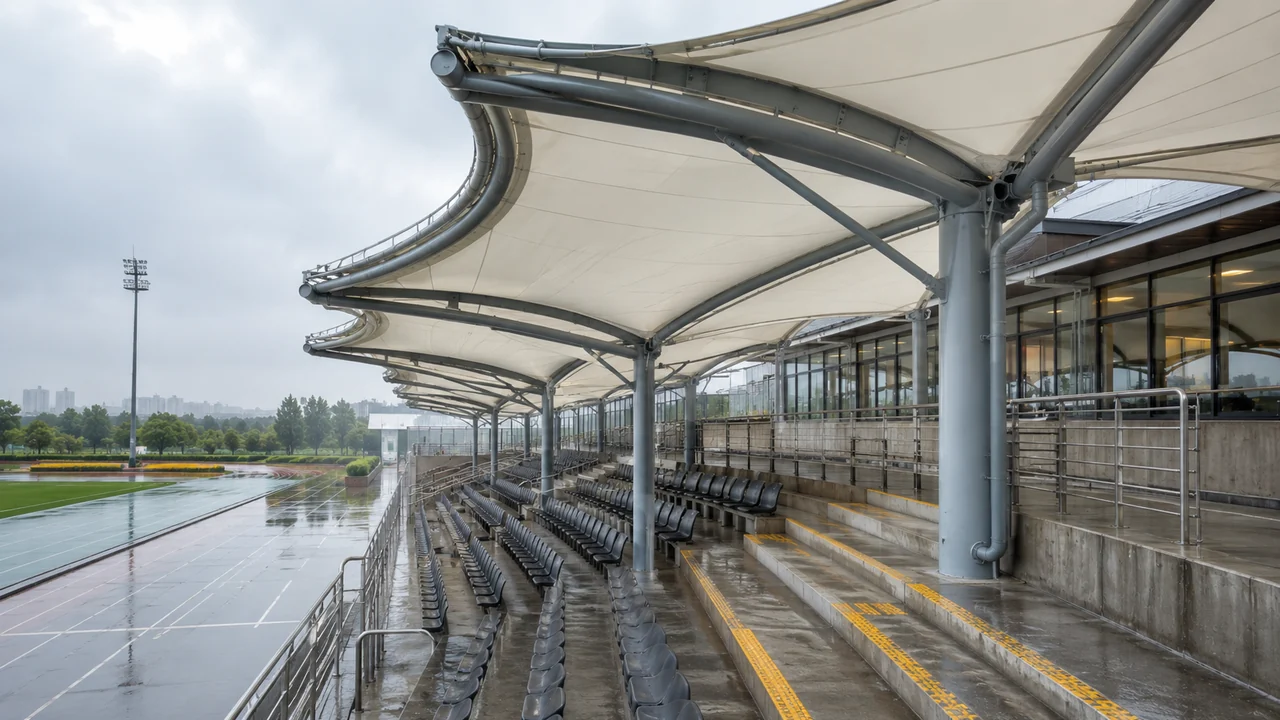
| Stadium or grandstand canopy | Engineering-based membrane structure company | Span, sightline, wind uplift, drainage and seating layout must be reviewed together. |
| Public infrastructure canopy | Company with compliance and documentation support | Approval drawings, material documents and delivery scope are usually more strict. |
| Overseas custom project | Manufacturer with export experience and installation guidance | Packing marks, accessory matching and installation sequence reduce site delays. |
| Existing building or retrofit project | Supplier with site review and foundation coordination ability | Existing structures often limit support points, anchors and crane access. |
For standard shade structures, a manufacturer with mature production may be enough. For long-span roofs, public canopies or custom architectural projects, it is safer to choose a company that can coordinate design, steel structure, membrane fabrication and installation support. A tensile membrane structure manufacturer with both production and engineering experience can reduce many communication gaps between design and construction.
Understand the Difference Between Companies, Manufacturers, Suppliers and Architects
These terms are often used together, but they are not the same. Knowing the difference helps avoid choosing the wrong type of partner.
| Role | Main Responsibility | Best Used When |
|---|---|---|
| Architect | Controls the appearance, space, user flow and building integration | The project has strong architectural or public-space requirements. |
| Structural engineer | Reviews load path, steel frame, support points and foundation conditions | The project has large span, high wind load, rooftop installation or approval requirements. |
| Manufacturer | Produces membrane panels, steel components, accessories and packing | The project requires fabrication control and export delivery. |
| Supplier | Provides materials, components or a defined supply package | The design is already clear and the buyer mainly needs procurement support. |
| Engineering-based company | Coordinates design review, material selection, fabrication and site guidance | The project is custom, large, public, overseas or technically complex. |
| Installer | Handles lifting, assembly, membrane tensioning and final adjustment | The project requires site execution support or local construction coordination. |
If the project is still at concept stage, an architect may be needed first. If the drawings are already clear, a manufacturer or supplier can provide a quotation. If the project involves span, drainage, steel structure, foundation or overseas installation, an engineering-based company is usually the better choice.
Check Whether the Company Can Review the Whole Structure
A tensile membrane roof is not only a membrane surface. The membrane must work with the steel frame, support points, cable system, drainage path and foundation. A company that only prices the membrane area may miss important project risks.
During early communication, the company should ask for project location, application, dimensions, site photos, expected span, support limitations, wind or snow conditions, preferred material, foundation situation and installation responsibility. These questions show whether the company is reviewing the project as a real structure, not only as a fabric order.
The application also affects the structure. A parking canopy, entrance cover, landscape shade and tensile roof may use similar membrane materials, but the design logic is different. The membrane structure product range should be matched with the actual use, site conditions and support layout.
Evaluate Design and Engineering Ability
A rendering can show the intended appearance, but it does not prove that the structure can be built. A suitable company should be able to explain how the roof form becomes a workable engineering solution.
Important points include column position, mast location, steel depth, membrane tension direction, roof high and low points, drainage outlet, connection details, transport size and lifting method. If these issues are not discussed before quotation, the design may need major changes later.
For long-span roofs, stadium canopies, entrance covers and public structures, design ability should be judged by technical discussion, not only by visual presentation.
Check Manufacturing and Fabrication Control
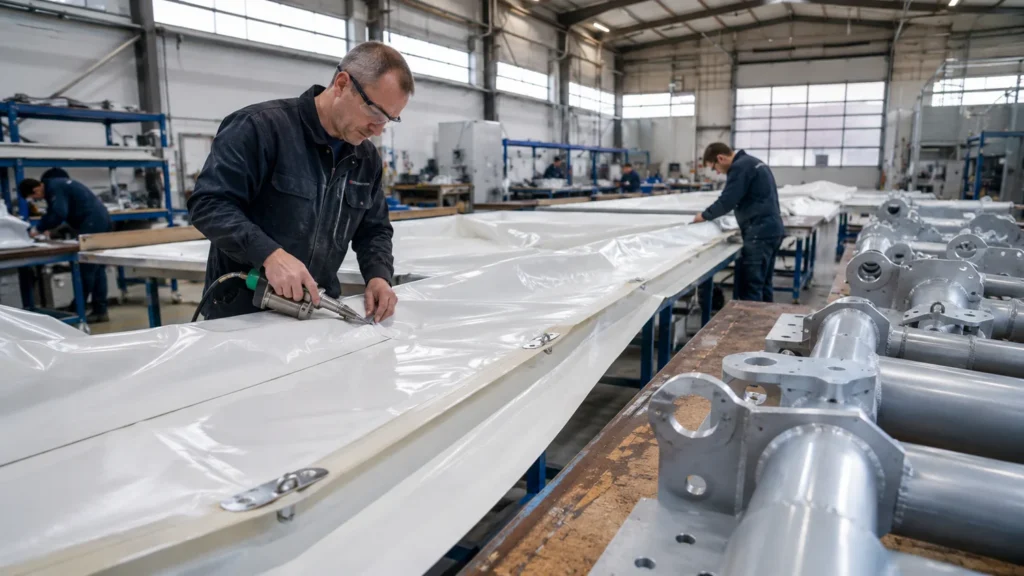
Manufacturing quality directly affects installation. Good membrane fabrication requires accurate cutting patterns, stable welding, reinforced edges and correct hardware positions. Steel fabrication also needs controlled dimensions, hole accuracy, surface treatment and clear component marking.
| Item to Check | Why It Matters |
|---|---|
| Membrane cutting pattern | Controls the final shape, tension behavior and installation fit. |
| Welding and edge reinforcement | Affects waterproofing, strength and long-term appearance. |
| Steel fabrication tolerance | Determines whether components align correctly on site. |
| Surface treatment | Protects the steel frame from outdoor corrosion. |
| Accessory matching | Reduces missing parts and site modification. |
| Packing and labeling | Helps the installation team identify components quickly. |
This is especially important for export projects. If one bracket, bolt group or connection plate is missing, the local contractor may not be able to continue installation. A professional manufacturer should provide clear packing marks, part lists and installation-related documents.
Compare the Quotation Scope, Not Only the Price
Price comparison is useful only when the scope is the same. In membrane structure projects, two quotations may look similar but include very different responsibilities.
| Quotation Item | What Should Be Confirmed |
|---|---|
| Membrane material | Material type, coating, thickness, color, fire performance and warranty terms |
| Steel structure | Main frame, columns, plates, bolts, surface treatment and fabrication scope |
| Accessories | Cables, clamps, anchors, edge details, bolts and connection parts |
| Drainage system | Gutters, downpipes, roof slope and water discharge direction |
| Drawings | Shop drawings, fabrication drawings, membrane pattern drawings and installation drawings |
| Delivery | Packing method, part labels, container loading and export documents |
| Installation support | Installation sequence, remote guidance or on-site technical support if required |
A lower square-meter price may become more expensive if steel, drainage, accessories or installation guidance are not included. Before choosing a supplier, make sure the quotation clearly states what is included and what is excluded.
Choose Materials According to Project Conditions
PVDF, PTFE, ETFE and PVC are common materials in membrane structure projects, but they are suitable for different applications. Material selection should follow climate, service life, fire requirement, transparency, budget and maintenance expectations.
| Material | Common Application | Selection Focus |
|---|---|---|
| PVDF membrane | Parking canopies, sports canopies, entrance covers and commercial shelters | Coating quality, UV resistance, fire requirement and service life |
| PTFE membrane | Long-term architectural roofs and higher-performance public projects | Durability, specification requirement, fabrication control and budget |
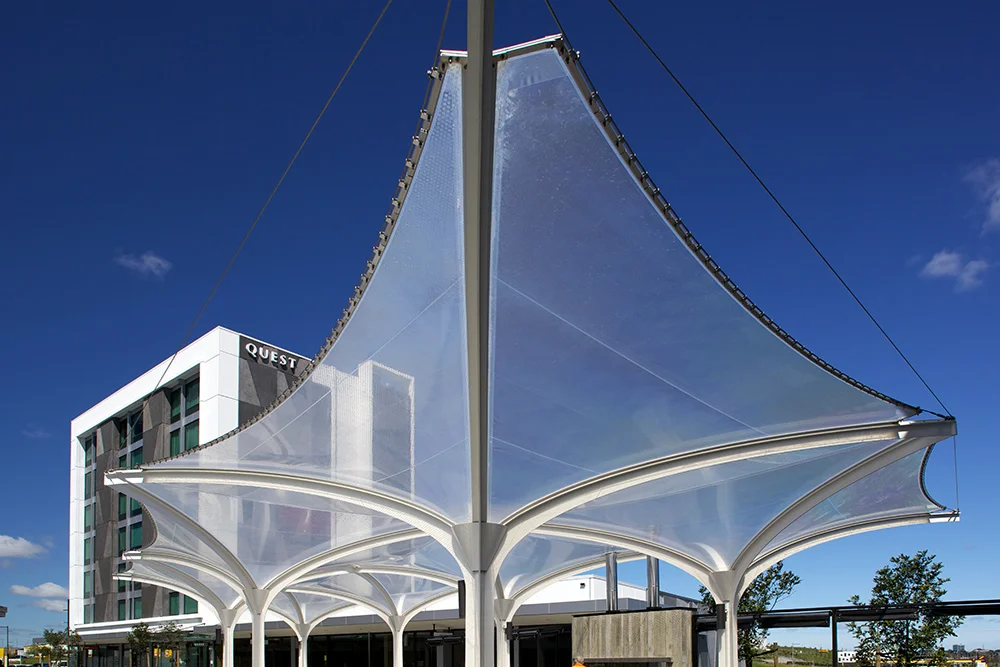
| ETFE film | Transparent roofs, skylights, atriums and facade systems | Light transmission, cushion system, air supply and thermal performance |
| PVC membrane | Cost-sensitive shade structures and simple canopy applications | Outdoor durability, UV resistance, fire rating and maintenance expectation |
The comparison of PVDF, PTFE and ETFE for membrane structures is useful when the project team needs to connect material choice with roof function, not only material name.
Review Documentation and Compliance Ability
For public buildings, commercial projects and overseas supply, documents are part of the project delivery. Missing documents can delay approval, customs clearance, contractor coordination or final handover.
Useful documents may include material references, fire-performance information, structural drawings, fabrication drawings, welding records, coating details, packing lists, installation instructions and export documents. For projects with approval requirements, project compliance for membrane structure engineering should be checked before placing the order.
Do Not Ignore Foundation and Site Conditions
Some companies can supply simple shade structures but may not be suitable for projects with soft soil, rooftop installation, existing foundations, coastal corrosion risk or limited crane access. These conditions can change the steel design, support layout and installation method.
Foundation behavior affects the whole structure. Wind uplift, membrane pretension, cantilever force and long-span geometry all place demands on anchors and base supports. This is why foundation engineering for membrane structures should be discussed before the support layout is fixed.
Confirm Installation Support Before Production
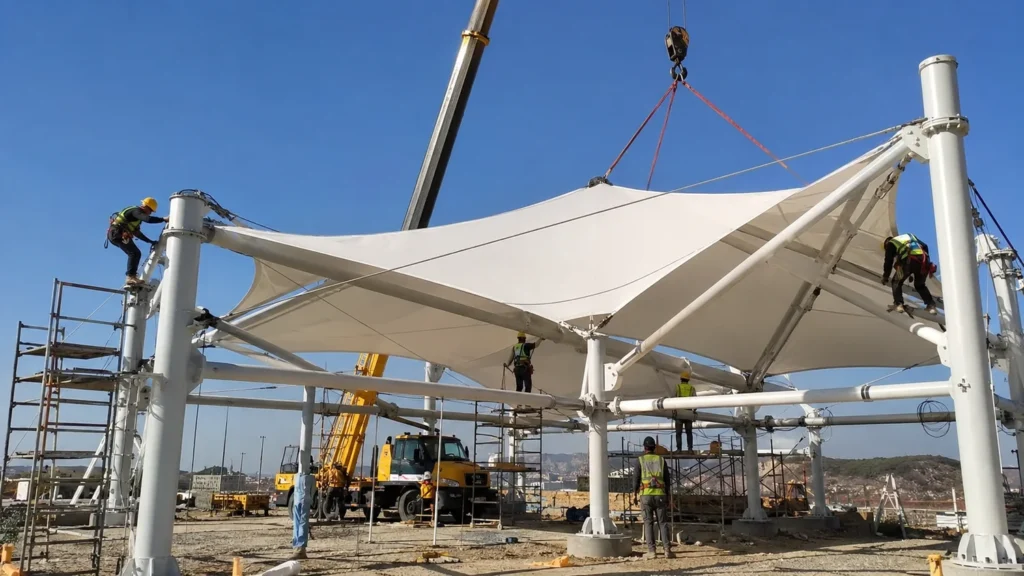
A tensile membrane structure is not complete when it leaves the factory. It still needs correct unloading, positioning, assembly, lifting, alignment and membrane tensioning. If the installation sequence is unclear, the final result may include wrinkles, poor drainage, uneven tension or unnecessary site rework.
The supplier should provide component labels, installation drawings, accessory lists and technical guidance that the local team can actually use. For complex or overseas projects, on-site project management for membrane structures helps connect factory delivery with real site execution.
A Clear Selection Process
A practical way to choose a tensile membrane structure company is to review the project in the following order:
- Define the project type. Confirm whether it is a simple canopy, custom roof, stadium structure, entrance cover, public facility or retrofit project.
- Confirm the required role. Decide whether you need an architect, manufacturer, supplier, engineering company or installation support.
- Check technical review ability. The company should understand span, support points, drainage, foundation and material behavior.
- Review fabrication control. Confirm membrane cutting, welding, steel processing, surface treatment, packing and labeling.
- Compare quotation scope. Make sure membrane, steel, accessories, drawings, drainage and installation support are clearly listed.
- Check documentation. Ask for material, drawing, packing and compliance support before production.
- Confirm site support. Make sure the installation team can follow the drawings, labels and sequence provided.
This process is more reliable than choosing only by price or appearance. It helps identify which company can actually deliver the project, not just quote it.
Information to Prepare Before Requesting a Quote
The more accurate the project information, the more useful the quotation will be. Even if final drawings are not ready, the following details can help the company judge the project correctly:
- Project location and application
- Approximate covered area and dimensions
- Site photos, layout plan or drawings
- Expected span and possible support positions
- Preferred membrane material or performance requirement
- Local wind, snow, fire or approval requirements if available
- Foundation condition or existing structure information
- Required supply scope: membrane only, steel frame, accessories, drawings or installation guidance
FAQ About Choosing Tensile Membrane Structure Companies
What should I check first when choosing a tensile membrane structure company?
Start with project type and technical scope. A suitable company should understand the application, span, support layout, material requirement, drainage, foundation and installation conditions before giving a serious quotation.
Is a manufacturer better than a trading supplier?
For custom projects, a manufacturer or engineering-based supplier is usually safer because membrane cutting, steel fabrication, accessories and installation details must be coordinated. A trading supplier may be suitable for simple or standard products if the design is already clear.
When is an architect needed?
An architect is useful when the membrane structure affects building appearance, entrance flow, public space, facade integration or landmark design. The manufacturer should still review whether the concept can be engineered, fabricated and installed properly.
Why do tensile membrane structure quotations vary so much?
Quotation differences usually come from material grade, steel scope, surface treatment, accessories, drainage system, drawings, packing, delivery and installation support. Comparing only the membrane area or square-meter price can be misleading.
What information is needed for a reliable quotation?
Useful information includes project location, application, dimensions, site photos, drawings, preferred material, support conditions, foundation situation, delivery schedule and whether installation support is required.
Conclusion
The right tensile membrane structure partner should be selected by project capability, not by price alone. A suitable company should understand how membrane form, steel structure, material selection, drainage, foundation, fabrication and installation work together.
For simple structures, a standard manufacturer or supplier may be enough. For custom roofs, commercial canopies, stadium structures, public projects or overseas supply, a company with engineering review, fabrication control, documentation support and installation guidance is usually a safer choice.
Before choosing a company, clarify the project type, required scope, material expectation, site conditions and installation responsibility. A clear selection process can reduce design changes, hidden costs and site delays later.