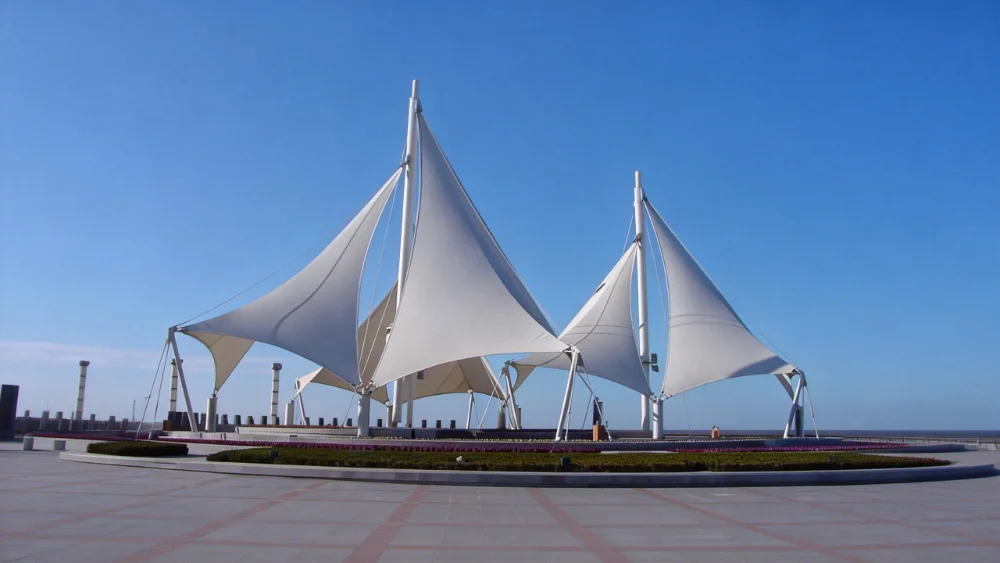
Why membrane material selection shapes the whole project
Choosing between PVDF, PTFE, and ETFE is not only a material question. It affects structural weight, visual appearance, fabrication method, cleaning behavior, service life, and the overall cost logic of the membrane project. Because each material performs differently, the right choice depends on how the building will be used, what span or enclosure effect is required, what the maintenance conditions are, and how long the structure is expected to remain in service.
In practice, no single membrane material is ideal for every project. A transport canopy, stadium roof, commercial shade structure, botanical enclosure, and landmark public building may all require different priorities. This is why material selection should be made according to project conditions rather than simplified into a generic ranking of better or worse.
PVDF: practical and cost-conscious for many standard projects
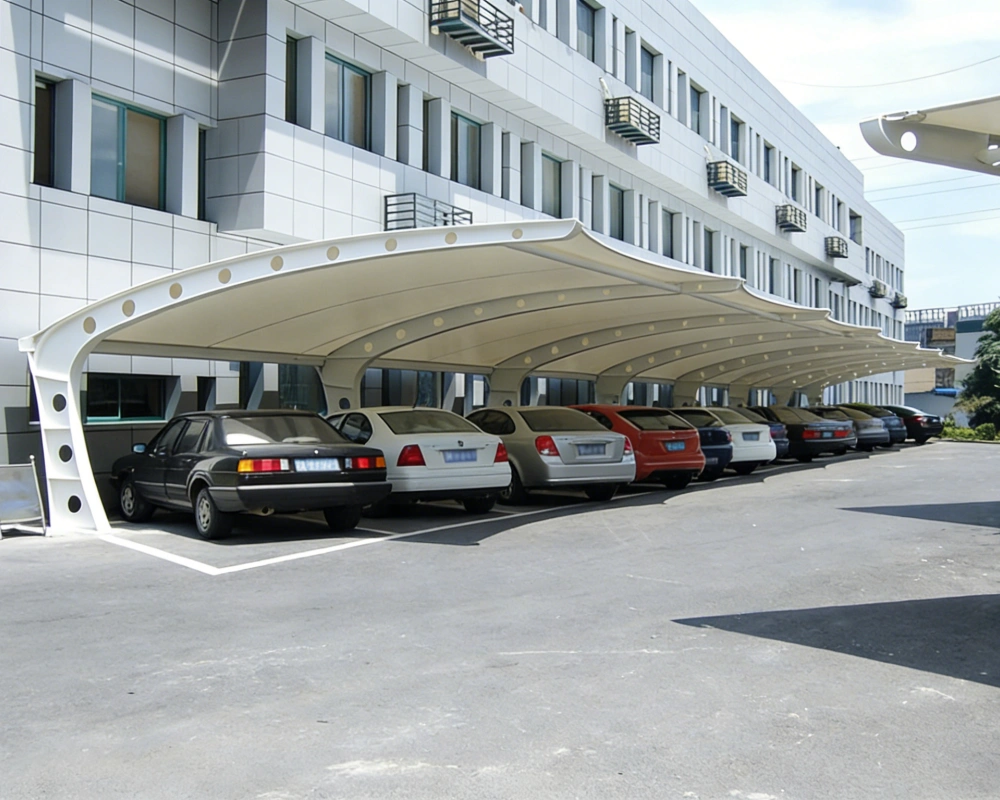
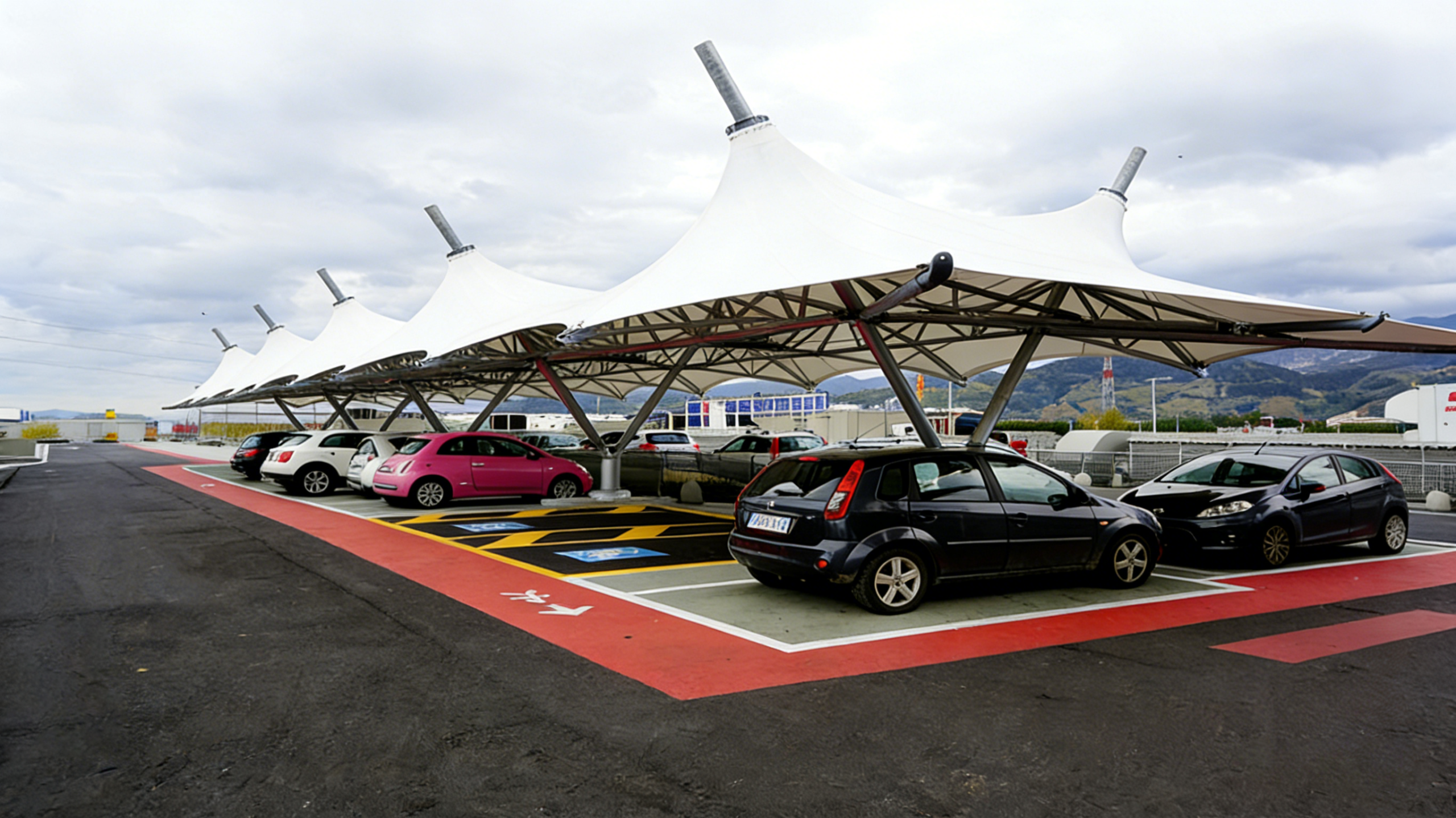
PVDF-coated polyester membrane is widely used because it offers a good balance of cost, processability, and architectural flexibility. It is a practical option for many canopies, parking covers, landscape structures, entrance roofs, and mid-scale public projects where efficient fabrication and controlled budget are important. PVDF systems can deliver attractive visual results and dependable weather protection when specified correctly.
Its limitations are usually related to service life, self-cleaning performance, and long-term surface aging compared with higher-grade membrane options. For projects where the roof is highly visible, difficult to maintain, or expected to remain in service for a very long period, these factors deserve closer review.
PTFE: long service life and stronger premium performance
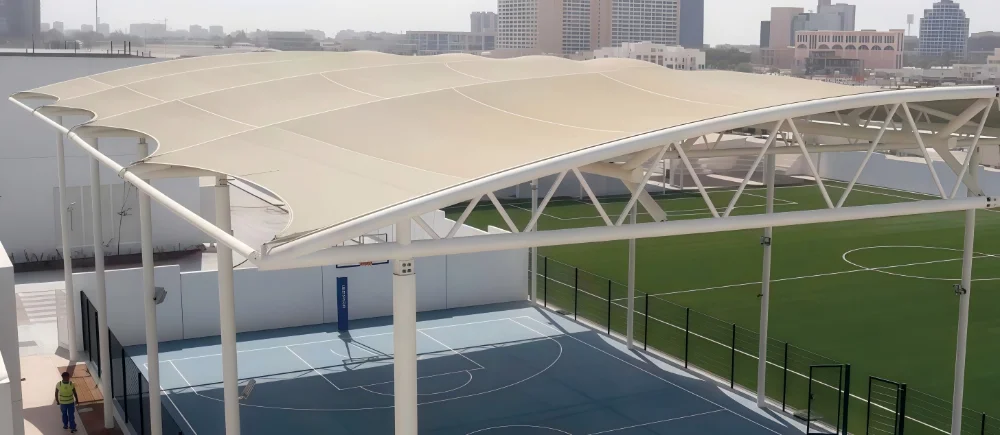
PTFE membrane is often selected for projects that require longer service life, stronger fire performance, and superior self-cleaning behavior. It is commonly used in larger public structures, sports architecture, transport applications, and high-visibility buildings where long-term durability matters as much as initial appearance. PTFE also performs well in challenging outdoor environments, which makes it a strong choice for more demanding project conditions.
Because PTFE systems usually involve a higher initial investment, they are most suitable when the project value comes from long service intervals, reduced maintenance, and long-term visual quality rather than the lowest upfront cost.
ETFE: very light, highly transparent, and suited to special enclosure needs
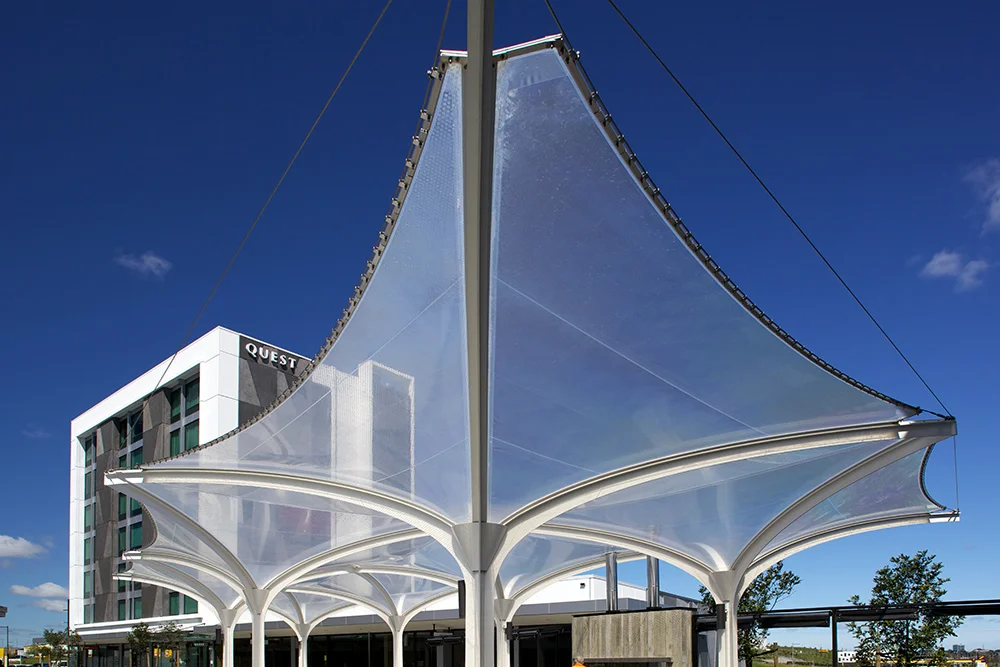
ETFE differs from both PVDF and PTFE because it is often used as a transparent or translucent enclosure material rather than as a conventional tensioned fabric roof alone. It is extremely light, supports high daylight transmission, and can be configured for cushions or specialized envelope systems. ETFE is especially effective in skylights, atriums, facades, stadium features, greenhouse environments, and architecturally expressive enclosures where transparency or enclosure performance is important.
Its engineering logic is also more specialized, and project teams need to account for detailing, support coordination, and in some cases cushion-system requirements from the outset.
How to choose the right material
The best membrane material is the one that aligns with the actual priorities of the project. Owners and designers should compare expected service life, maintenance access, fire requirements, light-transmission goals, structural form, environmental exposure, and budget. When these criteria are reviewed together, the choice between PVDF, PTFE, and ETFE becomes clearer and more defensible from both engineering and procurement perspectives.