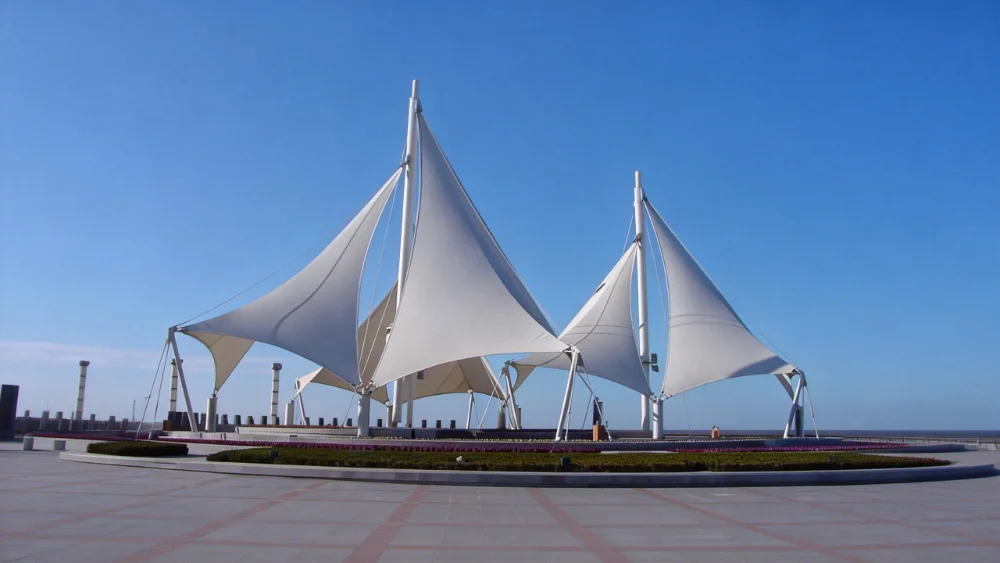
Steel Structure for Membrane Buildings: Q235B, Galvanizing, and Corrosion Protection
Why steel protection matters in membrane building projects
In membrane structure engineering, the membrane surface often receives the most visual attention, but the long-term reliability of the project depends just as much on the steel support system. Columns, trusses, ring beams, edge members, and connection nodes must remain stable under outdoor exposure for many years. That is why corrosion protection is a core engineering issue rather than a finishing detail. When the steel system is well selected and properly protected, the entire membrane building gains better structural reliability, lower maintenance risk, and stronger lifecycle value.
Q235B structural steel is widely used in membrane projects because it offers a practical balance of strength, fabrication convenience, weldability, and cost control. For many commercial, industrial, and public applications, it provides dependable structural performance when paired with the right anti-corrosion treatment system. The key question for project owners is usually not whether steel needs protection, but which protection strategy is more suitable for the environment and expected service life of the project.
Why Q235B remains common in membrane structure fabrication
Q235B is a mature structural steel grade commonly selected for membrane buildings because it is easy to process, suitable for standard fabrication workflows, and readily available for engineered support frames. In tensile structures, the steel system must not only carry roof and wind loads, but also respond correctly to membrane pretension forces and connection detailing. A stable and predictable steel base is therefore essential for accurate fabrication and safe installation.
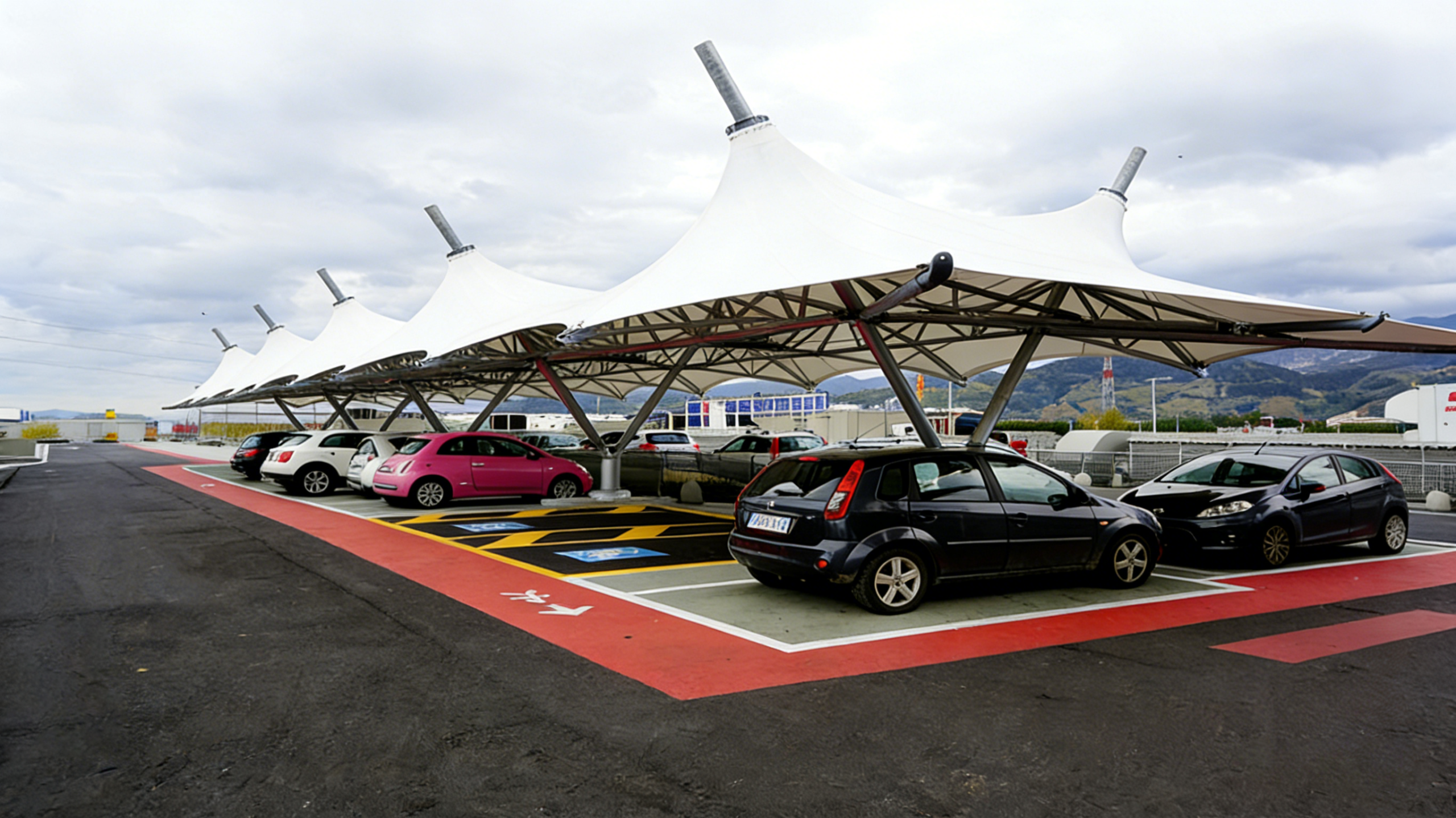
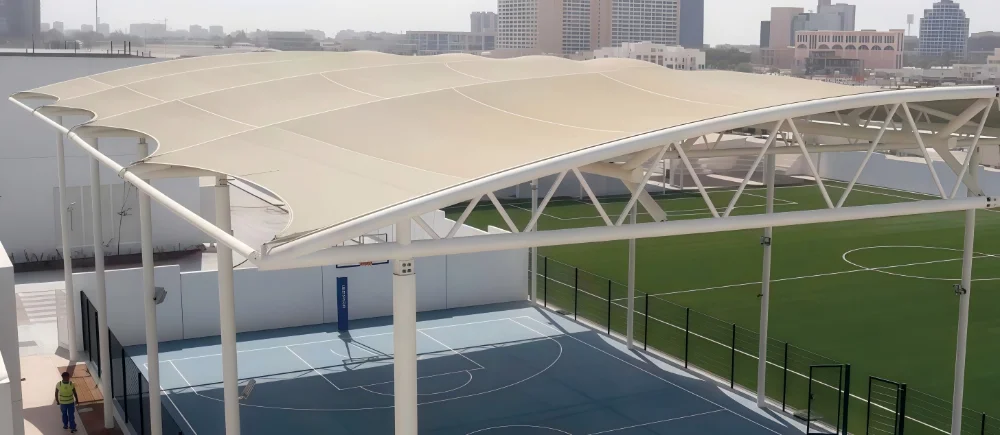
For membrane projects with conventional exposure conditions, Q235B can meet performance needs effectively when the structure is properly designed and surface-protected. This makes it a practical choice for canopies, parking shelters, walkway covers, transport structures, landscape shading systems, and many custom fabric buildings.
Hot-dip galvanizing and epoxy systems compared
Two of the most common approaches to corrosion protection in membrane buildings are hot-dip galvanizing and epoxy zinc-rich coating systems. Hot-dip galvanizing creates a metallurgically bonded zinc layer over the steel surface, which offers both barrier protection and sacrificial protection. It is often chosen for projects requiring durable outdoor performance with reduced maintenance over time.
Epoxy zinc-rich primer systems are also widely used, especially where a multi-layer coating build-up is required or where project conditions call for a specific finishing appearance. These systems can perform well when correctly applied, but their long-term behavior depends heavily on surface preparation quality, coating thickness control, and maintenance conditions during service.
In practical project evaluation, the decision between galvanizing and epoxy systems should be based on exposure environment, expected design life, maintenance access, fabrication sequence, and total lifecycle cost rather than only initial coating price.
Choosing the right protection strategy for the project
For coastal zones, polluted urban environments, transport-sector structures, and projects with limited maintenance access, stronger corrosion protection becomes especially important. The best solution is usually the one that fits the real service environment of the steel, not simply the most familiar treatment. Project teams should evaluate whether the structure will face frequent moisture, aggressive airborne contaminants, standing water risk, or repeated cleaning and maintenance challenges.
We recommend reviewing membrane structure steel protection as part of the early engineering stage. When material selection, detailing, drainage, and coating strategy are coordinated from the beginning, the structure is better positioned to maintain both safety and appearance over the long term.