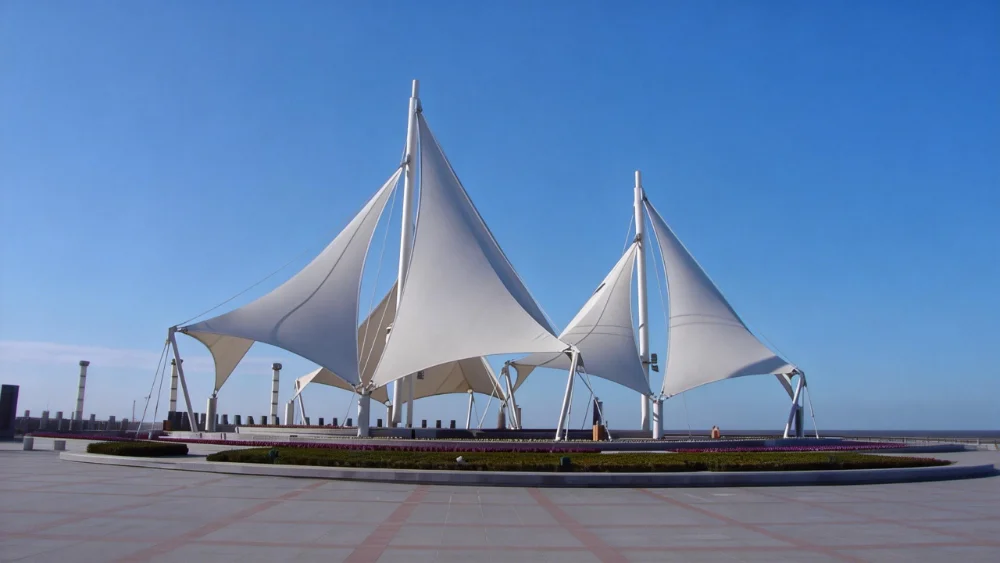
A heated pool is a demanding environment for a lightweight roof. Warm, chlorinated, humid air rises and condenses on the first cold surface. Steel corrodes, and a roof that cannot ventilate will drip.
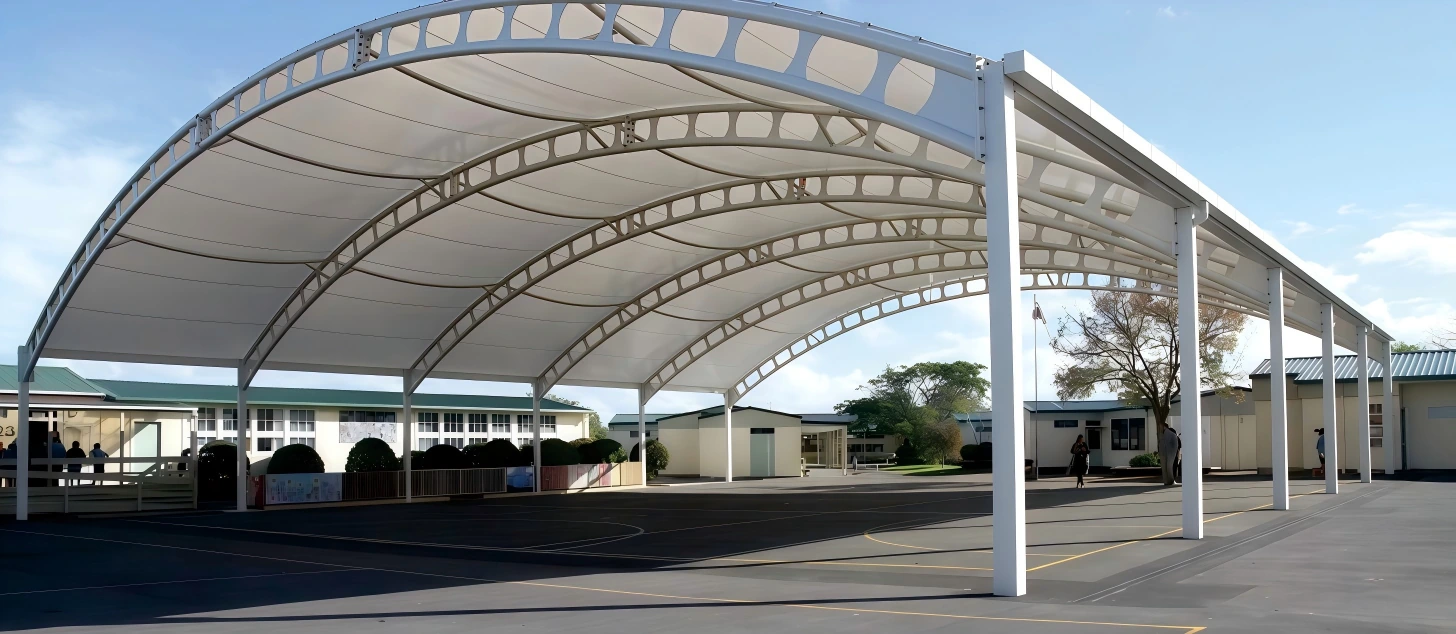
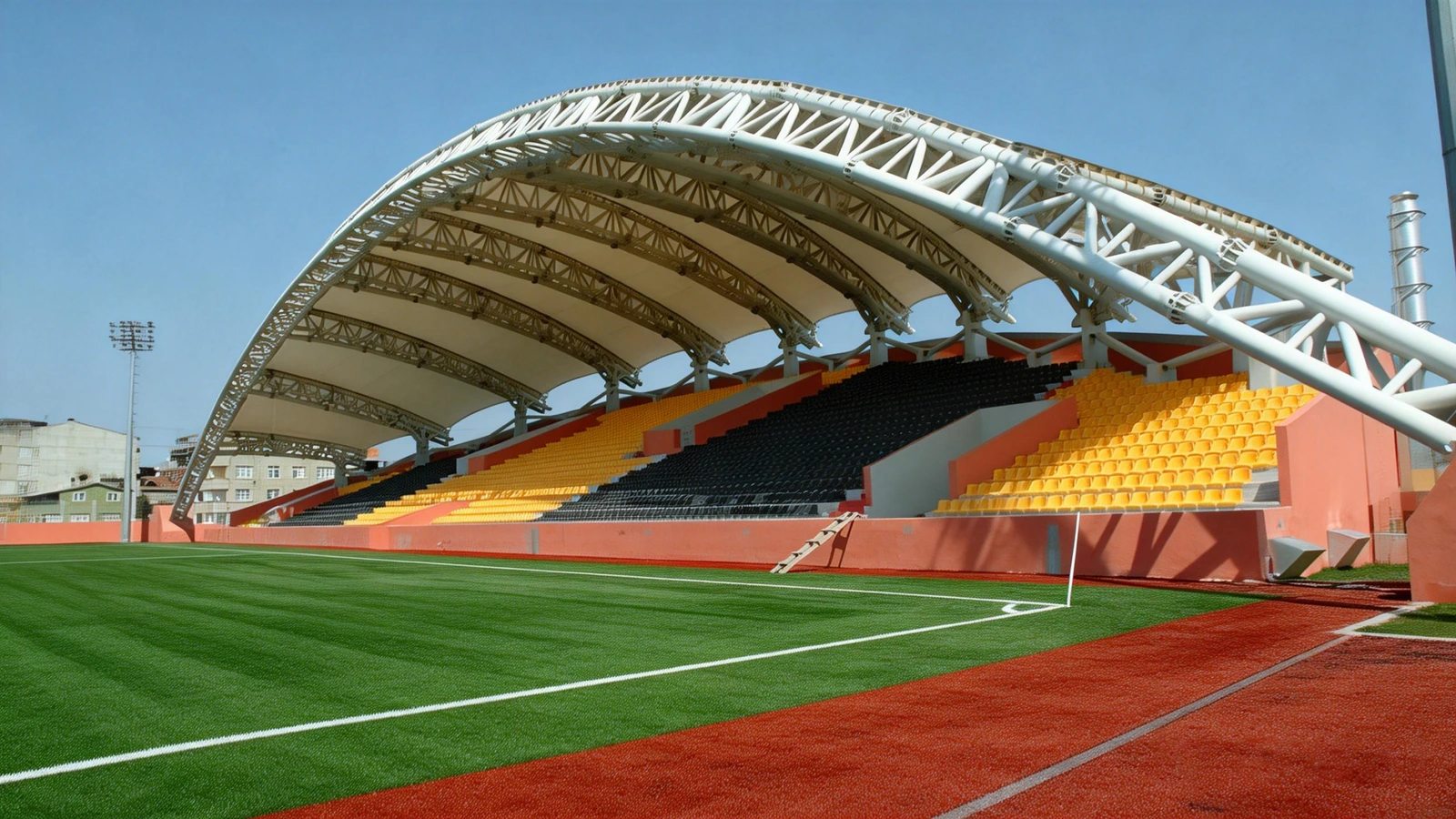
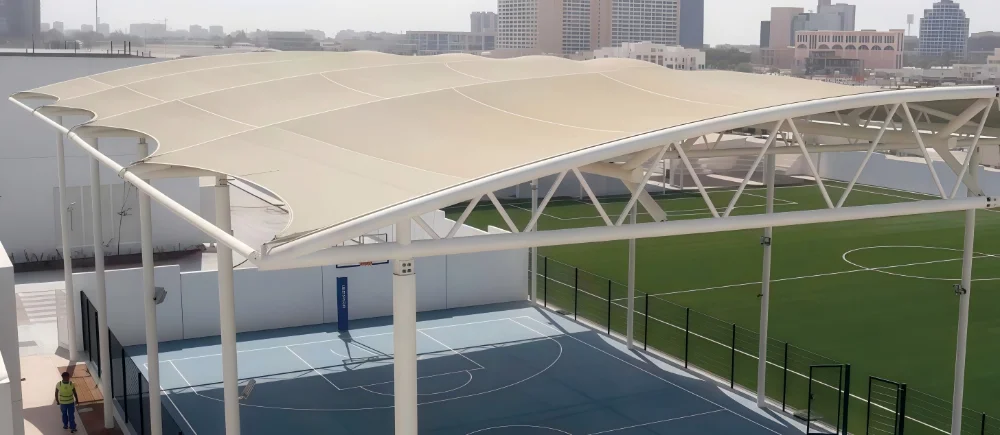
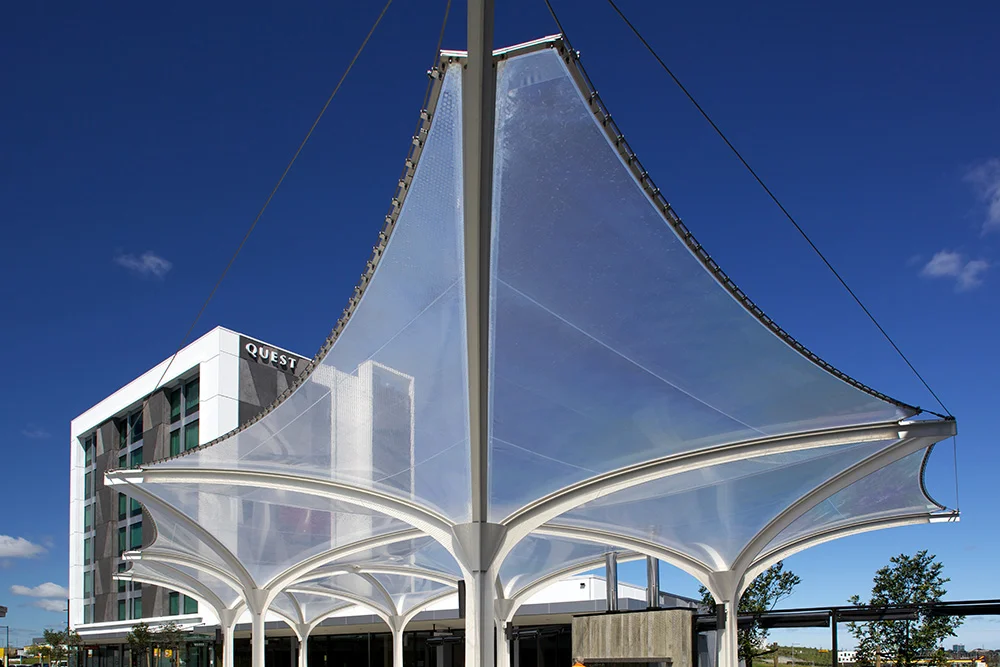
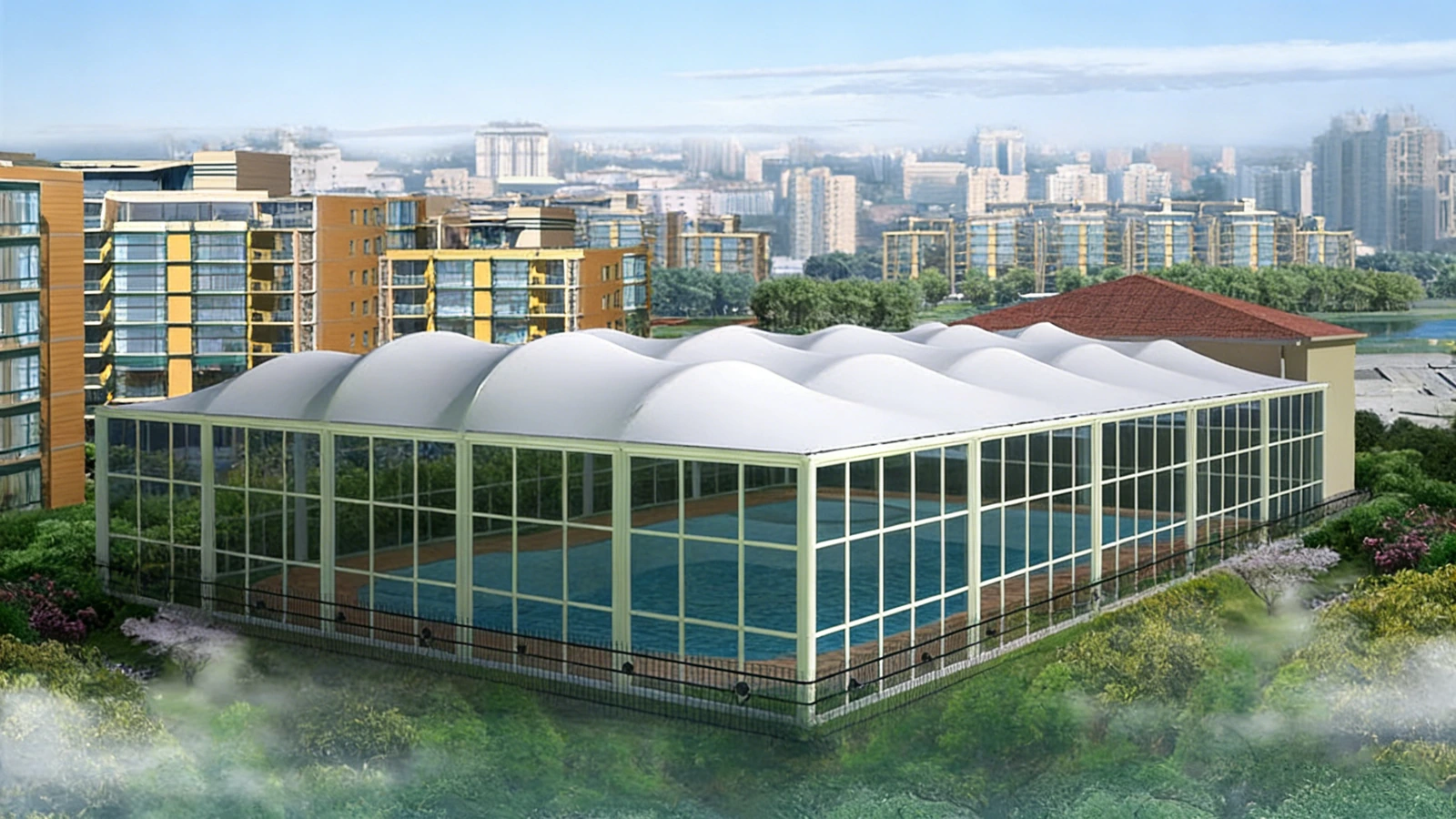
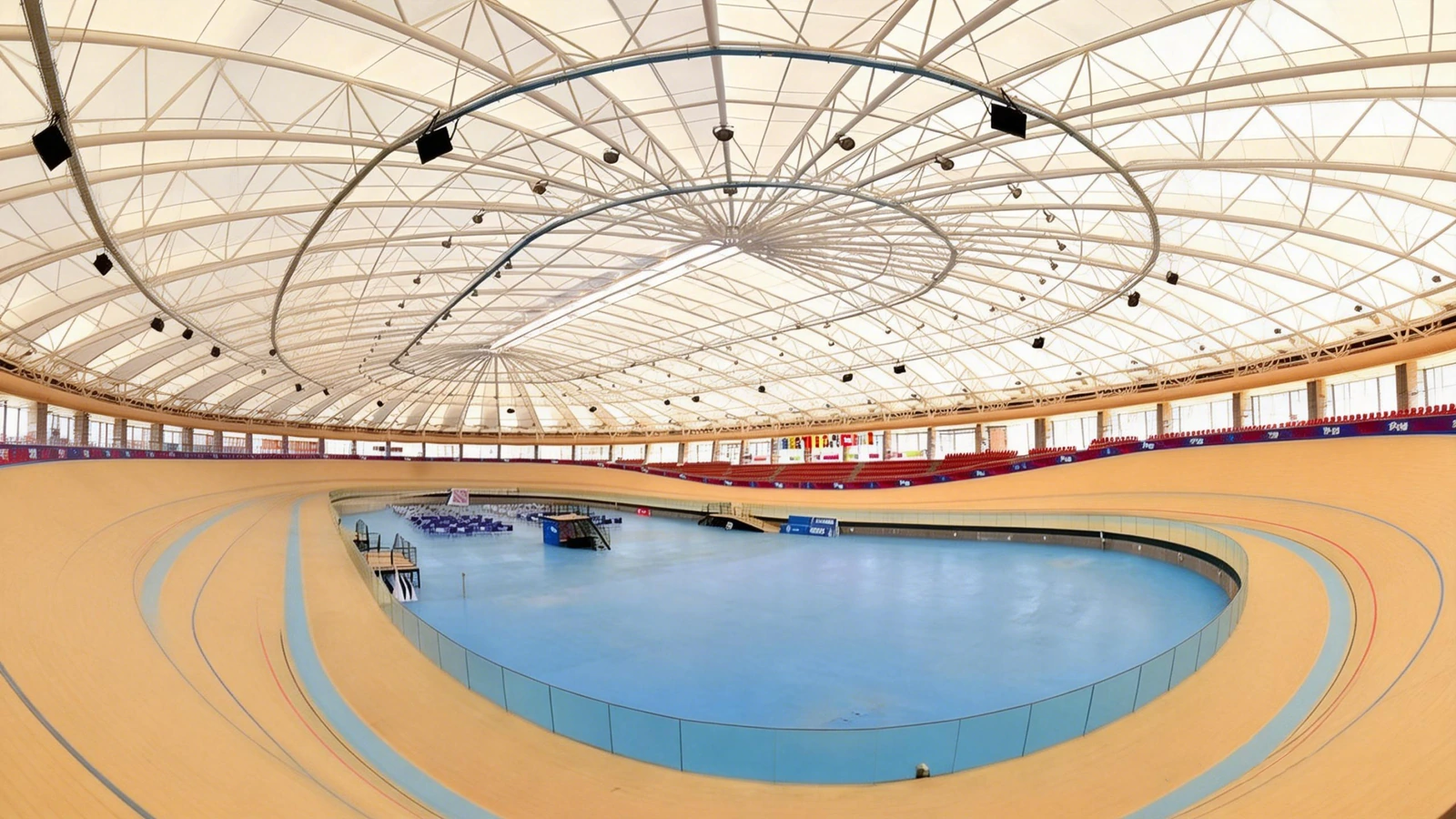
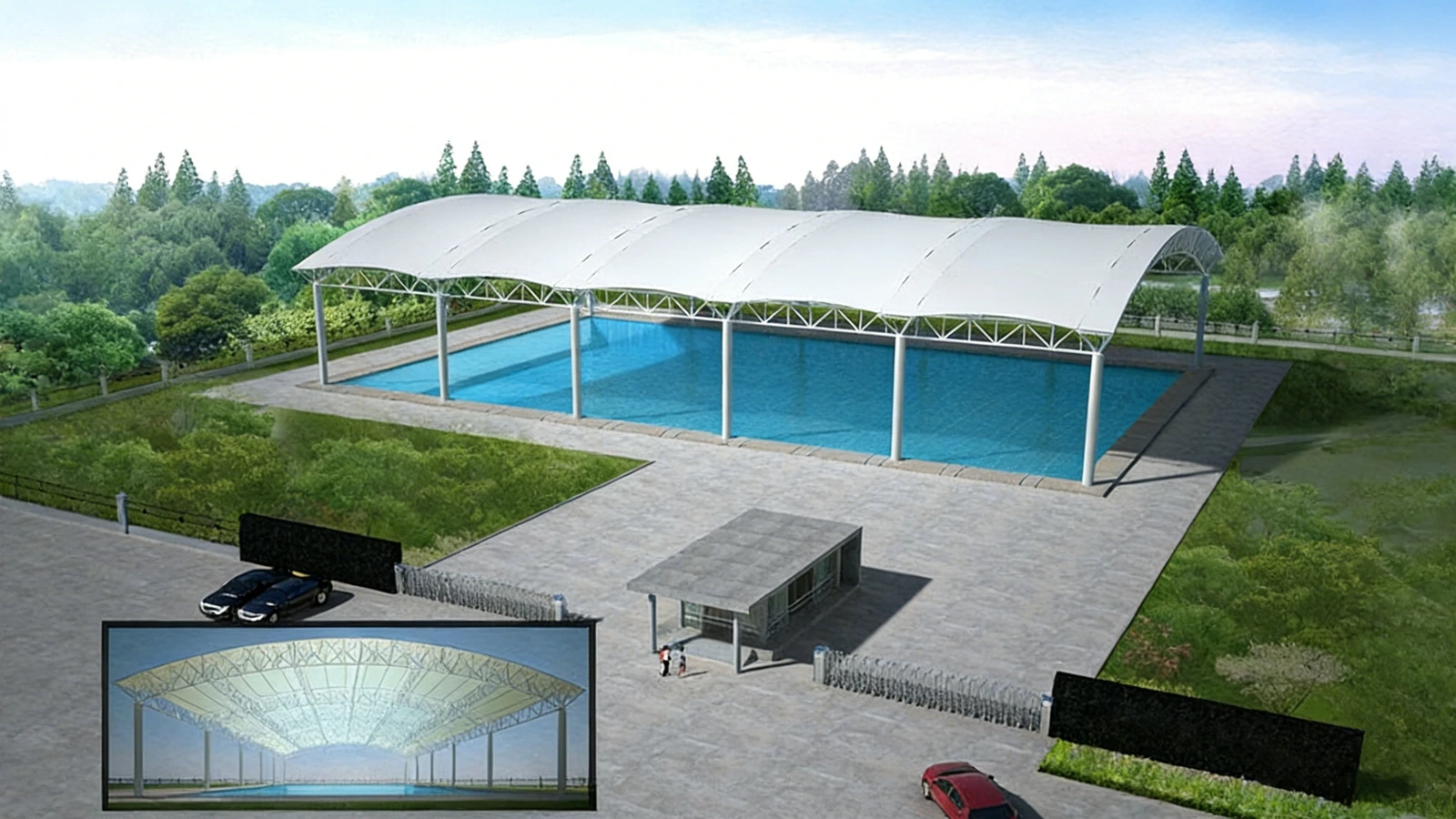
These reference views show a glazed pool hall with a curved membrane roof, a radial cable roof over a competition pool and an open barrel vault.
Project snapshot
| Item | Reference scope |
|---|---|
| Application | Indoor pool, hotel, resort, thermal spa |
| Typical span | 15–60 m |
| Forms | Curved enclosure, radial cable, barrel vault |
| Membrane and frame | PVC/PVDF anti-mould; stainless fittings |
| Design drivers | Humidity, condensation, corrosion, ventilation |
What the design has to solve
- Keep the roof surface warm. Insulation or a warm-air layer reduces condensation on the underside.
- Ventilate at high level. Extract moist air at the ridge and supply fresh air low down.
- Protect the structure. Use stainless or coated steel and isolate dissimilar metals.
- Detail the glazing junction. The roof-to-wall connection must allow movement and stay weathertight.
Roof forms in this reference set
Radial cable roof
A radial cable roof spans a competition pool without columns in the water or deck zone. Cable forces, ring stiffness and erection sequence need careful analysis.
Open barrel vault
An open barrel vault shades an outdoor pool and allows cross ventilation. Water is kept away from the pool surround by perimeter gutters.
Materials and delivery
Every component in a pool hall should be specified for a chlorinated, humid atmosphere. The frame and fixings matter as much as the membrane.
- PVC/PVDF 900–1100 g/m² with an anti-mould coating
- Stainless A4 fixings and isolation washers
- Thermally broken glazing frames
Frequently asked questions
Why do pool canopies drip?
Dripping is condensation forming on a cold roof surface. It is prevented by insulating the roof, ventilating at high level and keeping the inner surface above the dew point.
Which membrane is best for a chlorinated pool?
PVC/PVDF with an anti-mould top coat is common. PTFE is used where long life and easy cleaning are priorities.
Can a pool be covered without glazing the walls?
Yes. An open or semi-enclosed canopy can provide shade and rain protection while leaving the sides open.
Discuss a similar project
Send the pool dimensions, indoor design conditions and glazing strategy. We will review the roof form and ventilation interfaces.
Related reading: Sustainable membrane structure design