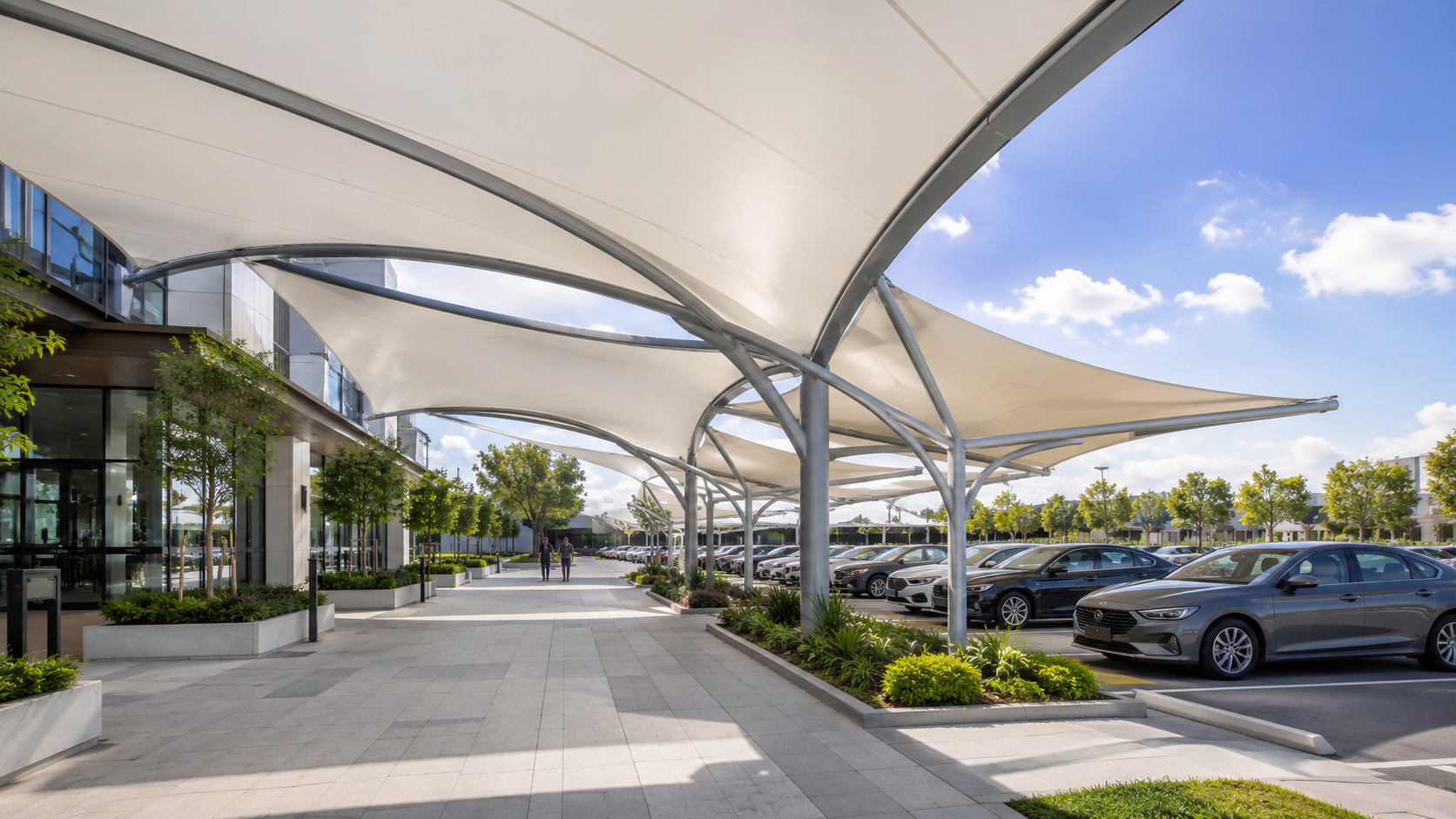
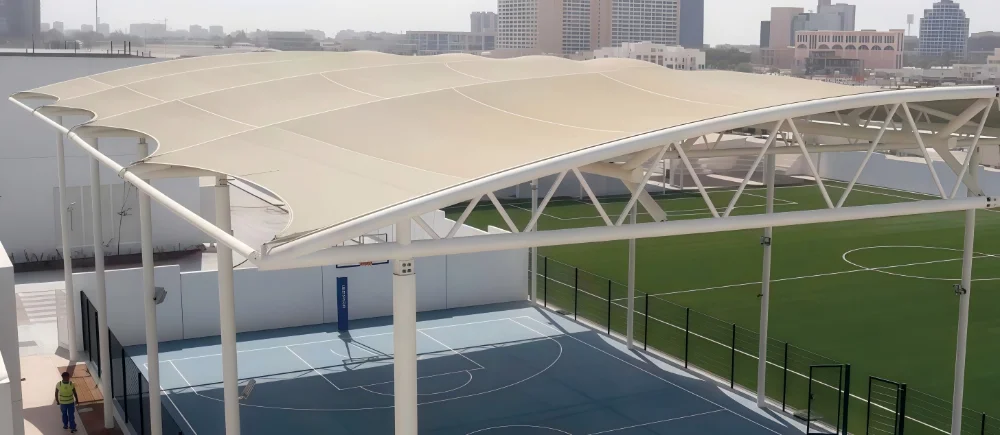
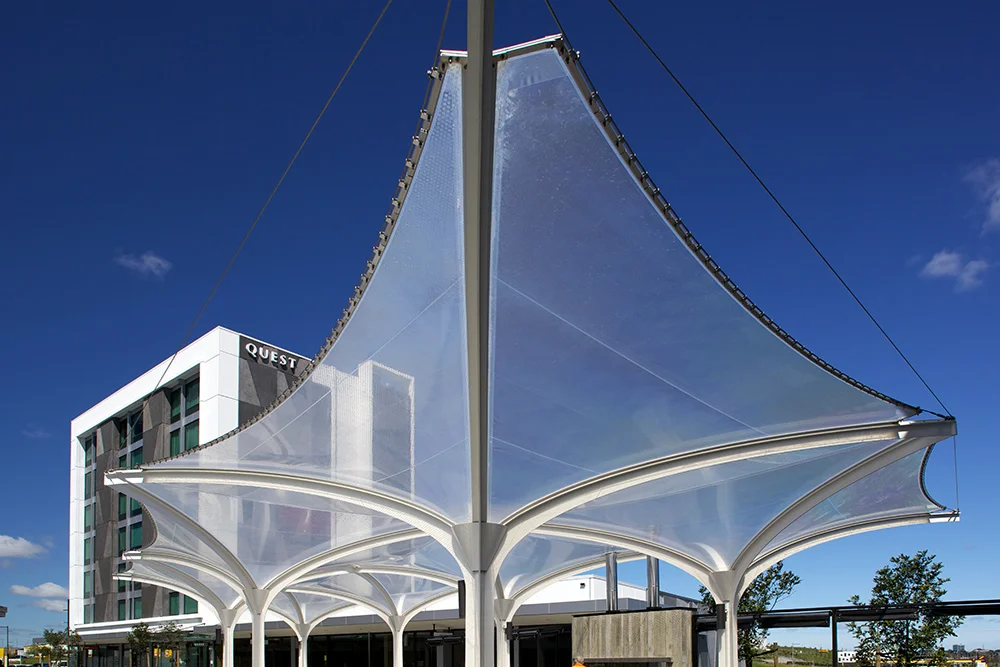
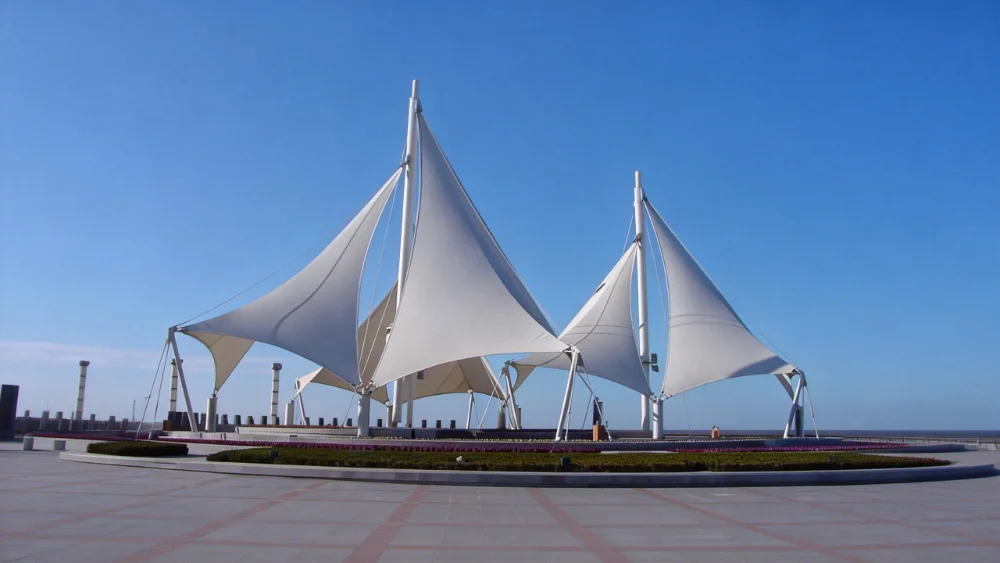
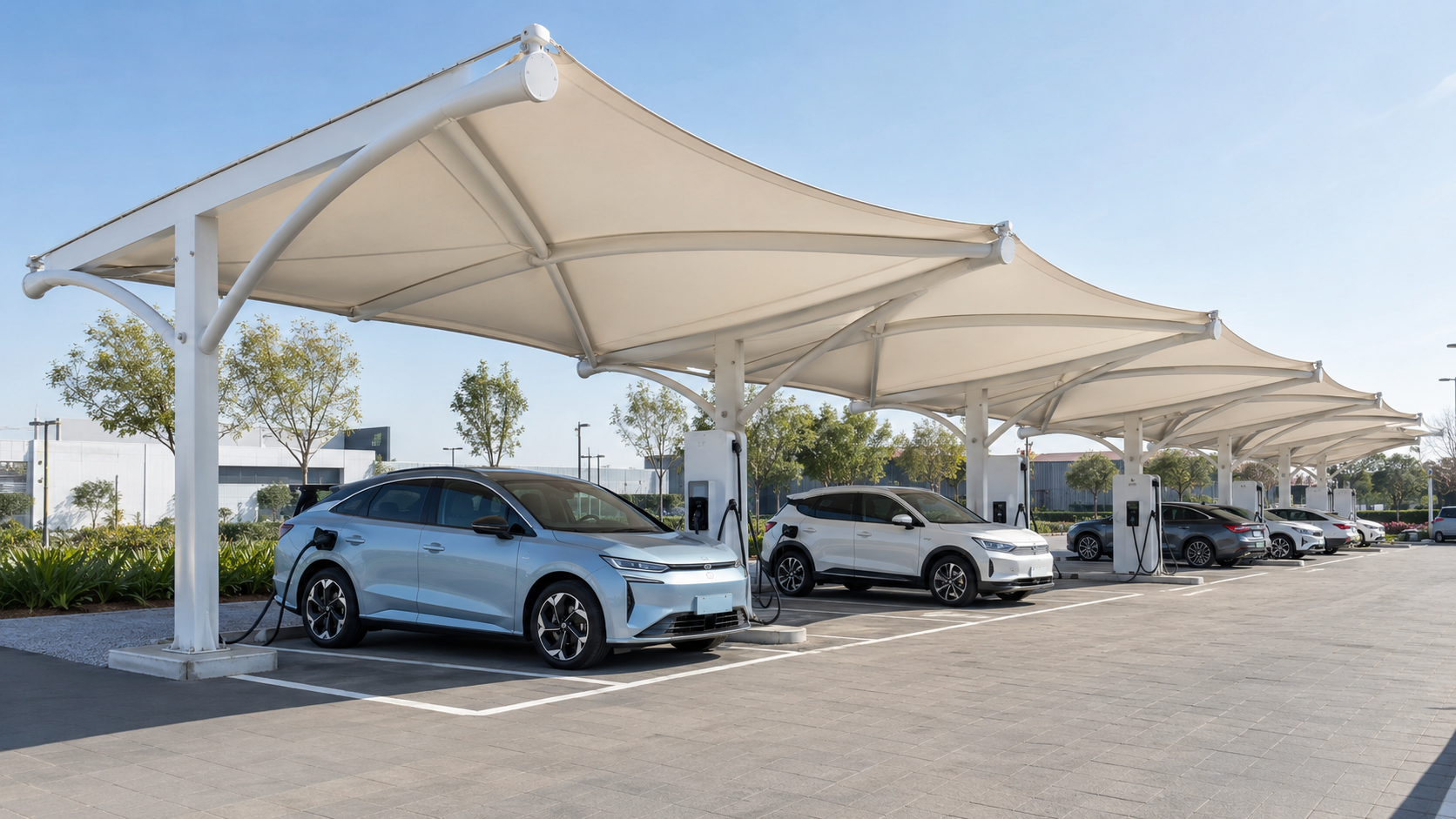
As more outdoor EV charging stations are built in commercial parking lots, highway service areas, office parks, residential communities, hotels, shopping centers, and public transport spaces, the charging area is no longer just a place to park a vehicle. It also needs to provide weather protection, clear traffic movement, safe equipment layout, good lighting, and a comfortable user experience.
A service station and EV charging canopy can help protect vehicles, charging equipment, cables, payment terminals, and users from sun and rain. Compared with a heavy traditional roof, a tensile membrane canopy can also create a lighter and more modern appearance for outdoor charging spaces.
This article explains why tensile membrane structures are suitable for EV charging stations and what project owners should consider before choosing a canopy system.
Why EV Charging Stations Need Better Canopy Design
Many EV charging points are installed in open parking areas. Without a canopy, drivers may need to connect cables, check charging status, or make payment under strong sunlight or heavy rain. Over time, charging equipment is also exposed to outdoor weather, dust, heat, and moisture.
A well-designed canopy can improve the whole charging experience. It gives users a more comfortable space, helps define the charging area, improves visual recognition, and protects key equipment from direct weather exposure.
For commercial and public projects, the canopy also becomes part of the station image. A clean and modern membrane structure can make the charging area look more organized and professional.
1. Weather Protection for Vehicles, Users, and Equipment
The most basic function of an EV charging canopy is weather protection. Drivers often need to stand outside the vehicle while handling the charging connector, checking the screen, or waiting near the charging point. A canopy can reduce discomfort caused by direct sun, rain, and heat.
For charging equipment, the canopy can help reduce direct exposure to rainfall and sunlight. It does not replace the equipment’s own protection rating, but it can create a better outdoor operating environment.
When designing a membrane canopy for EV charging stations, the roof coverage should consider:
- Vehicle parking position
- Charging pile location
- User standing area
- Cable movement range
- Payment or control terminal location
- Rainwater discharge direction
The canopy should protect the real operating area, not only cover the center of the parking bay.
2. Clear Vehicle Movement and Parking Layout
EV charging areas need enough space for vehicles to enter, park, charge, and leave safely. If the canopy columns are placed in the wrong position, they may block turning paths, parking access, or charging equipment.
A tensile membrane canopy can be customized according to the parking layout. The steel support position, column spacing, and membrane span can be planned around the actual traffic flow.
For charging station projects, buyers should check:
- Is the canopy suitable for one-way or two-way vehicle movement?
- Will the columns block doors, charging ports, or driving paths?
- Is the clear height enough for SUVs, vans, or service vehicles?
- Can the canopy be expanded if more charging points are added later?
- Does the structure allow safe maintenance access?
For large parking areas, the charging canopy may also connect visually with a wider tensile membrane car parking canopy system.
3. Modern Appearance for New Energy Infrastructure
EV charging stations often represent a clean, modern, and future-oriented service. The canopy should support this image. A tensile membrane structure can create a lighter architectural form than many conventional steel or metal panel roofs.
Curved membrane surfaces, clean steel supports, and bright underside spaces can make the charging area look more open and recognizable. This is useful for shopping centers, hotels, office parks, public parking areas, transport hubs, and highway service zones.
For branded charging stations, the canopy design can also coordinate with lighting, signage, color planning, and site landscaping. A practical structure can still have a strong visual identity.
4. Drainage Should Be Planned Around Users and Equipment
Drainage is especially important for EV charging stations. Rainwater should not fall directly onto users, cable areas, control terminals, or the main walking path between vehicles and charging points.
A membrane canopy should have a clear slope and planned discharge points. The drainage design should guide water away from:
- Charging piles
- Electrical equipment zones
- Pedestrian paths
- Vehicle entry and exit areas
- Payment or control areas
- Accessible parking spaces
Poor drainage can make the station uncomfortable and may create long-term maintenance issues. For this reason, drainage direction should be reviewed before fabrication, not after installation.
5. Lighting, Signage, and Cable Management
EV charging stations are often used during early morning, evening, or nighttime. Good lighting helps users see charging connectors, payment screens, parking lines, and walking areas clearly.
The canopy structure should be coordinated with lighting and signage from the beginning. If lights, cameras, signs, cable trays, or monitoring equipment need to be installed, the steel frame and connection details should allow for these elements.
Buyers should consider:
- Where will lights be fixed?
- Will the canopy support signs or branding?
- Is wiring protected and easy to maintain?
- Will lighting create shadows around the charging point?
- Can cameras or safety devices be installed if needed?
A canopy is not only a roof. It should work together with the whole charging station system.
6. Steel Structure and Anti-Corrosion Protection
The membrane surface is the most visible part of the canopy, but the steel structure controls stability, span, column position, and long-term performance.
For outdoor charging stations, the steel frame should be designed according to the local environment. Coastal areas, humid climates, industrial zones, and high-rainfall locations may require stronger anti-corrosion treatment.
Important steel structure details include:
- Column size and spacing
- Foundation and anchor details
- Connection plate accuracy
- Surface treatment method
- Protection during shipping
- Ease of assembly on site
A low-cost canopy may become expensive later if the steel frame is not suitable for long-term outdoor use.
7. Material Selection for EV Charging Canopies
For many EV charging station canopies, PVDF membrane can be a practical option because it offers weather protection, flexible design, and a clean architectural appearance. PTFE may be considered for projects with higher long-term performance requirements. ETFE may be used when the project needs more daylight transmission or a more transparent architectural effect.
The right material should be selected according to:
- Project location
- Expected service life
- Sunlight and rainfall exposure
- Cleaning requirements
- Budget direction
- Architectural appearance
- Local fire or safety requirements
Material selection should be reviewed together with span, steel frame, drainage, wind load, and installation method.
8. Can EV Charging Canopies Be Modular?
Many EV charging stations start with a limited number of charging points and expand later. For this reason, modular planning can be useful.
A membrane canopy can be designed as a single charging bay, a row of covered charging spaces, or a larger multi-bay charging area. If future expansion is possible, the early design should consider column rhythm, foundation planning, drainage route, and visual consistency.
For projects that require repeated units or faster site planning, standard and modular shade structures may provide a useful design direction.
9. What Buyers Should Prepare Before Requesting a Solution
To design a practical EV charging canopy, buyers should prepare more than just the number of parking spaces. The supplier needs to understand the site layout and charging operation.
| Information Needed | Why It Matters |
|---|---|
| Number of charging bays | Helps confirm canopy size, span, and modular layout |
| Vehicle type | Affects clear height, column position, and access design |
| Charging pile position | Helps avoid column conflicts and improve user operation |
| Site photos or layout drawings | Shows entrances, obstacles, drainage routes, and installation access |
| Project location | Helps review wind, rain, snow, corrosion, and shipping conditions |
| Lighting and signage needs | Allows coordination with steel frame and electrical layout |
| Future expansion plan | Supports modular design and long-term site planning |
Common Mistakes to Avoid
- Only covering the vehicle and forgetting the user standing area
- Placing columns too close to doors, charging ports, or cable routes
- Ignoring rainwater discharge around electrical equipment
- Not coordinating lighting and signage before fabrication
- Choosing a shape that looks good but is difficult to expand
- Not checking wind load and local climate conditions
- Using weak steel protection for outdoor environments
- Comparing quotations without checking the complete scope
Final Thoughts
An EV charging station canopy should do more than provide shade. It should improve user comfort, protect equipment, support safe vehicle movement, guide rainwater properly, and create a professional image for the charging area.
Tensile membrane structures are suitable for many EV charging station projects because they can offer flexible span design, modern appearance, weather protection, and customized layout according to the real site.
If you are planning an EV charging station canopy, service station canopy, commercial parking canopy, or outdoor new energy facility, you can send your site layout, number of charging bays, vehicle clearance requirements, project location, and drawings to Timi. Our team can help review the canopy layout, structure direction, drainage concept, and material options for your project.
FAQ
Why do EV charging stations need canopies?
Canopies help protect users, vehicles, charging equipment, and operating areas from sun and rain. They also improve comfort, visibility, and the professional appearance of the charging station.
Is a tensile membrane canopy suitable for EV charging stations?
Yes. A tensile membrane canopy can be customized for EV charging bays, vehicle clearance, equipment layout, drainage, lighting, and site appearance.
What should be considered when designing an EV charging canopy?
Important factors include charging bay layout, column position, vehicle movement, clear height, charging pile location, drainage direction, lighting, signage, steel structure, membrane material, and future expansion.
Can an EV charging canopy be expanded later?
Yes, but expansion should be considered early. Column rhythm, foundation layout, drainage route, and modular structure planning can make future expansion easier.
What information should I provide for an EV charging canopy inquiry?
You should provide the number of charging bays, site layout, vehicle type, charging pile position, project location, site photos, lighting or signage needs, and any future expansion plan.