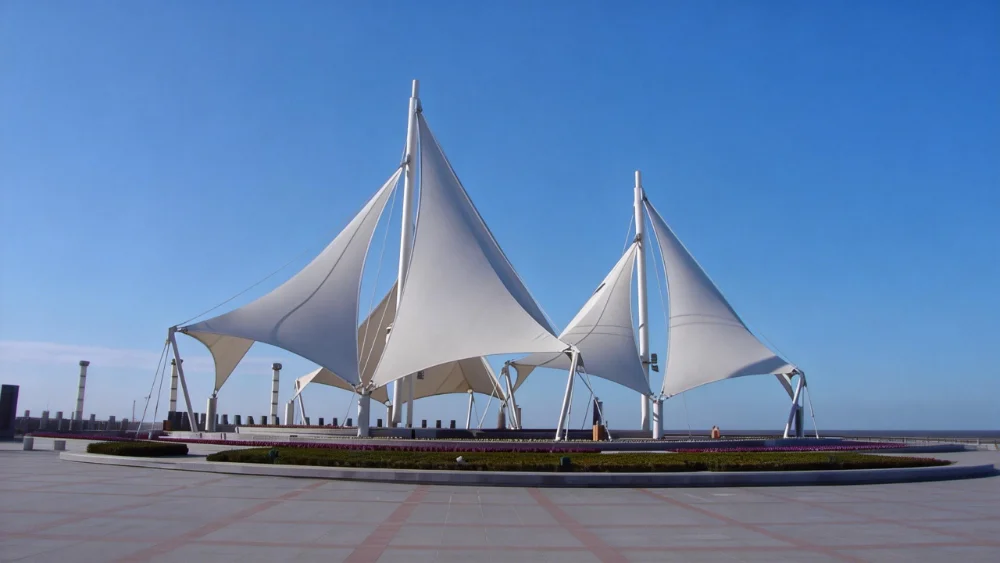
In a public space, shade is also a landmark. The canopy has to work from every approach, survive wind and remain safe for people walking and sitting underneath.
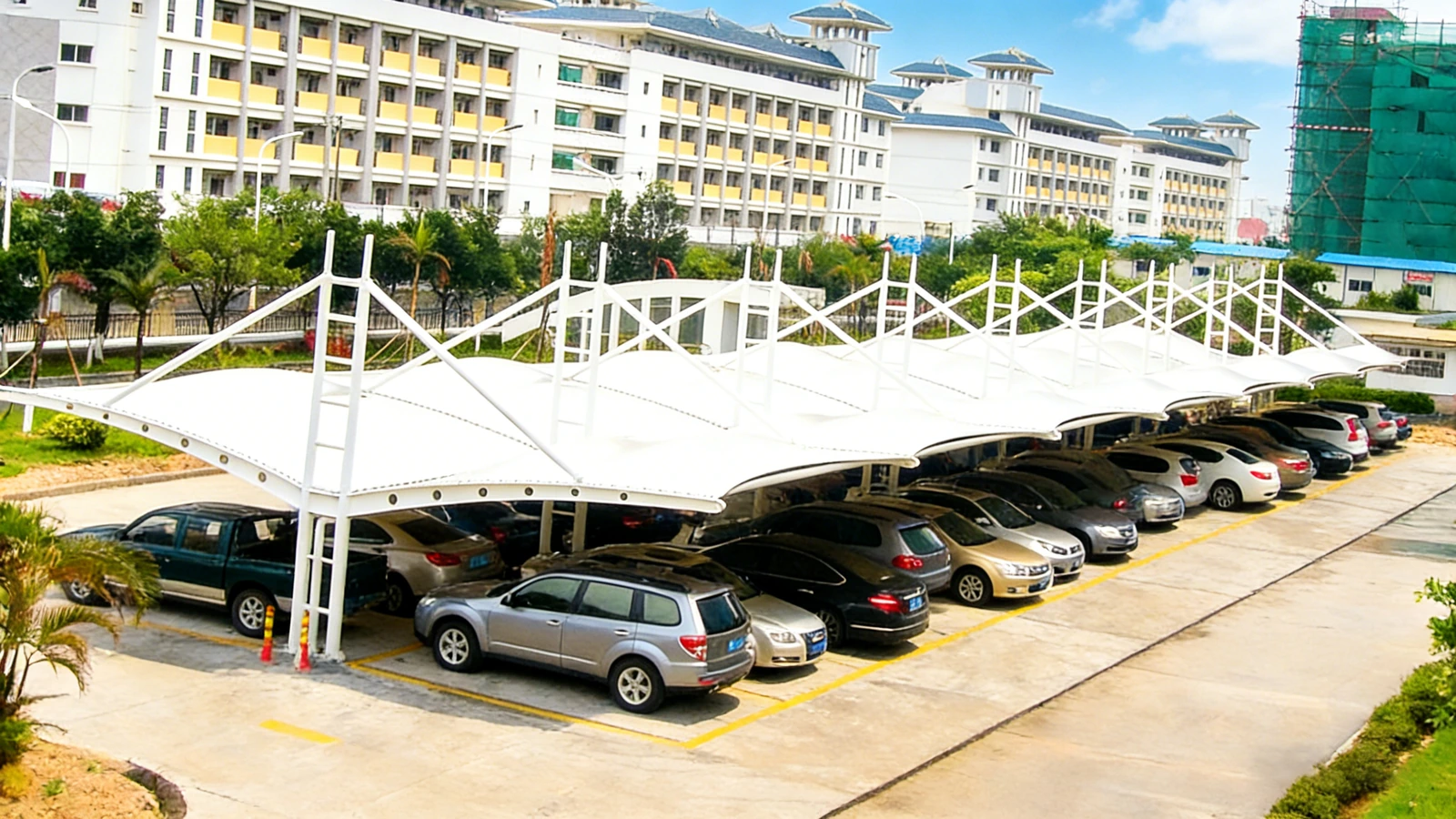
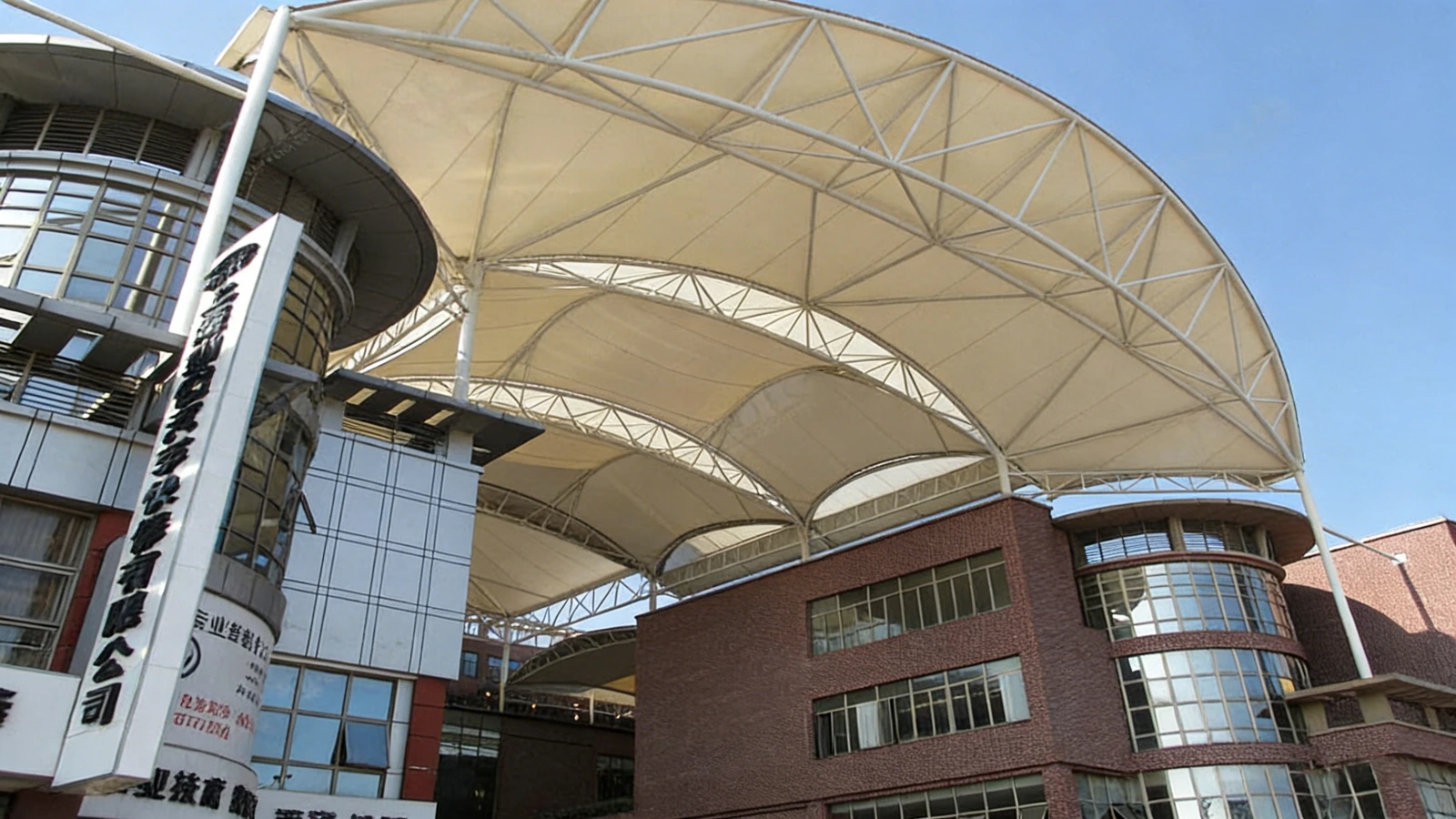
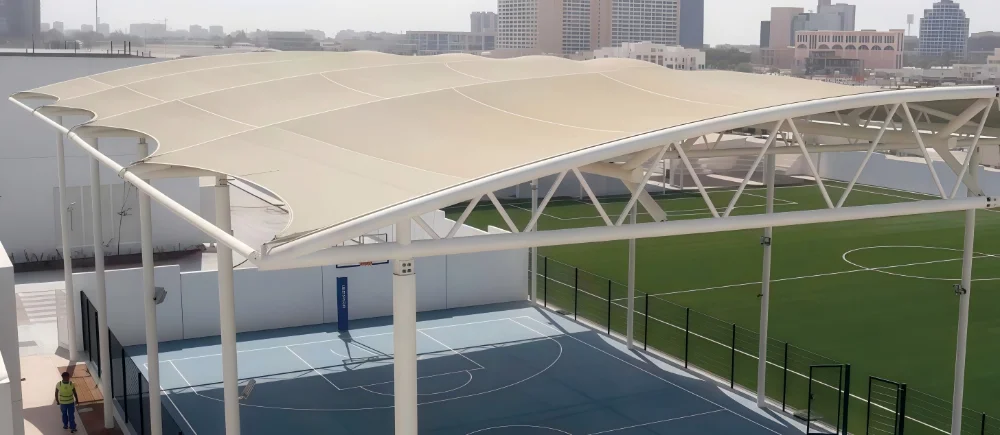
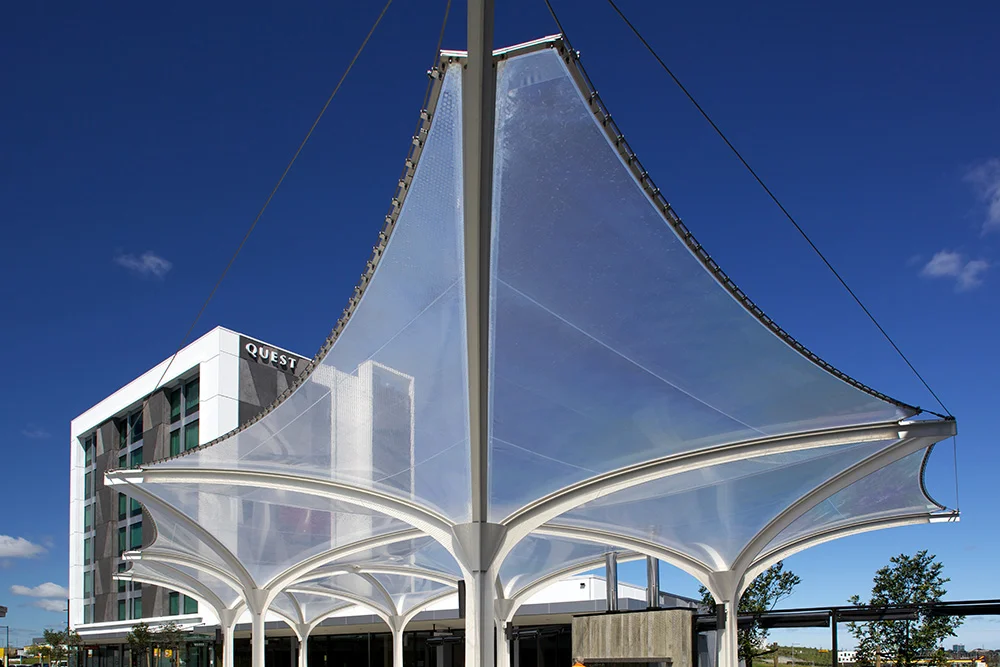
These reference views show sail clusters at a waterfront, tension peaks and a sculptural promenade canopy.
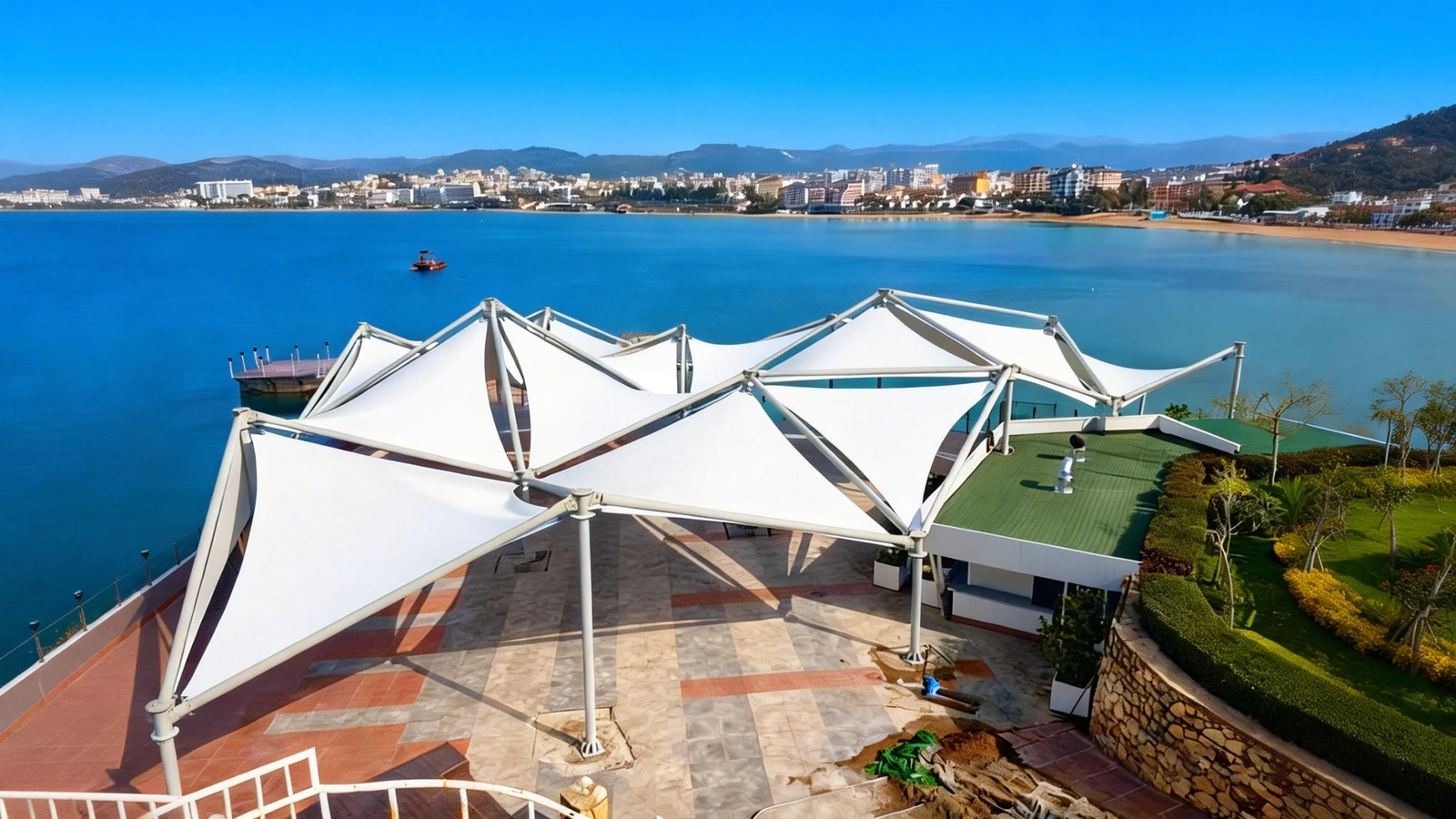
Project snapshot
| Item | Reference scope |
|---|---|
| Application | Park, plaza, waterfront, retail street |
| Typical area | 150–1,500 m² per canopy group |
| Forms | Sail cluster, tension peaks, sculptural canopy |
| Membrane and frame | PVC/PVDF on steel masts and cables |
| Design drivers | Wind, drainage, public safety, identity |
What the design has to solve
- Check wind from all directions. Corners and free edges carry the highest local loads.
- Drain every low point. A sail that collects water will lose its shape and prestress.
- Keep masts and cables safe. Protect them from vehicles and make them difficult to climb.
- Plan maintenance. Cleaning, tension checks and drainage access should be possible without closing the whole space.
Roof forms in this reference set
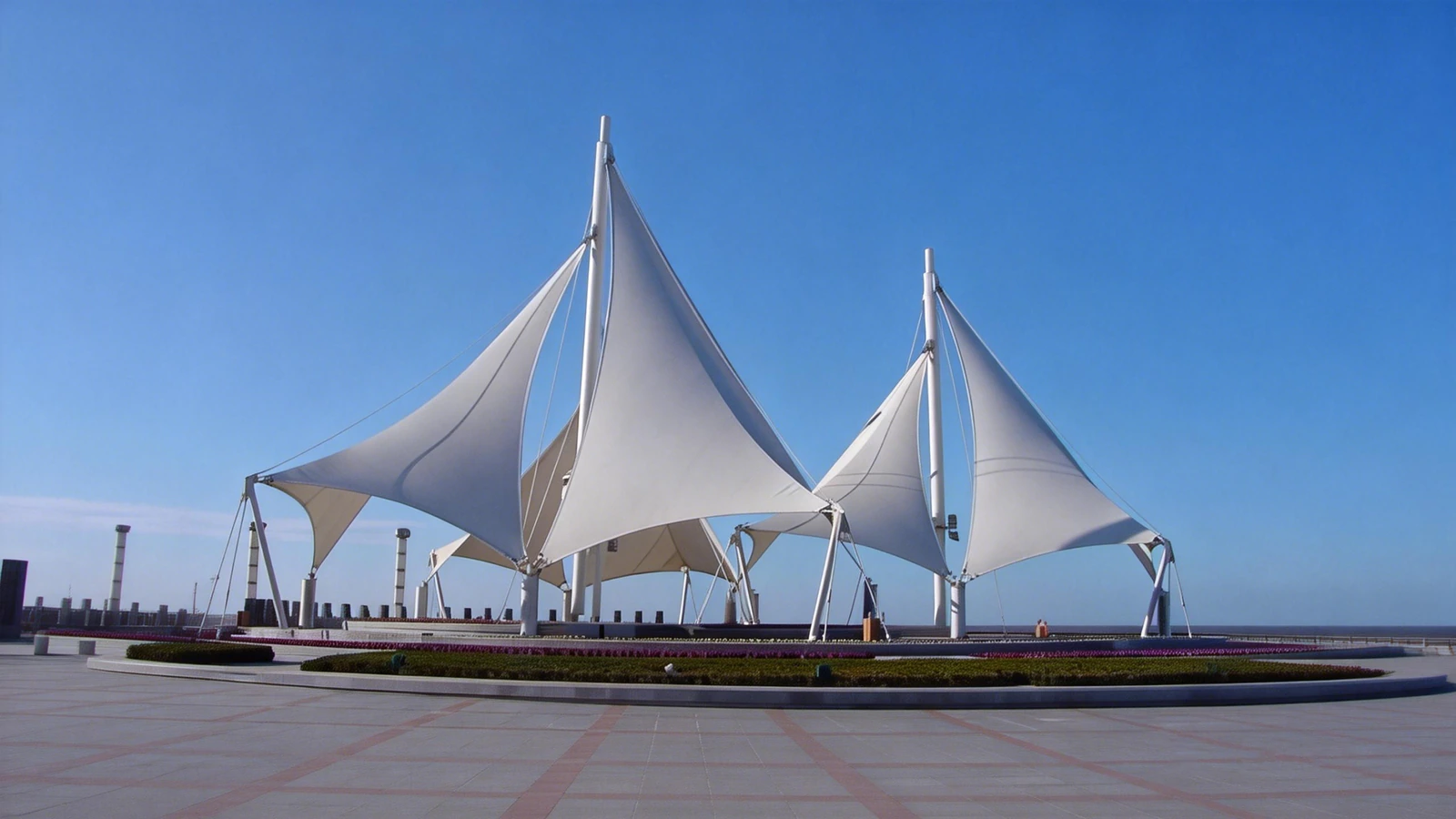
Tension peaks
High peaks create a strong silhouette and a large shaded area from relatively few supports. The mast foundations carry significant uplift and must suit the ground.
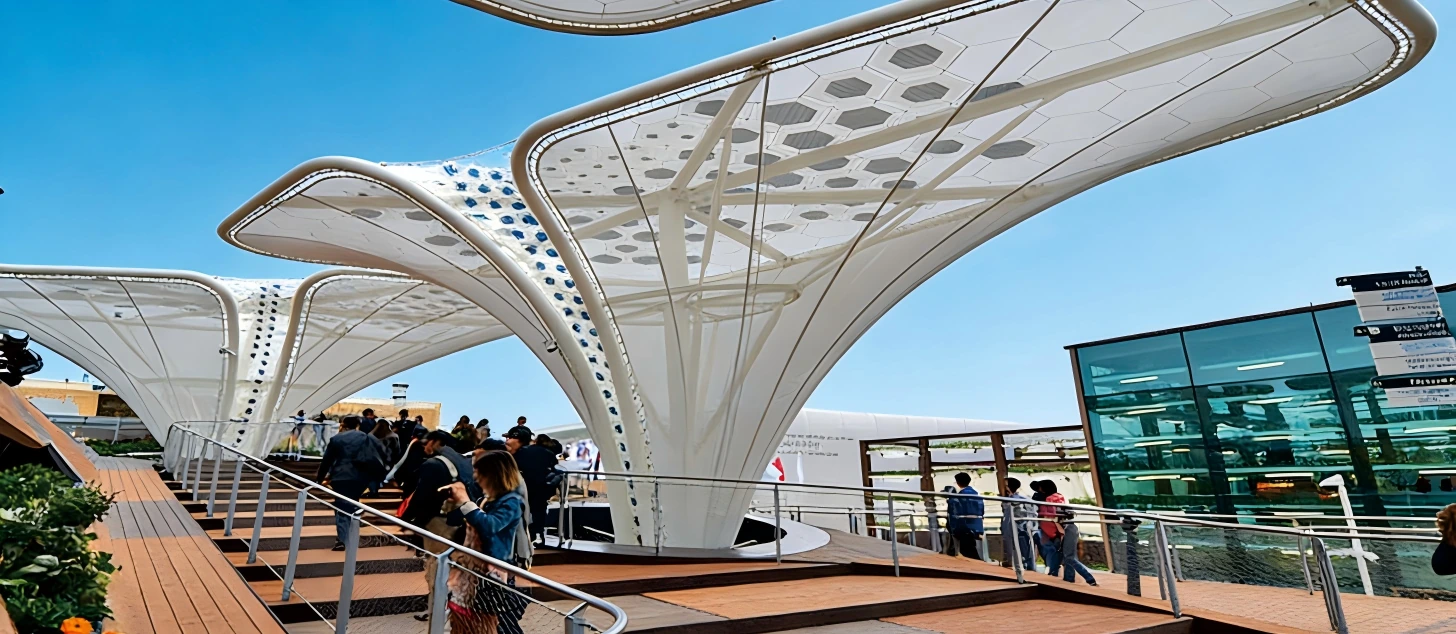
Sculptural promenade canopy
A sculptural form can combine shade with a landmark. Perforations and layered surfaces reduce weight, but they also need a cleaning and drainage strategy.
Materials and delivery
For open shade, PVC/PVDF is cost-effective and available in a range of colours. Where the space is enclosed or a transparent roof is needed, ETFE is an option.
- PVC/PVDF 850–1100 g/m², white or a custom colour
- Galvanised steel masts and stainless cable fittings
- Reinforced concrete pads or piles designed for uplift
Frequently asked questions
Are shade sails suitable for rainy climates?
Open-weave shade cloth is not waterproof. For year-round rain protection, use a coated PVC or PTFE membrane with a continuous drainage path.
Can the canopy be removed seasonally?
Yes, demountable systems are available. The foundations still need to be designed for the full wind load.
Can it carry lighting or speakers?
Yes, with designed mounting points and cable routes. The loads should be included in the structural analysis.
Discuss a similar project
Send the site plan, photos and intended use. We will review the canopy form, support positions and wind exposure.
Related reading: Landscape membrane sunshade canopies