Choosing a tensile membrane structure manufacturer for an outdoor project is not only a matter of comparing prices. A membrane structure must respond to wind load, rainwater drainage, steel frame stability, membrane material performance, site conditions, installation method, and long-term maintenance. If the supplier only provides a simple product price without reviewing the project details, the final structure may face problems during fabrication, installation, or long-term outdoor use.
For contractors, developers, architects, and project owners, the right manufacturer should be able to support the project from early design discussion to material selection, steel structure coordination, fabrication, packing, delivery, and installation guidance. This is especially important for outdoor applications such as car parking canopies, walkway covers, stadium shading, toll plaza roofs, landscape shade structures, service station canopies, and ETFE roof systems.
Before choosing a manufacturer for an outdoor tensile membrane structure project, buyers should review the supplier’s engineering ability, material options, fabrication control, installation support, and project communication.

1. Check Whether the Manufacturer Understands Outdoor Project Conditions
A reliable tensile membrane structure manufacturer should first ask about the project environment, not only the required size. Outdoor membrane structures are exposed to sunlight, wind, rain, temperature changes, dust, humidity, and sometimes coastal corrosion. The same canopy design may not be suitable for every location.
Before quotation, the manufacturer should understand several key points:
- Project location and local climate conditions
- Application scenario, such as parking, walkway, stadium, plaza, or entrance canopy
- Approximate span, height, and coverage area
- Expected wind load, snow load, or local building requirements
- Drainage direction and rainwater collection method
- Foundation conditions and available installation space
- Whether the project needs a standard canopy or a custom fabric structure
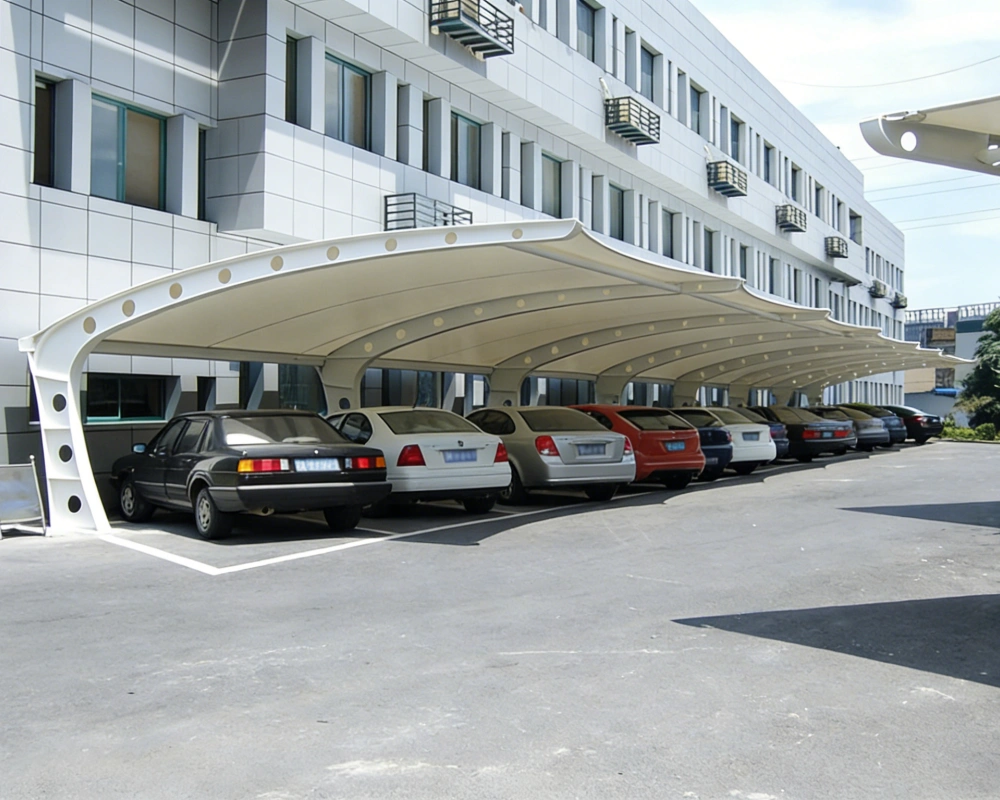
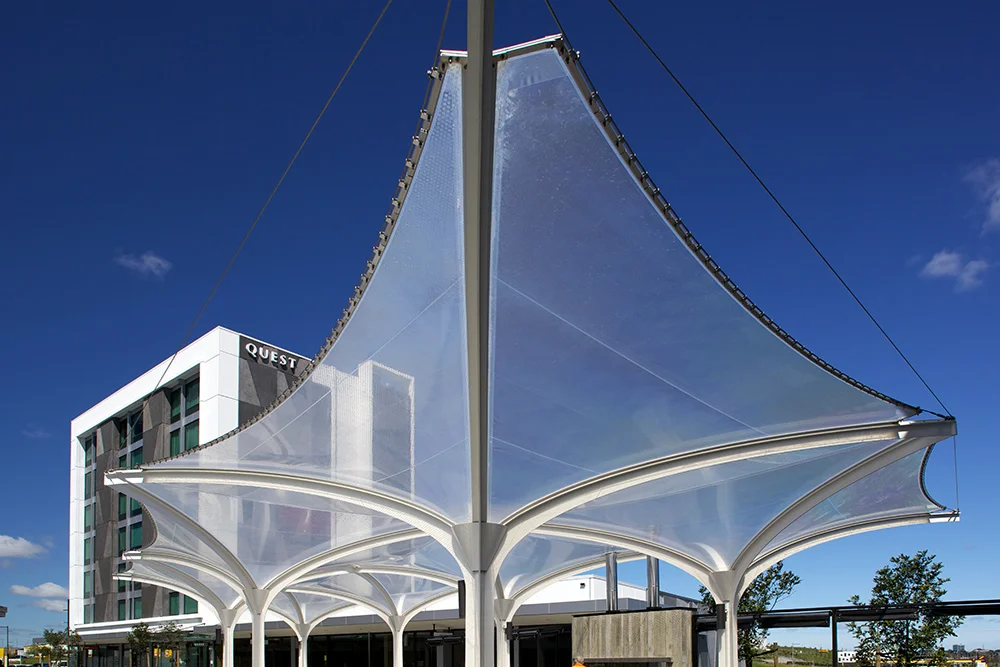
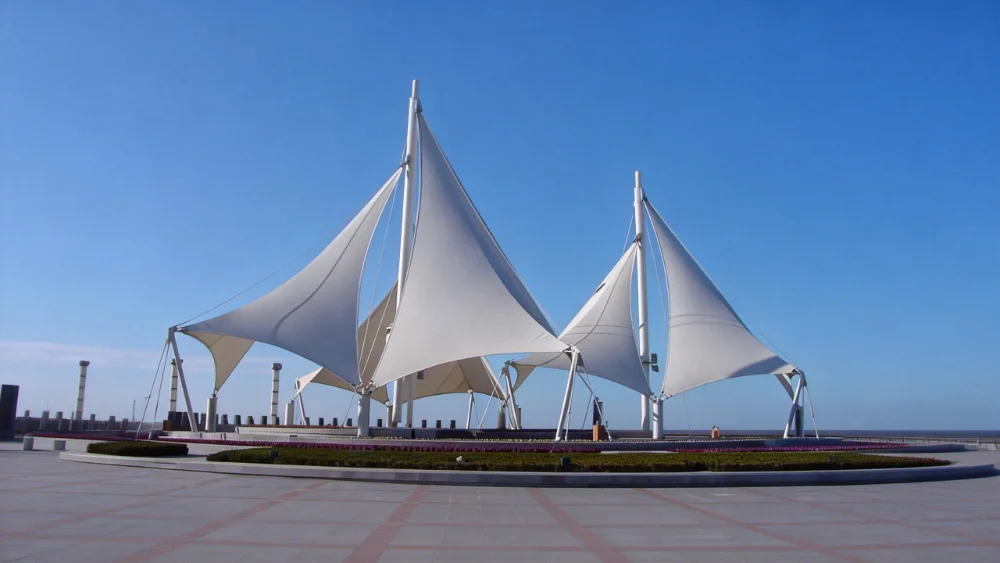
For example, a membrane carport in a commercial parking area has different design priorities from a public-space landscape canopy or an ETFE roof system. A carport canopy must consider vehicle clearance, column layout, drainage, and repeated parking use. A park canopy may place more emphasis on architectural appearance, pedestrian safety, and long-term exposure in an open environment. In practical project planning, the structure type should be matched with the site function, span requirement, support condition, and expected visual effect rather than selected only by appearance.
2. Review the Manufacturer’s Design and Engineering Support
Tensile membrane structures are not ordinary roofing products. The final shape depends on membrane tension, steel frame geometry, connection details, edge cable arrangement, support points, and load transfer. A manufacturer with weak design ability may provide a visually attractive concept, but the structure may become difficult to fabricate or install.
Buyers should check whether the supplier can support:
- Initial structure concept based on project use
- Steel frame layout coordination
- Membrane form discussion
- Drainage and gutter planning
- Connection details between membrane and steel structure
- Fabrication drawing preparation
- Installation sequence review
For outdoor projects, the structure should not only look good in a rendering. It must be practical for manufacturing, transportation, lifting, installation, and maintenance. If the manufacturer cannot explain how the membrane connects to the steel frame, how rainwater will be discharged, or how the structure will be installed on site, the quotation may not be complete enough for a real project.
3. Confirm the Membrane Material Options
Material selection has a direct influence on durability, appearance, light transmission, cleaning performance, and project cost. Common membrane structure materials include PVDF-coated membrane, PTFE membrane, and ETFE film systems. Different materials are suitable for different project requirements.
For many outdoor shade and canopy projects, PVDF membrane is commonly selected because it provides a practical balance between cost, weather resistance, and appearance. PTFE membrane is often considered for higher-performance architectural projects requiring stronger long-term stability. ETFE is suitable for lightweight roof and facade applications where daylight transmission and architectural transparency are important.
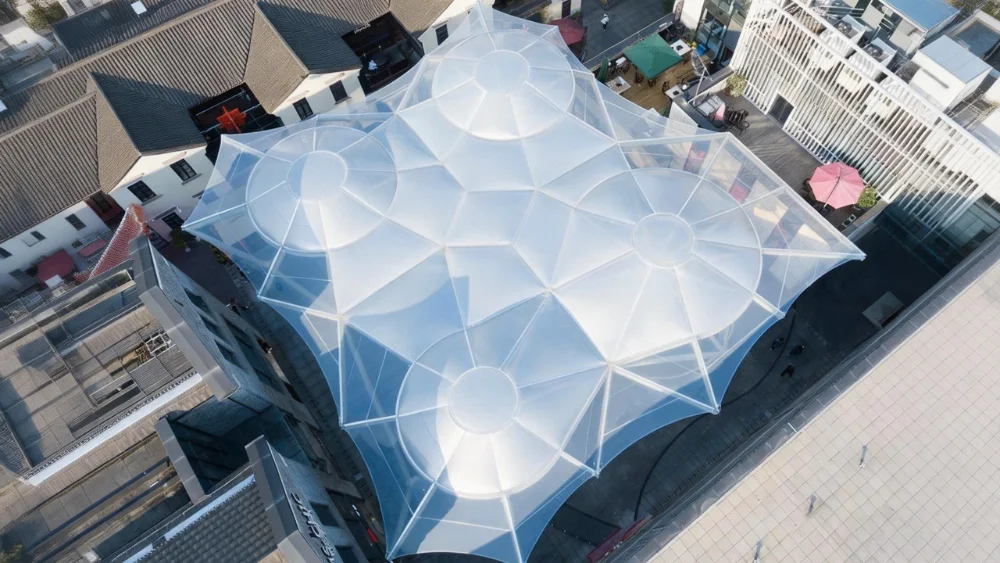
If the project requires high light transmission, atrium coverage, skylights, or modern public-building enclosures, buyers may need to consider ETFE roof and facade systems instead of conventional opaque membrane canopies.
When comparing suppliers, do not only ask for “membrane material price.” Ask for the material type, thickness, coating, expected service environment, color options, warranty terms, and whether the material matches the project’s climate and usage requirements.
4. Evaluate Steel Structure Fabrication Capability
The membrane surface is visually important, but the steel structure carries the actual load. For outdoor tensile membrane structures, the steel frame must handle membrane tension, wind load, column forces, connection stress, drainage components, and long-term corrosion exposure.
A professional manufacturer should be able to explain the steel frame design and fabrication process clearly. Buyers should ask about:
- Steel grade and profile selection
- Welding quality control
- Connection plate design
- Surface treatment, such as hot-dip galvanizing or painting
- Corrosion protection for coastal, humid, or high-rainfall areas
- Pre-assembly or dimensional checking before shipment
- Bolted connection preparation for site installation
This step is especially important for projects such as toll plaza canopies, service station canopies, sports grandstand roofs, and large car parking structures. If the steel fabrication is not controlled properly, site installation may become difficult, and long-term structural performance may be affected.
5. Ask Whether the Manufacturer Has Experience With Similar Applications
Experience in similar projects is more useful than a general company introduction. A manufacturer that has handled only small shade sails may not be suitable for a large commercial carport, toll station roof, or stadium canopy. Each application has different design priorities.
For example:
- Car parking canopies require vehicle clearance, column spacing, drainage, and repeated use.
- Walkway canopies require pedestrian flow, weather protection, and safe support placement.
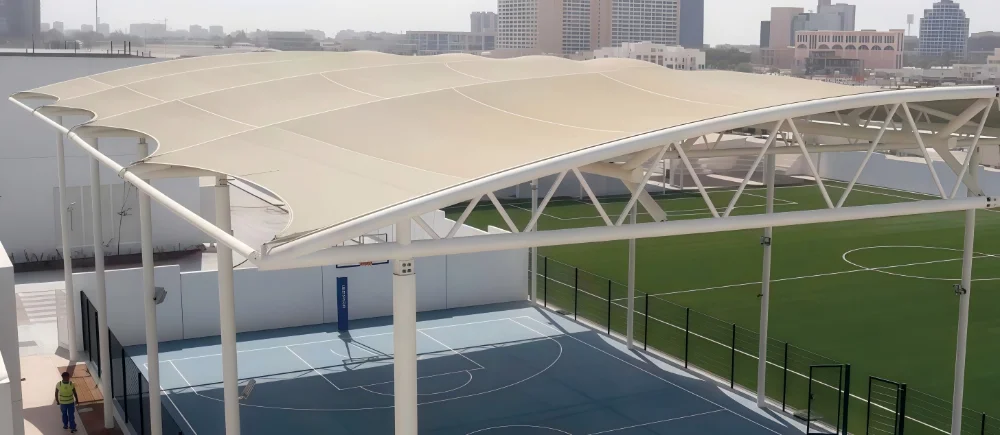
- Stadium and grandstand canopies require long-span coverage, sightline control, and strong wind resistance.
- Landscape shade structures require visual design, public safety, and year-round outdoor durability.
- ETFE roof systems require daylight control, lightweight support, and more detailed envelope coordination.
For parks, plazas, resorts, waterfront areas, and civic spaces, buyers can also review architectural shade canopies for public spaces to understand how outdoor shade structures should balance appearance, steel frame protection, membrane form, and practical installation.
6. Compare Quotation Details, Not Only Unit Price
A low quotation is not always a complete quotation. In membrane structure projects, the final cost may include membrane material, steel structure, cables, connection parts, drainage components, surface treatment, fabrication drawings, packing, shipping, installation accessories, and technical support.
When comparing different suppliers, buyers should check whether the quotation clearly states:
- Membrane material type and specification
- Steel structure scope
- Surface treatment method
- Included accessories and connection parts
- Drawing and engineering support scope
- Packing method and shipment arrangement
- Installation support or guidance
- Warranty and maintenance terms
- Items excluded from the quotation
If one supplier includes steel structure and another only quotes the membrane fabric, the two prices cannot be compared directly. A professional manufacturer should help the buyer understand the quotation boundary clearly, especially for custom outdoor projects.
7. Check Fabrication Control and Packing Method
Membrane structure projects require accurate fabrication because the membrane surface is cut, welded, tensioned, and installed according to the designed geometry. If the membrane cutting or welding is inaccurate, wrinkles, poor tension distribution, or installation difficulty may appear on site.
Buyers should ask how the manufacturer controls:
- Membrane cutting accuracy
- Welding seam quality
- Edge cable and corner reinforcement
- Steel component dimensions
- Labeling of parts before shipment
- Packing to protect membrane surfaces and steel parts
- Loading method for export delivery
For overseas projects, clear part labeling and packing are very important. Contractors need to identify components quickly during installation. Poor packing may cause surface damage, missing accessories, or delays at the job site.
8. Confirm Installation Support Before Ordering
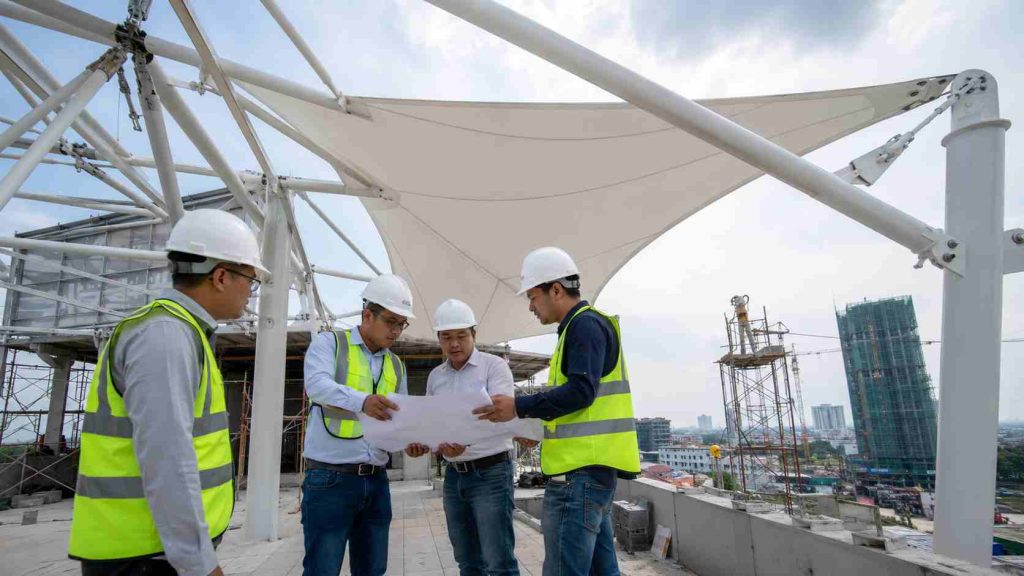
Some buyers focus only on product manufacturing, but installation is where many project problems appear. A tensile membrane structure is usually installed through a sequence of foundation preparation, steel frame erection, membrane positioning, edge connection, tension adjustment, and final inspection.
Before placing an order, buyers should confirm whether the manufacturer can provide:
- Installation drawings
- Component layout drawings
- Membrane installation direction
- Steel frame assembly guidance
- Accessory list
- Remote technical support
- On-site installation support if required
This is particularly important for first-time membrane structure buyers or contractors who have limited experience with tensile systems. A complete manufacturer should not leave the buyer to solve installation issues alone after the goods arrive.
9. Review Project Communication and Response Quality
Good communication is a practical sign of a reliable manufacturer. Outdoor membrane structure projects often require several rounds of discussion before the final design and quotation are confirmed. If the manufacturer responds only with general statements, it may be difficult to control the project later.
During early communication, buyers should observe whether the supplier asks specific questions and gives project-based suggestions. A professional team will usually ask about site dimensions, application, drawings, load requirements, installation conditions, and expected appearance. They should also explain possible limitations instead of promising every design without engineering review.
For a serious project, buyers can prepare basic information before contacting the supplier. This makes the quotation more accurate and reduces unnecessary back-and-forth communication.
10. What Information Should Buyers Prepare Before Requesting a Quote?
To receive a practical quotation for a tensile membrane structure, buyers should prepare as much project information as possible. Even if the design is not finalized, basic details can help the manufacturer judge the structure type and material direction.
Useful information includes:
- Project application: carport, walkway, entrance, stadium, park, toll plaza, ETFE roof, or other use
- Project location and climate conditions
- Approximate length, width, height, and coverage area
- Site photos or layout drawings
- Preferred membrane color or light transmission requirement
- Steel structure style or architectural reference
- Local wind load, snow load, or building requirements if available
- Foundation condition or existing structure information
- Expected delivery schedule
- Whether installation support is required
For customized outdoor projects, buyers can discuss project requirements with a manufacturer through the project quotation request page and provide drawings, dimensions, or site photos for a more accurate review.
Common Mistakes When Choosing a Tensile Membrane Structure Manufacturer
Many project risks come from choosing a supplier based on incomplete information. Buyers should avoid the following mistakes:
- Comparing only the lowest price without checking material and steel structure scope
- Choosing a supplier that cannot provide engineering support
- Ignoring wind load, drainage, and foundation conditions
- Accepting a quotation without clear accessory and installation details
- Using the same canopy design for different climate regions
- Not confirming surface treatment for outdoor steel structures
- Ordering without checking packing, labeling, and shipment preparation
- Assuming all membrane materials have the same service performance
A tensile membrane structure is a project-based system. The manufacturer should provide more than fabric and steel parts. The buyer needs design logic, fabrication control, material clarity, installation support, and practical communication throughout the project.
Final Thoughts
Choosing the right tensile membrane structure manufacturer for an outdoor project requires careful review of engineering ability, material selection, steel fabrication, project experience, quotation scope, and installation support. A suitable manufacturer should understand the real site conditions and provide a structure that is practical for fabrication, delivery, installation, and long-term use.
For car parking areas, walkways, public spaces, stadiums, toll stations, service stations, and ETFE roof projects, buyers should work with a manufacturer that can discuss the full project scope rather than only quote a simple product price. This approach helps reduce design uncertainty, avoid installation problems, and improve the long-term performance of the membrane structure.
If you are planning an outdoor tensile membrane structure project, you can share your project dimensions, application scenario, site location, drawings, or reference design with Timi. Our team can help review structure options, membrane material direction, steel frame requirements, and quotation details for your project.
FAQ About Choosing a Tensile Membrane Structure Manufacturer
What should I check before choosing a tensile membrane structure manufacturer?
You should check the manufacturer’s project experience, design support, membrane material options, steel structure fabrication capability, surface treatment method, installation guidance, and quotation scope. For outdoor projects, wind load, drainage, foundation conditions, and corrosion protection should also be reviewed.
What membrane material is suitable for outdoor tensile structures?
The suitable material depends on the project application, budget, climate, appearance requirement, and expected service life. PVDF membrane is commonly used for many outdoor canopy projects, while PTFE and ETFE may be considered for higher-performance or special architectural applications.
Can a tensile membrane structure be customized for different project sizes?
Yes. Many tensile membrane structures are customized based on project dimensions, site layout, support conditions, membrane form, and architectural requirements. Buyers should provide drawings, site photos, or basic dimensions before requesting a quotation.
Why is steel structure important in membrane canopy projects?
The steel structure supports membrane tension, wind load, drainage components, and the overall shape of the canopy. Poor steel fabrication or weak corrosion protection can affect installation accuracy and long-term outdoor performance.
What information is needed to quote a custom membrane structure?
Useful information includes project location, application, dimensions, site photos, drawings, preferred material, wind or snow load requirements, foundation condition, delivery schedule, and whether installation support is needed.
Can tensile membrane structures be used for car parking and EV charging areas?
Yes. Tensile membrane canopies are widely used for commercial parking areas, EV charging stations, service stations, hotels, schools, office buildings, and public parking facilities. The design should consider vehicle clearance, column layout, drainage, and long-term weather exposure.
Does the manufacturer need to provide installation guidance?
Installation guidance is very important, especially for overseas projects. The manufacturer should provide installation drawings, component labels, accessory lists, and technical support to help the contractor complete the structure correctly on site.