PVDF, PTFE, and ETFE are often used in tensile membrane structures, outdoor canopies, stadium roofs, atriums, skylights, greenhouse roofs, facade systems, and public-space shade projects. However, they are not interchangeable. A material that works well for a parking canopy may not be suitable for a transparent atrium roof. A high-performance membrane may also be unnecessary for a simple outdoor shade structure.
The right choice should come from the project function, climate, span, required transparency, fire requirements, budget, maintenance plan, and expected service life.


PVDF, PTFE, and ETFE: Basic Differences
Although these three materials are often compared together, they belong to different material categories.
- PVDF membrane usually refers to PVC-coated polyester fabric with a PVDF surface treatment.
- PTFE membrane usually refers to fiberglass fabric coated with PTFE.
- ETFE is a fluoropolymer film, not a coated fabric membrane. It is used as a single-layer film or pneumatic cushion system.
PVDF and PTFE are mainly used for tensioned fabric roofs and outdoor shade structures. ETFE is normally selected when the project needs daylight transmission, transparency, low structural weight, or a modern roof and facade effect.
Quick Comparison: PVDF vs PTFE vs ETFE
| Item | PVDF Membrane | PTFE Membrane | ETFE Film |
|---|---|---|---|
| Material Form | PVC-coated polyester fabric with PVDF surface layer | PTFE-coated fiberglass fabric | Fluoropolymer film, single-layer or cushion system |
| Main Strength | Balanced cost, flexible design, practical outdoor use | Long-term durability, weather stability, stronger fire performance | High light transmission, low weight, transparent appearance |
| Common Applications | Carports, walkways, entrance canopies, park shade, commercial shade roofs | Stadium roofs, transport hubs, large public roofs, long-term architectural canopies | Atriums, skylights, facades, greenhouse roofs, transparent roof systems |
| Cost Level | Usually more cost-controlled | Higher initial cost | Project-dependent |
| Best Used When | The project needs shade, rain protection, and controlled cost | The project needs long service life and stronger performance | The project needs daylight, transparency, and lightweight enclosure |
When PVDF Membrane Is the Right Choice

PVDF membrane is widely used because it gives many outdoor projects a practical balance between cost, appearance, and weather resistance. It is commonly selected for car parking canopies, walkway covers, entrance canopies, school canopies, commercial shade roofs, and landscape structures.
PVDF is not simply a low-end choice. For many medium-scale outdoor projects, it is the most reasonable material because the project does not require high transparency, extremely long service life, or premium fire performance. If the main purpose is shade and rain protection, PVDF often gives the buyer a more balanced solution than choosing a higher-cost material that the project does not actually need.
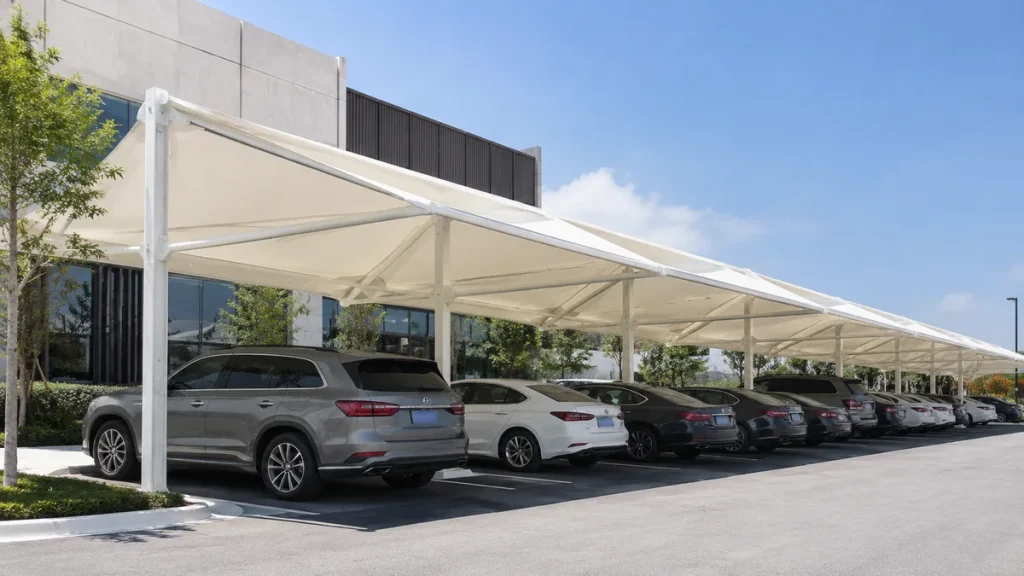
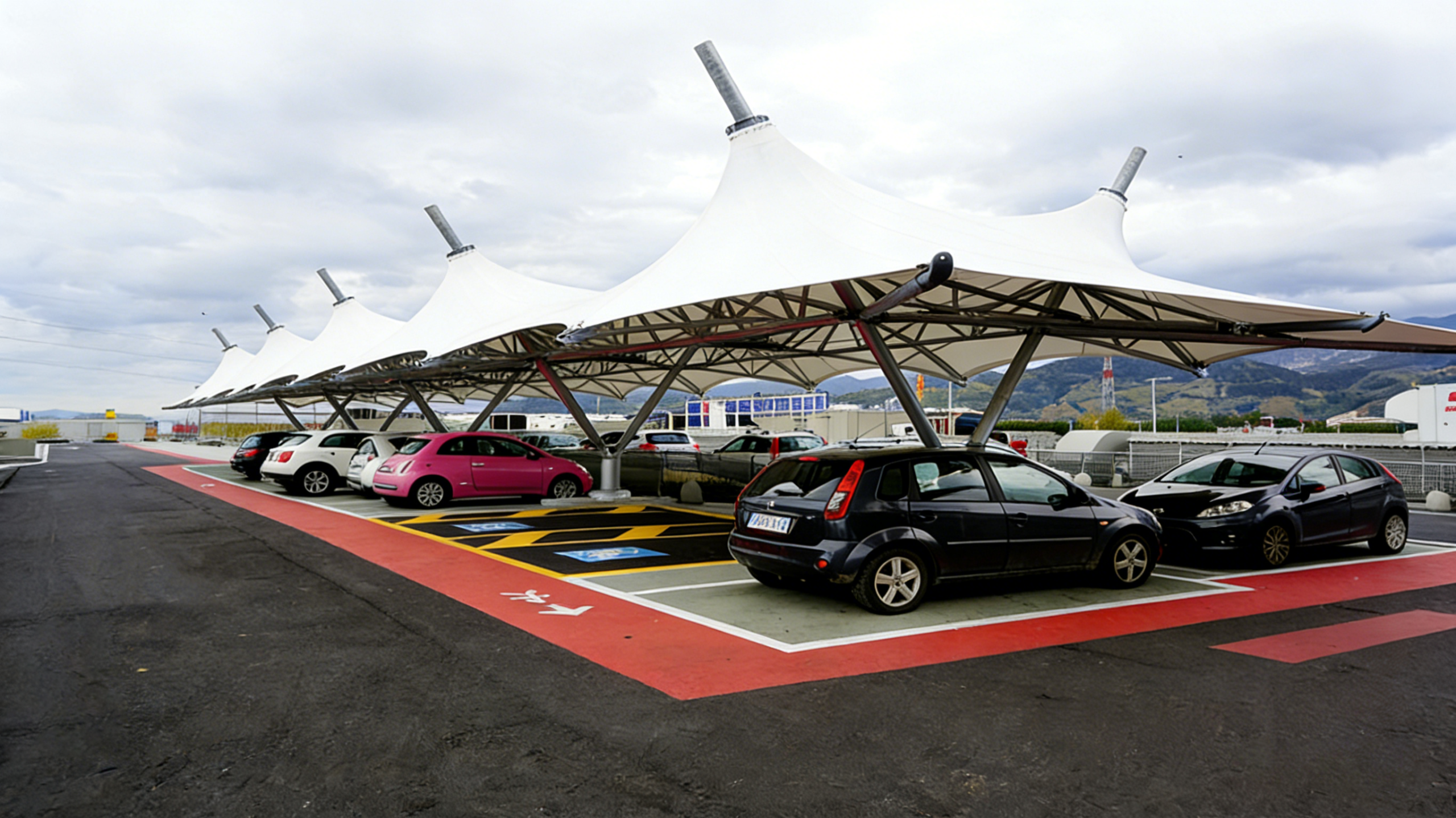
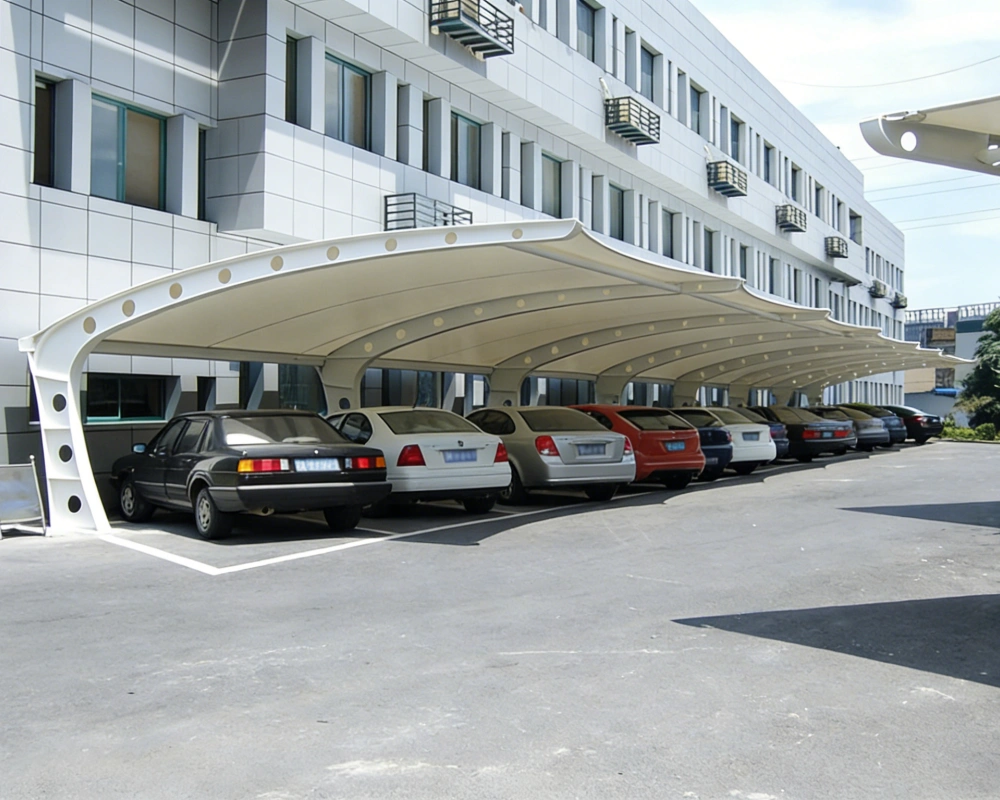
For example, a commercial parking canopy must consider vehicle clearance, column layout, roof slope, rainwater drainage, wind exposure, and long-term outdoor use. In this type of project, tensile membrane car parking canopy systems usually focus more on shade performance and practical structure layout than on transparency.
PVDF Is Usually Suitable For:
- Commercial car parking canopies
- School and campus walkway covers
- Outdoor entrance canopies
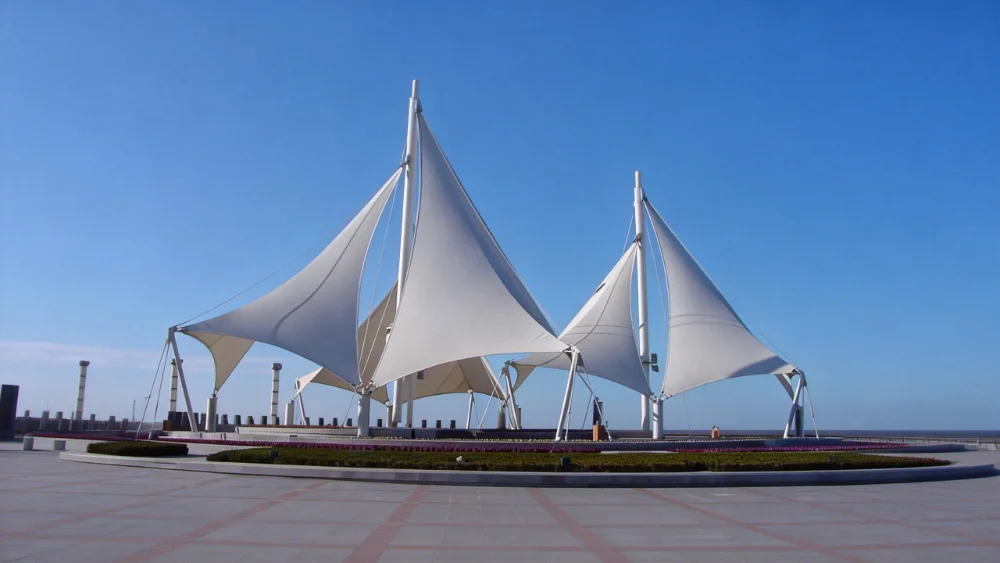
- Park and landscape shade structures
- Shopping plaza shade roofs
- Medium-span tensile canopy projects
- Projects that require color flexibility and controlled cost
When PTFE Membrane Is the Better Option

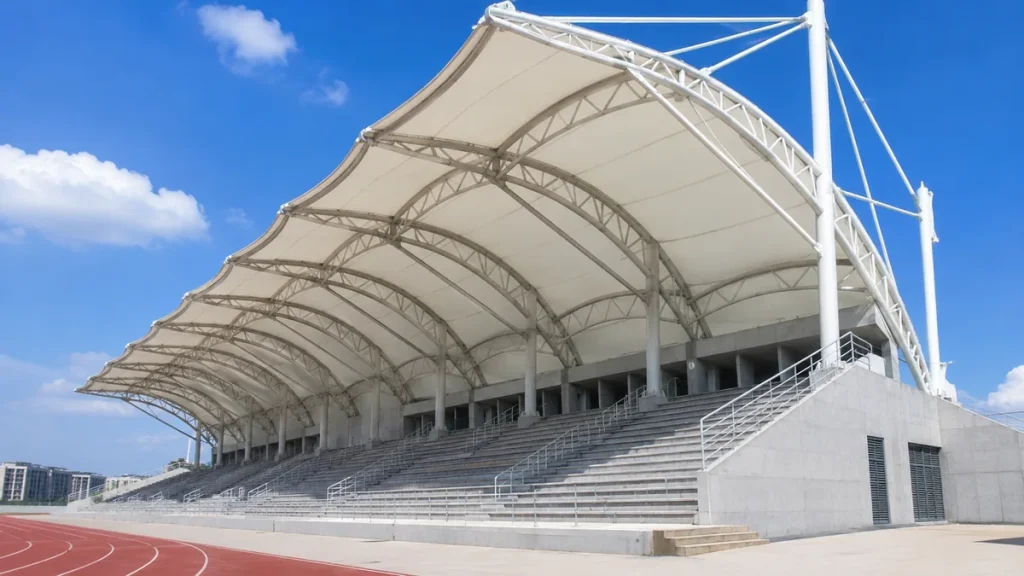
PTFE membrane is usually selected when the project requires stronger long-term durability, better weathering stability, and higher fire-performance expectations. It is often used in stadium roofs, transport facilities, exhibition spaces, large public buildings, high-end entrance canopies, and long-span tensile structures.
Compared with PVDF, PTFE normally requires a higher initial investment. However, this higher cost can be reasonable when the structure is permanent, public-facing, difficult to maintain, or exposed to demanding weather conditions. For some projects, a lower initial material cost may create higher long-term risk if replacement or maintenance becomes difficult later.
PTFE should be evaluated as part of the full system. The steel structure, edge connection, membrane tension, drainage design, and installation process must support the material’s performance. A high-performance membrane cannot compensate for weak engineering details.
PTFE Is Usually Suitable For:
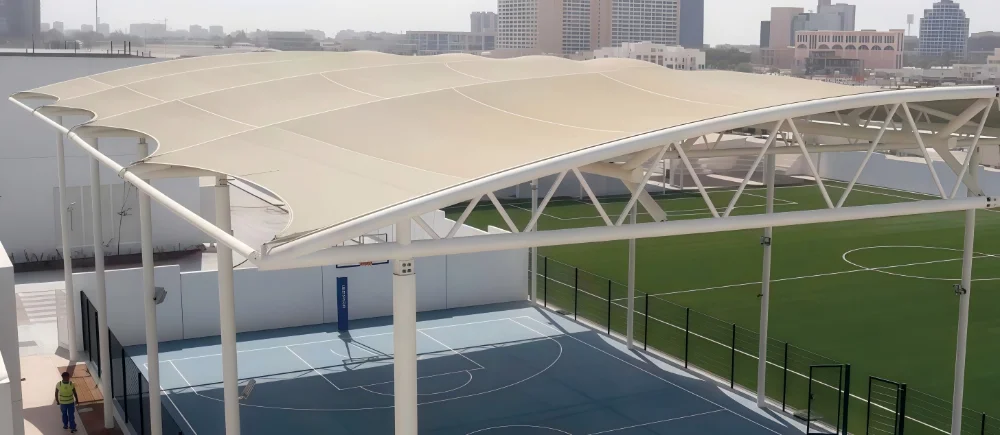
- Stadium and sports facility roofs
- Transport hub canopies
- Large public-building roofs
- Permanent architectural tensile structures
- High-exposure outdoor projects
- Projects with stricter fire-performance requirements
- Long-span structures where long-term stability is important
When ETFE Is More Suitable Than Fabric Membrane

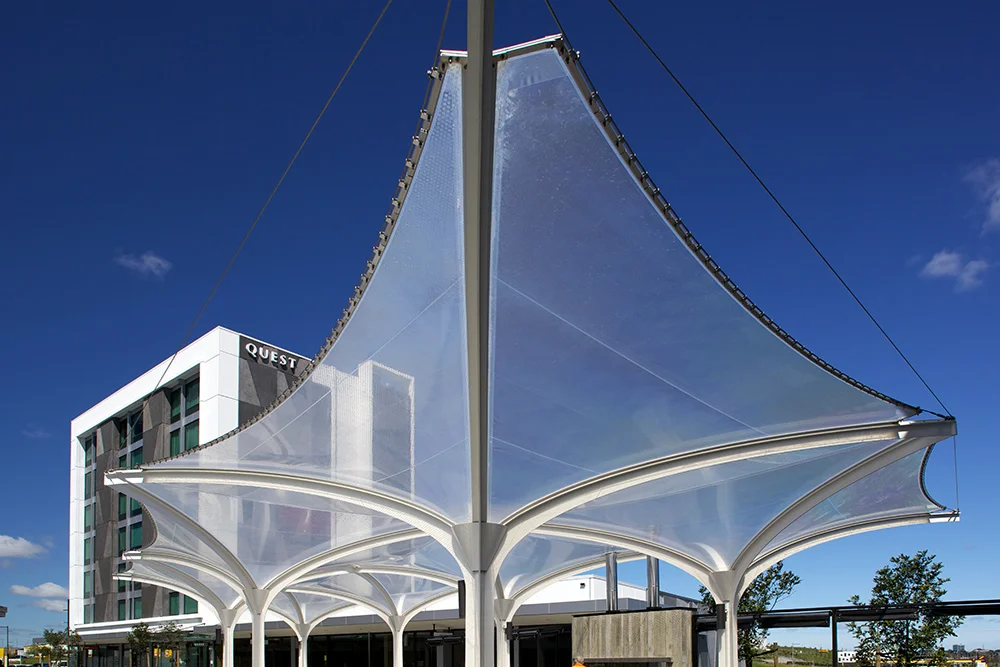
ETFE is different from PVDF and PTFE because it is not a woven fabric membrane. It is a fluoropolymer film used in lightweight roof and facade systems. ETFE is selected when the project requires daylight transmission, transparency, reduced roof weight, or a modern architectural enclosure.
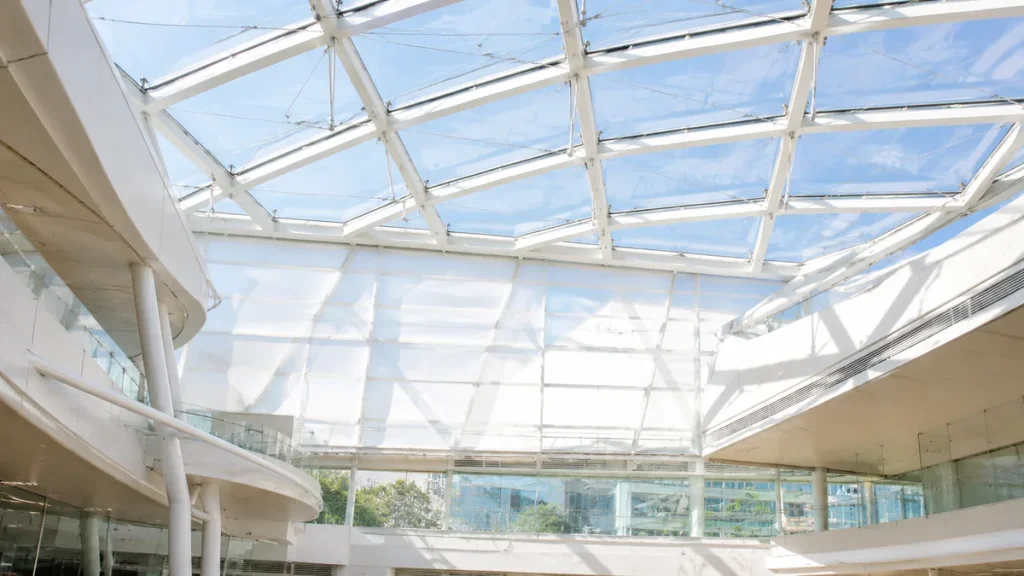
If daylight is the reason the roof exists, ETFE usually becomes the first material to evaluate. Atriums, skylights, greenhouse roofs, shopping mall covers, public concourses, and transparent facade areas often need a material that allows natural light to enter the space while keeping the envelope visually open and structurally light.
ETFE can be used as a single-layer film or as a two-layer or three-layer cushion system. A cushion system may involve air supply equipment, perimeter fixing details, pressure control, drainage design, and maintenance planning. For transparent architectural projects, ETFE roof and facade systems should be reviewed as a complete system rather than only as a film material.
ETFE Is Usually Suitable For:
- Atrium roofs
- Skylight systems
- Greenhouse roofs
- Commercial transparent roofs
- Public building facade systems
- Lightweight roof enclosures
- Projects requiring high daylight transmission
One common mistake is treating ETFE as a premium replacement for every membrane material. ETFE is excellent for the right project, but it is not always suitable for ordinary shade structures. For a hot outdoor parking area, a transparent roof may increase heat and glare instead of improving user comfort.
Material Selection by Project Priority
| Project Priority | Usually Better Option | Reason |
|---|---|---|
| Controlled budget with reliable outdoor shade | PVDF | Good balance between cost, weather resistance, and design flexibility. |
| Long-term public roof or landmark structure | PTFE | Stronger durability and better long-term stability. |
| High daylight transmission | ETFE | Suitable for transparent or translucent roof and facade systems. |
| Car parking canopy | PVDF or PTFE | Shade, drainage, vehicle clearance, and outdoor durability matter more than transparency. |
| Greenhouse or atrium roof | ETFE | Natural light is usually the core function of the structure. |
| Stadium or transport hub roof | PTFE or ETFE | PTFE fits durable opaque roofs; ETFE fits daylight-oriented lightweight roofs. |
Key Factors That Should Decide the Final Material
1. Shade or Transparency
This is the first decision. If the project mainly needs shade and rain protection, PVDF or PTFE is usually more practical. If the project mainly needs daylight, transparency, or a glass-like roof effect, ETFE should be evaluated first.
2. Expected Service Life
PVDF can provide a practical service life for many standard outdoor canopies. PTFE is usually better for long-term architectural structures where aging resistance and surface stability are more important. ETFE can also offer strong durability, but the complete system design must be reviewed, especially for cushion roofs.
3. Fire and Approval Requirements
Fire performance should not be treated as a general claim. Different countries and project types may require different test reports or approval documents. Stadiums, transport facilities, public buildings, and enclosed spaces usually need stricter review than open-air shade canopies.
4. Climate and Site Exposure
Outdoor membrane structures must handle UV exposure, rain, wind, dust, temperature change, humidity, and sometimes coastal or industrial pollution. Material selection should be reviewed together with steel corrosion protection, drainage design, and maintenance access.
5. Drainage and Roof Slope
Drainage is one of the most underestimated factors in membrane structure performance. Ponding water, weak slope control, poor gutter placement, or unclear discharge routes can affect appearance, cleaning, membrane tension, and long-term use.
6. Initial Cost vs Life-Cycle Cost
The cheapest material is not always the lowest-cost project. The final cost includes membrane material, steel structure, edge cables, clamping systems, accessories, fabrication, packing, transport, installation, lifting equipment, cleaning, and maintenance.
Buyer Checklist Before Confirming PVDF, PTFE, or ETFE
Before asking for a final quotation, buyers should prepare project information that allows the manufacturer or design team to recommend the right material system.
- Project application: carport, walkway, stadium roof, atrium, greenhouse, facade, or public canopy
- Project location and climate conditions
- Approximate span, height, and covered area
- Required transparency or shade level
- Expected service life
- Fire standard or approval requirement
- Wind or snow load information if available
- Drainage direction and roof slope requirements
- Maintenance access after installation
- Budget range and expected delivery schedule
For international projects, quality documents and fabrication control should also be reviewed before ordering. A broader review of membrane structure quality assurance can help buyers check whether the quotation is supported by practical documentation rather than only material descriptions.
Final Recommendation
PVDF, PTFE, and ETFE each have a clear role in membrane structure projects. PVDF is often the practical choice for cost-controlled outdoor canopies and shade structures. PTFE is better suited to long-term, high-performance, public-facing, and demanding architectural roofs. ETFE is the right direction when daylight transmission, transparency, low weight, and modern roof or facade expression are central to the design.
The best material is not the most expensive one. It is the material that fits the project function, climate, span, approval requirements, maintenance plan, and budget. A correct decision should consider the full system: membrane, steel frame, edge fixing, drainage, fabrication, installation, and long-term maintenance.
Before confirming PVDF, PTFE, or ETFE, buyers should share the project location, drawings, span, intended use, expected transparency, local fire requirements, and installation conditions. With these details, the material recommendation can be based on the structure itself instead of only a membrane price.
FAQ About PVDF, PTFE, and ETFE Membrane Materials
Which is better, PVDF, PTFE, or ETFE?
There is no single best material for every project. PVDF is suitable for many cost-controlled outdoor canopies. PTFE is better for long-term architectural roofs and demanding public structures. ETFE is suitable when daylight transmission, transparency, and lightweight roof or facade design are required.
Is PVDF membrane suitable for outdoor tensile structures?
Yes. PVDF membrane is widely used for outdoor tensile structures such as carports, walkway covers, entrance canopies, commercial shade roofs, and landscape shade structures. It provides a practical balance of cost, weather resistance, color flexibility, and fabrication efficiency.
When should PTFE membrane be selected?
PTFE should be considered when the project requires stronger long-term durability, better fire performance, stable appearance, and high resistance to outdoor aging. It is commonly used in stadiums, transport facilities, public buildings, and long-span tensile roof structures.
Is ETFE a fabric membrane?
No. ETFE is a fluoropolymer film, not a coated fabric membrane. It is usually used as a single-layer film or as a two-layer or three-layer cushion system for roofs, facades, atriums, skylights, and greenhouse structures.
Which material is better for car parking canopies?
PVDF and PTFE are usually more suitable for car parking canopies because parking projects mainly need shade, rain protection, vehicle clearance, drainage, and outdoor durability. ETFE is less common unless the project specifically requires a transparent architectural roof.
How should buyers compare membrane material quotations?
Buyers should compare material specification, coating type, thickness, fire test documents, steel structure scope, accessories, edge fixing, fabrication method, packing, installation support, and warranty terms. Comparing only the membrane price can lead to an inaccurate cost judgment.